

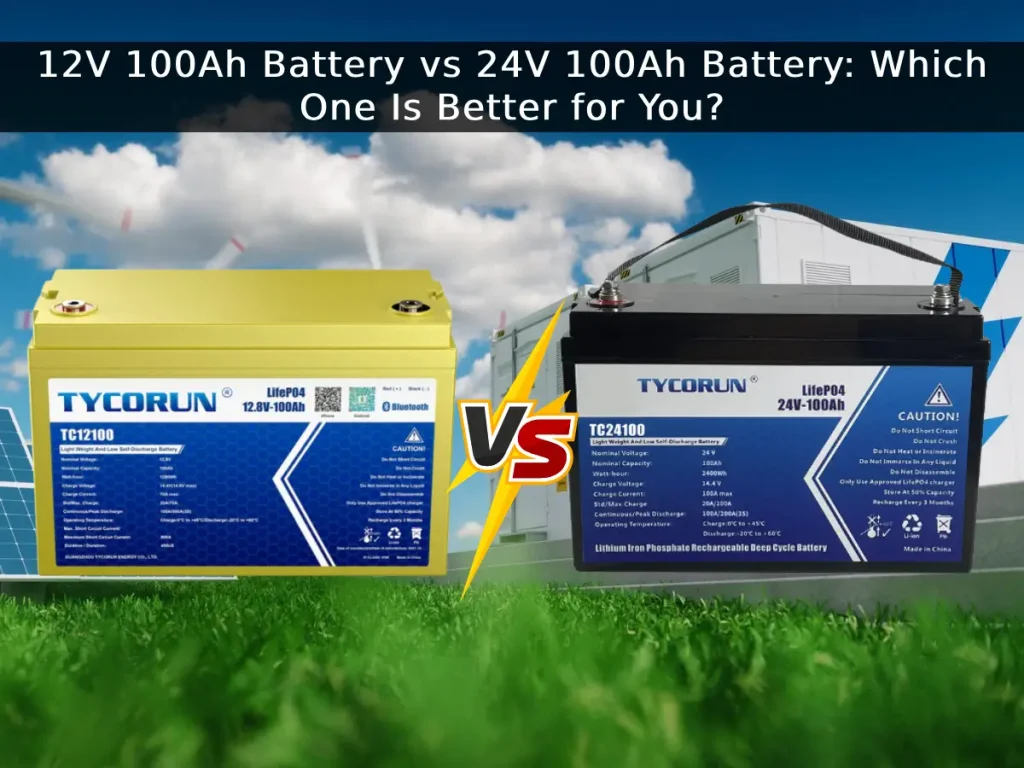
When choosing a battery for energy storage, there are many considerations to take into account. One of the most important factors is the battery voltage. This is because voltage greatly affects battery performance. When choosing the right voltage for an energy storage system battery, a frequently discussed topic is 12V 100Ah Battery vs 24V 100Ah Battery.
These two batteries may seem the same to users, as they both have a capacity of 100Ah. So what is the difference and which one is more suitable for users? 12V batteries are commonly used for small-scale systems such as home backup power. Meanwhile, 24V batteries are usually used for larger storage systems.
The comparison of the 12V 100Ah Battery vs 24V 100Ah Battery will be covered in more detail in this article. Users will have a deeper understanding of the uses of both batteries and which one best suits their requirements if they comprehend this subject. Let us go deeper further.
What is a 12V 100Ah Battery?
Before we discuss further about 12V 100Ah Battery vs 24V 100Ah Battery, users need to understand first what a 12V 100Ah battery is. So, a 12V 100Ah battery is a battery commonly used for small to medium-scale energy storage systems. Examples include home solar panels, boats, camper vans, or devices that require stable power.

The number 12V on the battery indicates its voltage. Meanwhile, 100Ah indicates the battery’s capacity or how long it can store power. Roughly speaking, a 12V 100Ah has a battery capacity of around 1,200 watt-hours (Wh) or the equivalent of 1.2 kWh of energy. Therefore, this battery is commonly used to power several small devices for several hours.
What is a 24V 100Ah Battery?
After users understand that 12V batteries are widely used for small systems, now it’s time for users to learn more about 24V batteries. So, just like before, 24V is a number that indicates the voltage of this battery. Meanwhile, 100Ah describes the battery’s capacity. If calculated, a typical 24V battery has a capacity of 2,400 watt-hours (Wh), or approximately 2.4 kWh of energy. This means that this battery has twice the capacity of a 12V battery.

With its high power, 24V can provide more stable electricity for devices that require high power. In addition, 24V batteries are less prone to overheating because the current flowing in the system is smaller than in 12V batteries. A smaller current means less heat is generated, so components such as cables and connectors can last longer.
That is why 24V batteries are widely used for devices that require large capacity. For example, for energy storage systems in large homes, industrial-scale solar panels, or tools that require a stable power supply so they do not easily drop. This is the reason why many people often compare 12V 100Ah Battery vs 24V 100Ah Battery before deciding which one is most suitable for their energy system.
Voltage and Capacity Basics of 12V vs 24V Batteries
Before users choose which one is most suitable, it is important to first understand the basic differences between 12V 100Ah battery vs 24V 100Ah battery in terms of voltage and capacity. This is because voltage and capacity can affect how the energy storage system works.

Voltage is the electrical pressure that drives the current to flow. The higher the voltage, the stronger the current. So, if the battery is 24V, the pressure is twice as high as 12V. Therefore, a 24V system can supply more power with a smaller current.
Meanwhile, capacity (Ah) indicates how long the battery can supply power. So, if two batteries have the same capacity of 100Ah, the only difference is their voltage. Users can calculate it as follows:
Power (Wh) = Voltage (V) × Capacity (Ah)
For example:
• 12V × 100Ah = 1,200 Wh
• 24V × 100Ah = 2,400 Wh
From the above calculation, a battery with a voltage of 24V can store twice as much energy as a 12V battery.
Performance Differences Between 12V 100Ah Battery vs 24V 100Ah Battery
In understanding the topic of 12V 100Ah Battery vs 24V 100Ah Battery, it is important for users to understand the performance of these two batteries. Here is the comparison:

- Power efficiency
In terms of power efficiency, 24V batteries are superior to 12V batteries. This is because a 24V battery delivers a smaller current for the same power, so less energy is lost due to heat and it lasts longer than a 12V battery. - Applications
In terms of usage, 12V batteries are typically used for small systems such as emergency lights, portable solar kits, or light household appliances. Meanwhile, 24V batteries are often used for systems that require high power, such as homes with many electrical appliances or outdoor use. - Stability and Heat
As discussed earlier, 24V batteries deliver a smaller current, making them more heat-resistant and less prone to overloading. This is in contrast to 12V batteries, which heat up more easily and are less stable in the long term.
Installation and Compatibility of 12V 100Ah Battery vs 24V 100Ah Battery
After users understand the performance differences between 12V 100Ah battery vs 24V 100Ah battery, it is also important for users to consider the installation aspects of these two batteries. Here is a comparison:

- 12V 100Ah Battery
Installing a 12V battery is easier for beginners because many devices are designed to use this voltage. In addition, 12V batteries are widely used for household appliances, such as garden lights, small water pumps, or simple home solar systems. So, users only need one 12V 100Ah battery. - 24V 100Ah Battery
Unlike 12V batteries, installing a 24V battery requires a little adjustment. This is because not all devices are compatible with high voltages. Users may ask, “Where can this battery be used?” Typically, 24V systems are used for tools or installations that are specifically designed for greater power. Therefore, before installing a 24V battery, users should first check whether the inverter, charger, and cables they are using also support 24V.
Therefore, when installing a battery, users cannot simply use a high voltage. Users can check first; if it is for a small system with more practical installation, users can use a 12V battery. However, if it is for a large system and the equipment can use a battery with a high voltage, then a 24V battery is the right choice.
Explore more about this in our dedicated post on high voltage lithium battery
Strengths and Limitations of 12V 100Ah Battery vs 24V 100Ah Battery
In understanding the comparison between 12V 100Ah battery vs 24V 100Ah battery, it is very important for users to know the weaknesses and strengths of these two batteries. The following are their strengths and weaknesses:

1. 12V 100Ah Battery
Strengths:
- Installing a 12V battery is easier than a 24V battery
- 12V batteries are widely used for household appliances or small solar systems.
- Another advantage is that 12V batteries can be used individually or combined if users need more power.
- They are suitable for light needs such as lights, fans, or small water pumps.
Limitation:
- The system can heat up quickly because the current flowing is greater.
- If the user needs a battery for a large system, a 12V battery is not suitable.
2. 24V 100Ah Battery
Strength:
- Less energy is wasted because the electric current flows at a lower rate.
- 24V batteries produce more stable power than 12V batteries.
- Suitable for medium to large systems that require high performance.
Limitation:
- Not all devices are compatible with 24V voltage, so compatibility must be checked first.
- Installing a 24V battery is slightly more complicated because it requires calculations and component adjustments.
Covered this in detail in What is lithium-ion battery storage?
Cost and Value Considerations
When comparing a 12V 100Ah battery vs a 24V 100Ah battery, users also need to consider the cost. This is because these two types of batteries have different prices depending on the system requirements. For a 12V 100Ah battery, the price that users need to pay is usually cheaper than a 24V battery. In addition, installation is also easier due to its simpler size and system.
Therefore, this battery is suitable for small to medium use, such as homes, shops, or home solar systems. In addition, if users use a 12V battery, they do not need additional tools. This is because most devices are already compatible with 12V voltage.
Learn more in our article on Solar battery cost

Meanwhile, 24V 100Ah batteries usually have a higher price. This is because these batteries can provide a smaller but stable current, making them more efficient and durable. In addition, in the long term, 24V systems can be more energy and maintenance efficient. So even though users will pay a higher price at the beginning, the performance of these batteries is excellent for systems that require high capacity.
For a deeper understanding, check out our guide on battery maintenance
Conclusion
When comparing 12V 100Ah battery vs 24V 100Ah battery, both have their advantages depending on the user’s needs. A 12V battery is more suitable for small or home systems because it is affordable, easy to install, and compatible with many devices.
Meanwhile, the 24V battery is more suitable for large systems that require high performance. This is because the power output is more stable, and its efficiency is also better due to the lower current flow. So, even though the initial price is slightly higher, this battery can provide more economical results in the long run.
Ultimately, the best choice depends on your specific needs. If you need a simple and practical battery, the 12V is a good option. However, if you want a robust and durable system, the 24V battery is the best choice for a long-term investment.
FAQS
It really depends on what you need. A 12V 100Ah battery is great for small systems like home solar setups or camping power storage because it’s simple and affordable. Meanwhile, a 24V 100Ah battery works better for larger systems that need stronger and more stable power. So, the “better” one depends on your setup and how much energy you actually need.
You can, but only if your system supports it. Not all devices or inverters can handle 24V input. Before switching, make sure every component in your setup, like the inverter, charge controller, and cables, is compatible with 24V. If not, it’s safer to stay with 12V.
On average, both can last between 5 to 10 years depending on how they’re used and maintained. A 24V battery often performs more efficiently, which can help it last longer in heavy-duty systems. But with proper care, a 12V battery can also last a long time in smaller setups.



 +86 – 18925002618