

energy storage system

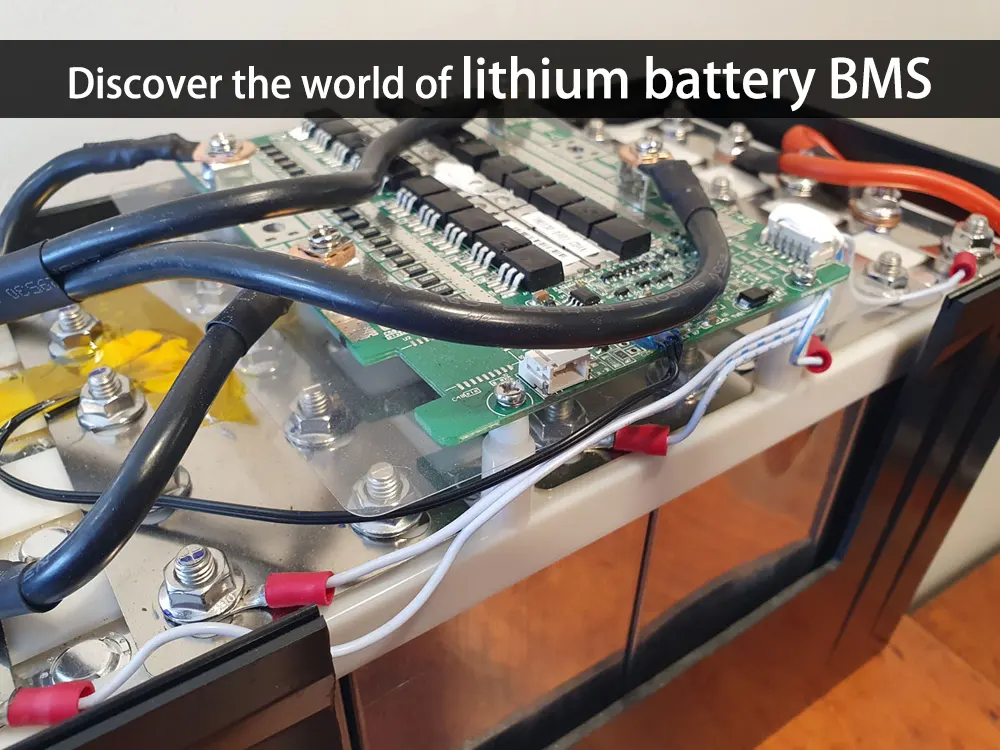
Discover the world of lithium battery BMS

Discover the world of lithium battery BMS
The Battery Management System (BMS) is a critical component in the lithium batteries, whether they are lithium-ion or lithium iron phosphate batteries. Lithium battery BMS plays an indispensable role in ensuring the safe, efficient, and long-lasting operation of these batteries.
Table of Contents
    Add a header to begin generating the table of contents

    In this comprehensive guide, we will delve deep into the world of lithium battery BMS, covering everything from its components and functions to its working principles, applications, selection criteria, and even insights into designing a BMS.

    YouTube_play_button_icon_(2013–2017)

    1.What is a lithium battery BMS?

    A Battery Management System, commonly referred to as a  BMS, is an electronic system designed to oversee and manage the performance and safety of lithium batteries. These batteries, widely used in various applications ranging from portable electronic devices to electric vehicles (EVs) and industrial energy storage systems, are known for their high energy density and efficiency. 

    However, they also come with certain risks and sensitivities that require careful management, and this is where the BMS comes into play.

    2.Do lithium batteries need a BMS?

    Absolutely. Lithium batteries are susceptible to a range of issues that can compromise safety and longevity. These include overcharging, over-discharging, excessive temperature, and overcurrent conditions. Without a BMS, these issues may lead to failures, fires, reduced battery capacity, and a diminished lifespan. The BMS acts as a guardian, monitoring and controlling the battery’s various parameters to prevent these potential hazards.

    3. Components of a lithium battery BMS and their functions

    A typical lithium battery BMS consists of several key components, each with its own specific function:


    • Voltage Measurement Circuit:This part of the lithium battery BMS continuously monitors the voltage of each individual cell within the battery pack. It ensures that none of the cells exceeds or falls below the safe operating voltage range, preventing overcharging and over-discharging.
    • Current Sensing Circuit:This circuit measures the current flowing into and out of the battery pack. It helps prevent overcurrent conditions, which can occur during rapid charging or high discharge rates.
    • Temperature Sensors:Temperature sensors are essential for monitoring the battery’s thermal conditions. They help prevent overheating by triggering protective actions like reducing the charge or discharge rate.
    • Cell Balancing Circuit: In multi-cell battery packs, cells can have slight variations in voltage. The cell balancing circuit ensures that the voltage levels among cells are kept relatively equal, which optimizes the overall performance and lifespan of the battery.
    • Protection Circuit:This circuit is the heart of the lithium battery BMS and implements various safety features, including overcharge protection, over-discharge protection, and short-circuit protection. It disconnects the battery circuit or takes corrective action when any of these conditions are detected.

    Temperature sensors are essential for helping prevent overheating

    4. Working principles of a lithium battery BMS

    The working principle of a lithium battery BMS is grounded in continuous monitoring and intelligent control. Here’s how it works:

    • Continuous Monitoring: The lithium battery BMScontinuously monitors various parameters, including cell voltages, current, and temperature.
    • Parameter Comparison: It compares these measured parameters to predefined safe operating limits. If any parameter goes beyond these limits, it indicates a potential issue.
    • Protective Actions:Depending on the detected problem, the BMS takes protective actions. For example, if it senses overcharging, it may reduce the charging current or disconnect the battery from the charger. If a cell is over-discharging, it may disconnect the load to prevent further discharge.
    • Cell Balancing: In multi-cell battery packs, the BMS may also initiate cell balancing to equalize the voltages among cells. This is crucial for maintaining the pack’s overall health and maximizing its capacity.
    • Communication and Logging:Many lithium battery BMS systems offer communication capabilities, allowing them to communicate with external devices or systems for data logging, remote monitoring, and control.

    5. Function of a lithium battery BMS

    The primary function of a lithium battery BMS can be summarized as ensuring the safe and efficient operation of the battery pack. Here’s a breakdown of its functions:

    • Safety:The lithium battery BMS is the first line of defense against potentially hazardous conditions. It prevents overcharging, over-discharging, overheating, and short-circuiting, all of which can lead to safety risks and damage.
    • Longevity: By monitoring cell voltages and implementing cell balancing, the BMS helps ensure that the battery pack’s cells are well-matched and stay within their optimal parameterrange. This promotes long-term battery health and extends its lifespan.
    • Efficiency: The lithium battery BMSmanages the charging and discharging processes to maximize efficiency. It minimizes energy losses and optimizes the use of the available capacity.
    • Communication: Through communication interfaces, the BMS allows for real-time monitoring and control, providing valuable data for system operators and users.

    Large energy storage systems often require remote monitoring and control

    6. Main application markets of lithium battery BMS

    The versatility and ubiquity of lithium batteries have led to a wide range of applications for BMS technology. Some of the main application markets include:

    • Electric Vehicles (EVs) and Hybrid Electric Vehicles (HEVs): lithium battery BMS systems are crucial for the safety, performance, and longevity of the batteries powering electric and hybrid vehicles.
    • Renewable Energy Storage Systems: Lithium batteries are commonly used to store energy from renewable sources like solar and wind power. BMS ensures efficient energy storage and discharge.
    • Portable Electronic Devices: Smartphones, laptops, tablets, and other portable electronics rely on lithium battery BMS, integrated for safe and reliable operation.
    • Uninterruptible Power Supplies (UPS): UPS energy storage systems use lithium batteries and BMS to provide backup power in case of grid failures.

    7. How to choose a BMS for a lithium-ion battery

    Selecting the right lithium battery BMS is crucial to ensuring compatibility, safety, and performance. Here’s a step-by-step guide:

    • Battery Chemistry: Determine the battery chemistry, such as NMC, LiFePO4, or others, to ensure the BMS is suitable for specific battery type.
    • Voltage and Capacity: Know the voltage and capacity of battery pack. Ensure the BMS can handle battery’s voltage range and current levels.
    • Current Requirements: Consider the maximum discharge and charge current requirements of Choose a BMS that can handle these currents safely.

    8. Difference between energy storage battery BMS and power battery BMS

    Energy storage battery BMS and power battery BMS serve distinct purposes, and their designs reflect these differences:

    • Energy Storage Battery (BMS)
    1. Focus: Emphasizes long-term reliability and capacity retention.
    2. Applications: Used in residential and commercial energy storage systems, such as those connected to solar panels of photovoltaic energy storage or wind turbines.
    3. Priorities: Maximize the lifespan of the battery while ensuring reliable energy storage and discharge.
    • Power Battery BMS
    1. Focus: Designed for high-power applications, it prioritizes rapid charge and discharge rates.
    2. Applications: Commonly found in electric vehicles (EVs) and hybrid electric vehicles (HEVs), where quick acceleration and regenerative braking are essential.
    3. Priorities: Emphasize safety during high-power operations, including fast charging and discharging, and quick response to dynamic load changes.

    9. Characteristics of BMS for large energy storage systems

    Large energy storage systems often have unique requirements, and their lithium battery BMS should reflect these characteristics:

    • Scalability: The lithium battery BMSshould handle large battery banks with numerous cells and modules.
    • Remote Monitoring: Large energy storage systems often require remote monitoring and control capabilities to manage distributed assets effectively.
    • Redundancy: Redundancy in lithium battery BMScomponents and systems is crucial to ensuring uninterrupted operation, especially in critical applications like grid-scale energy storage.

    The BMS manages the charging and discharging processes to maximize efficiency

    10. How to design a lithium battery BMS

    Designing a lithium battery BMS is a complex process that requires expertise in battery technology, electronics, and control systems. Here’s a high-level overview of the steps involved:

    • Define Requirements: Clearly define the requirements of the BMS, including the battery chemistry, voltage, capacity, communication protocols, and safety features.
    • Component Selection:Select suitable components, including microcontrollers, sensors, voltage regulators, and communication interfaces.
    • Circuit Design:Design the circuitry for voltage measurement, current sensing, temperature monitoring, cell balancing, and protection features.
    • PCB Layout: Create a Printed Circuit Board (PCB) layout that accommodates all the components while considering factors like noise reduction and thermal management.
    • Programming: Develop the firmware and control algorithms for the microcontroller to monitor and control the battery parameters.
    • Safety Testing:Thoroughly test the lithium battery BMS for safety and performance, including simulations and real-world testing.
    • Certification:Ensure that the BMS complies with relevant safety standards and regulations, if applicable.
    • Integration: Integrate the lithium battery BMSinto the battery pack or system, ensuring proper wiring and communication with external devices.

    11. How to choose a BMS for LiFePO4 battery

    Selecting a BMS for LiFePO4 (LFP) batteries involves considerations specific to this battery chemistry:

    • Voltage Range: Ensure the BMS is compatible with the voltage range of LiFePO4 batteries, typically 2Vper cell.
    • Protection Features: Verify that the BMS provides protection against overcharge, over-discharge, and short-circuit conditions specific to LiFePO4 chemistry.
    • Cell Balancing: Check if the BMS supports cell balancing for LiFePO4 batteries, as this chemistry benefits from maintaining balanced cell voltages.
    • Compatibility: Ensure the BMS is compatible with LiFePO4 battery pack configuration, whether it’s a single cell, series-connected cells, or parallel configurations.
    • Quality: Choose a reputable manufacturer known for producing reliable BMS systems, just like Top 10 energy storage battery manufacturers in the world.

    Large energy storage systems often require remote monitoring and control

    Related posts
    Top 5 latest photovoltaic energy storage products in China
    Top 5 latest photovoltaic energy storage products in China

    The utilization of renewable energy sources like photovoltaics has been rising in recent years. Photovoltaic power generation is highly compatible with daytime electricity loads. This article will introduce top 5 latest photovoltaic energy storage products in China.

    logo+86 – 18925002618
    [email protected]
    Guangpu West Road, Huangpu, Guangzhou, Guangdong, China

    Product

    Video Gallery

    Huntkey automated battery storage workshop process
    Huntkey Grevault participated in Germany ESE exihition with 5KW mobile power bank
    Contact Form Demo
    Scroll to Top





