



- Pumped water energy storage: Pumped water energy storage is a type of energy storage with mature technology and a high coverage rate at home and abroad.
- Compressed air energy storage: Compressed air energy storage is characterized by large capacity. At the same time, compressed air energy storage can store energy for a long time.
- Flywheel energy storage: flywheel energy storage is characterized by its high power density and long service life.
- Superconducting energy storage: Superconducting renewable energy storage has high conversion rate and fast response speed

- Electrochemical energy storage: This energy storage has initially entered commercialization and large-scale application. The lithium-ion batteries can be divided into lithium iron phosphate, ternary lithium titanate,.
In addition, there are sodium-sulfur batteries, liquid Flow batteries, fuel cells (hydrogen, methanol, molten carbonates and solid oxides, etc.), hydrogen production from water electrolysis (multiple types of energy interconnection between electricity, gas, and transportation) and supercapacitors.
- Thermal energy storage: Thermal energy storage has a high thermal storage density, so it can achieve long-term storage.
Comprehensive comparison of the maturity and scenario applicability of the above energy storage technologies, the following conclusions can be drawn:
Pumped hydro energy storage technology is relatively mature, but it relies on large reservoirs, which limits the further development of energy storage;
Compressed air energy storage technology is environmentally friendly and suitable for large-scale development. At the same time, it can be coupled with thermal energy utilization to promote the heat absorption of renewable energy, and has good prospects for the development of renewable energy storage;
Thermal storage technology is suitable for large heat demands, large amounts of renewable energy thermal form consumption requirements, etc. It can also play an important role in space-time thermoelectric decoupling in thermal power conversion systems that require heat.
In the future, renewable energy storage will account for a high proportion. There will be continued development in the energy system;
Hydrogen energy storage technology has high energy density and can achieve large-scale storage and long-term regulation. The cooperation of hydrogen storage-fuel cell, hydrogen storage-pipeline-gas turbine-grid further expands the application scope of power-to-gas energy storage.
This energy storage technology is also a energy storage large-scale energy storage technology with development potential, but its energy conversion efficiency is still low at present and requires technological innovation;
Electrochemical energy storage technology represented by lithium batteries has initially entered commercialization and large-scale application. Combined with the demand for lithium battery technology in electric vehicles, it will develop faster.
However, due to its generally low electrochemical energy storage capacity, it is The application of large-scale energy storage access is limited, but it can be used as capacity energy storage (pumped water energy storage and compressed air energy storage) to adjust the grid frequency.
Superconducting energy storage technology has obvious advantages in solving power quality problems such as instantaneous power outages and voltage sag in the power grid. However, due to its high cost, this type of renewable energy storage is currently rarely used.
To sum up, large-scale renewable energy consumption requires both large-scale capacity guarantee of physical energy storage and rapid response of chemical energy storage. The efficient combination of the two will be the key technology for renewable energy storage in the future.
In physical energy storage, advanced compressed air energy storage technology uses ordinary air for energy storage, does not require large reservoirs, and can achieve zero carbon emissions through coupled thermal storage technology.
The cost is significantly reduced after large-scale (unlike chemical energy storage). It will occupy an important position in future energy systems with a relatively high proportion of renewable energy storage.

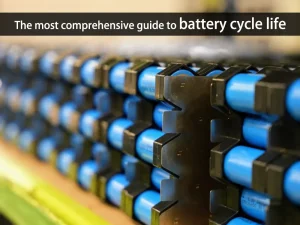
In this comprehensive guide, we will delve into the the battery life cycle, exploring its definition, the factors that influence it, and strategies to optimize it.

The utilization of renewable energy sources like photovoltaics has been rising in recent years. Photovoltaic power generation is highly compatible with daytime electricity loads. This article will introduce top 5 latest photovoltaic energy storage products in China.

As the midstream link of the energy storage industry chain, China top 10 energy storage system integrator are responsible for equipment providers and energy storage system owners.

 +86 – 18925002618





