



The energy storage cold plate has double circuits and single circuits, which correspond to different flow channel layout standards.
The flow channel arrangement of the double circuit should keep the spacing of the flow channels as small as possible while meeting the process conditions, and set up more circulation loops, so that The battery is heated or cooled more evenly and the temperature difference is small.
For single-circuit flow channel arrangement, the spacing between the flow channels should be kept as small as possible while meeting the process conditions, so that the battery can be heated or cooled.
More uniform. All in all, no matter which structural type, if the layout space is satisfied, the double circuit is preferred, because in this way, hot and cold will exist at the same time and the temperature difference will be reduced.
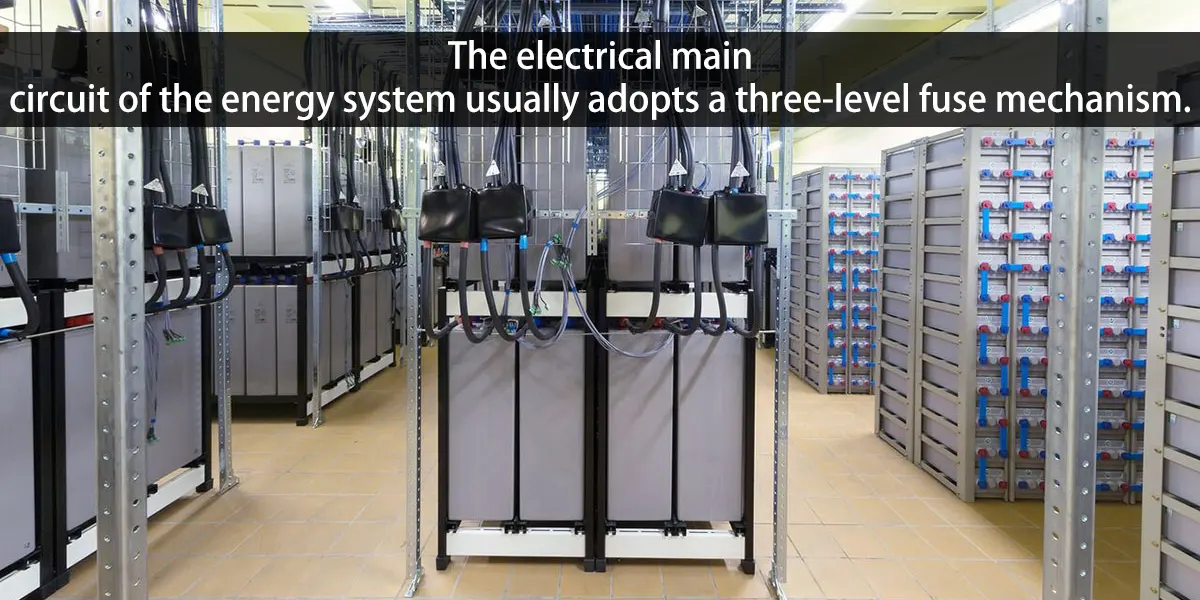
The electrical main circuit of the energy storage system usually adopts a three-level fuse mechanism, that is, battery Pack loop DC fuse, battery cluster loop DC fuse, and PCS AC loop fuse. Hidden risks caused by electrical short-circuit faults are minimized through hierarchical fuses.
Assume that the layout is a design plan for a sheet metal box of a certain model of car. The installation sequence is that the module, thermal pad, cold plate and box are threaded together and fixed with shared bolts. In this way, the cold plate is subject to more stress and requires greater strength.
At the same time, when designing the cold plate, the welding seam position must avoid the severely stressed position and control the flatness of the cold plate (0.8~1 industry processing capacity)
The layout is an aluminum box layout. The module and the cold plate are fixed on the upper and lower parts of the box respectively. The box installation beam is divided into two steps. The module is fixed on the first step and the cold plate is fixed on the second step.
The thermal conductive material is in the middle. Filling, so that the cold plate is only subject to the downward pressure of the thermal pad, while minimizing the weight of the profile cold plate. Here is more imformation about thermal energy storage.

- Active safety design
The active safety of the energy storage system is mainly through the management of battery cells to prevent “burning” before burning. Through internal short circuit diagnosis, cell internal resistance discrete analysis, and cell consistency analysis, the cell status is evaluated in real time, abnormal cells are promptly warned, and the safety of the energy storage system is turned from passive to active.
- Passive safety design
The passive safety of energy storage systems mainly relies on various fire-fighting facilities to promptly extinguish fires caused by thermal runaway of battery cells and prevent deflagration.
By setting up smoke sensors, temperature sensors, combustible gas detection, etc., a hierarchical fire warning and action mechanism can be achieved.
Set pressure relief valves, explosion vents, etc. at the cell, battery Pack, and system levels to prevent the accumulation of flammable gases that could lead to further deflagration.
Generally, when the secondary fire alarm activates the fire protection system, further thermal runaway is prevented by releasing fire gas and a large amount of water. Some manufacturers also add Pack-level fire protection configurations. Can be divided into the following categories:
- Multi-stage electrical fuse design
The electrical main circuit of the energy storage system usually adopts a three-level fuse mechanism, that is, battery Pack loop DC fuse, battery cluster loop DC fuse, and PCS AC loop fuse. Hidden risks caused by electrical short-circuit faults are minimized through graded fuses.
You can clik here to look an the best top 10 energy storage liquid cooling host manufacturers in the world.


 +86 – 18925002618





