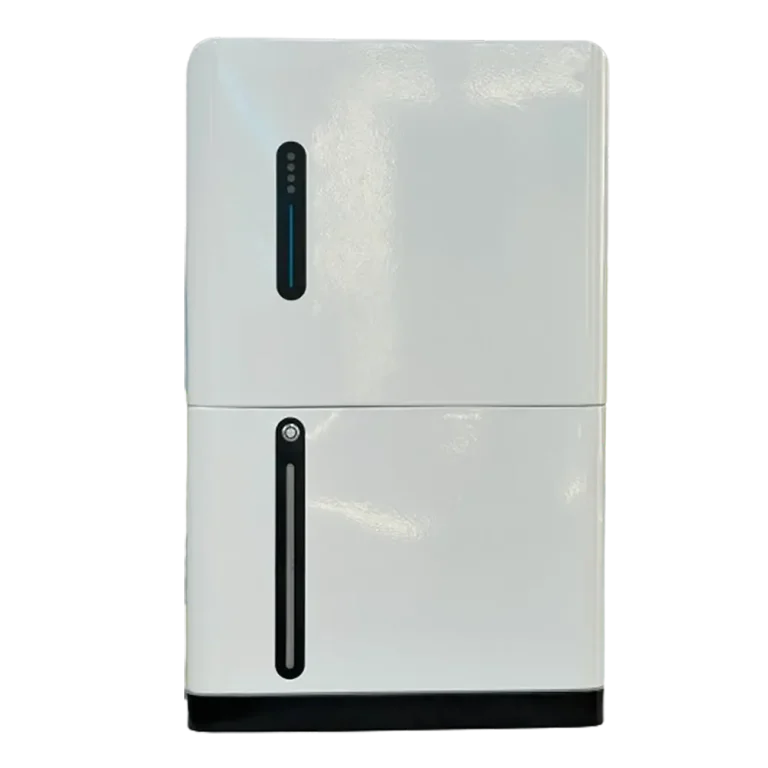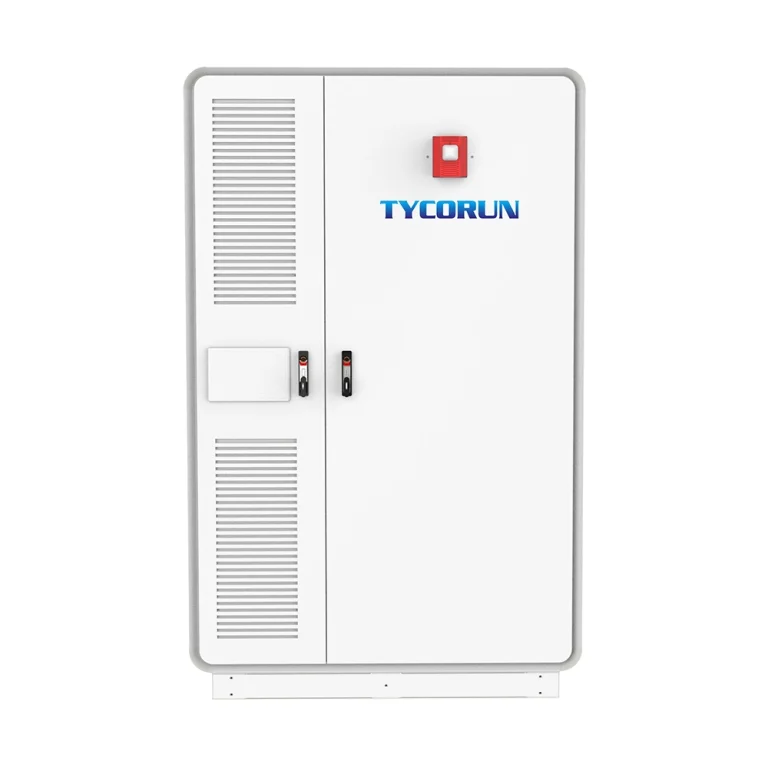
energy storage system

The most comprehensive analysis of the three main types of current knowledge

Comprehensive knowledge about Lithium Polymer Battery
For lines using three-phase reclosing or comprehensive reclosing, in order to prevent the zero-sequence current protection from malfunctioning when oscillation occurs during the three-phase closing process or the non-all-phase operating state of the single-phase reclosing process. A four-stage protection consisting of two first sections is used.
Table of Contents
    Add a header to begin generating the table of contents

    A device that uses the zero-sequence current generated during grounding to activate protection is called zero-sequence current protection. Special zero-sequence current transformers are used on cable lines or lithium-ion battery energy storage systems to achieve ground protection.

    YouTube_play_button_icon_2013–2017.svg (2)(1)

    1. What are positive sequence, negative sequence and zero sequence current?

    The current AC power systems in the world are generally ABC three-phase, and the positive sequence, negative sequence, and zero sequence components of the power system are determined based on the order of the ABC three-phases.

    • Positive sequence: Phase A leads phase B by 120 degrees, phase B leads phase C by 120 degrees, and phase C leads phase A by 120 degrees.
    • Negative sequence: Phase A lags phase B by 120 degrees, phase B lags phase C by 120 degrees, and phase C lags phase A by 120 degrees.
    • Zero sequence: The three phases of ABC are in the same phase, and no phase leads or lags behind.

    During three-phase short circuit fault and normal operation, the system has positive sequence.

    During a single-phase ground fault, the system has positive sequence, negative sequence and zero sequence components.

    When a two-phase short circuit fault occurs, the system has positive sequence and negative sequence components.

    When a two-phase short circuit to ground fault occurs, the system has positive sequence, negative sequence and zero sequence components.

    2.What is negative sequence current?

    When the generator is running normally, the negative sequence current in the system is zero. When asymmetry occurs in the system, a large negative sequence current appears in the system.

    The direction of the rotating magnetic field generated by the negative sequence current is opposite to the direction of motion of the rotor. It cuts the rotor at twice the synchronous speed and induces a frequency doubled current in the rotor. The main part of the frequency doubled current flows along the axial direction on the surface of the rotor.

    This current can reach Extremely large values will cause high temperatures in certain contact parts of the rotor surface, resulting in serious electrical burns. At the same time, local high temperatures may also cause the danger of loosening of the retaining ring; in addition, twice the alternating electromagnetic torque generated by the negative sequence magnetic field, This causes the unit to vibrate at 100HZ, causing metal fatigue and mechanical damage.

    The emergence of positive sequence, negative sequence and zero sequence is to analyze the asymmetry of the system voltage and current, and decompose the asymmetric components of the three phases into symmetric components (positive and negative sequence) and zero sequence components in the same direction.

    As long as it is a three-phase system, the above three components can be decomposed (a bit like the synthesis and decomposition of forces, but in many cases the value of a certain component is zero). For an ideal power system, due to three-phase symmetry, the values of the negative sequence and zero sequence components are both zero (this is why we often say that there are only positive sequence components in the normal state). When a system fault occurs, the three phases become asymmetrical, and negative sequence and zero sequence components with amplitudes can be decomposed.

    The long-term allowable negative sequence current of the steam turbine generator is 6% to 8% of the generator’s rated current; the long-term allowable negative sequence current of the hydroelectric generator is 12% of the generator’s rated current. For overload on the rotor surface caused by asymmetric load, non-full-phase operation and asymmetric short circuit, generators with an A value (a constant for the rotor surface’s ability to withstand negative sequence current) of 50 MW or above and greater than or equal to 10 should be equipped with a set time limit negative sequence. Overload protection. If you are interested in energy storage manufacturers worldwide, please click on bess manufacturing company for more related information.
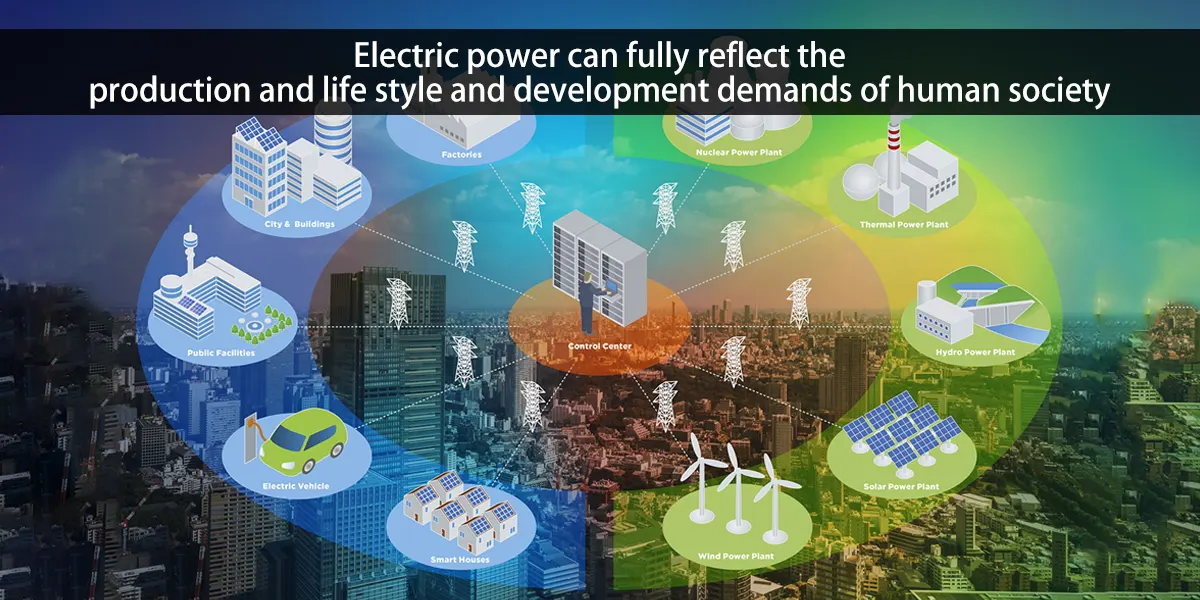
    Electric power can fully reflect the production and life style and development demands of human society

    3. What is zero sequence current?

    In a three-phase four-wire circuit, the phasor sum of the three-phase currents is equal to zero, that is, Ia+Ib+IC=0

    If a current transformer is connected to a three-phase four-wire circuit, the induced current will be zero. When an electric shock or leakage fault occurs in the circuit, a leakage current flows through the circuit.

    At this time, the phasor sum of the three-phase currents passing through the transformer is not equal to zero. The phasor sum is: Ia+Ib+Ic=I (leakage current current)

    In this way, there is an induced voltage in the secondary coil of the transformer. This voltage is added to the electronic amplifier circuit of the detection part and compared with the predetermined operating current value of the protection zone device.

    If it is greater than the operating current, even if the sensitive relay operates, the actuator will fail. brake.

    The transformer connected here is called a zero-sequence current transformer. The phasor sum of the three-phase currents is not equal to zero, and the current generated is the zero-sequence current.

    4. What is zero sequence reactance?

    The zero sequence parameter (impedance) is related to the network structure, especially the wiring method of the transformer and the neutral point grounding method. In general, the zero sequence parameters (impedance) and zero sequence network structure are different from the positive and negative sequence networks.

    For transformers, the zero-sequence reactance is related to its structure (three single-phase transformer groups or three-column transformers), the connection of the windings (Δ or Y) and whether it is grounded or not.

    When one side of the three-phase transformer is connected in a delta or star shape with an ungrounded neutral point, the zero-sequence reactance of the transformer is always infinite from this side. Because no matter how the other side is connected, when a zero-sequence voltage is applied to this side, the zero-sequence current cannot be sent into the transformer.

    Therefore, only when the windings of the transformer are connected in star shape and the neutral point is grounded, the zero sequence reactance is limited (although sometimes it is still very large) when looking at the transformer from the star side.

    For transmission lines, the zero-sequence reactance is related to factors such as the number of loops of parallel lines, the presence or absence of overhead ground wires, and the conductive properties of the ground wires.

    The zero-sequence current is in the same phase in the three-phase line, and the mutual inductance is very large, so the zero-sequence reactance is larger than the positive sequence reactance, and the zero-sequence current will return through the ground and the overhead ground wire, and the overhead ground wire acts as a shield for the three-phase conductors. , so that the zero-sequence flux linkage is reduced, even if the zero-sequence reactance is reduced. Click balcony solar storage system to get more content that interests you.

    When zero-sequence currents in the same direction pass through two three-phase overhead transmission lines erected in parallel, not only the mutual inductance of any two phases of the first circuit and the third phase of the first circuit will produce a magnetizing effect, but also all three phases of the second circuit of the first circuit will have a magnetizing effect.

    The mutual inductance of the third phase also produces a magnetizing effect, and vice versa. This further increases the zero-sequence impedance of this line.

    The technical barrier of intelligent power distribution is high

    5. Two conditions for generating zero sequence current

    Whether it is a longitudinal fault, a transverse fault, or asymmetry between normal and abnormal conditions, as long as there is a zero-sequence voltage generated;

    There is a path for zero sequence current.

    The above two conditions are indispensable. Because without the first one, there is no source; without the second one, we usually discuss the question of “whether there is voltage and there must be current.”

    Zero sequence formula: 3U0=UA+UB+UC

    3I0=IA+IB+IC

    The emergence of positive sequence, negative sequence and zero sequence is to analyze the asymmetry of the system voltage and current, and decompose the asymmetric components of the three phases into symmetric components (positive and negative sequence) and zero sequence components in the same direction.

    As long as it is a three-phase system, the above three components can be decomposed (a bit like the synthesis and decomposition of forces, but in many cases the value of a certain component is zero).

    For an ideal power system, due to three-phase symmetry, the values of the negative sequence and zero sequence components are both zero (this is why we often say that there are only positive sequence components in the normal state).

    When the system fails, the three phases become asymmetrical.

    At this time, the negative sequence and zero sequence component measures with amplitude can be decomposed (sometimes only one of them). Therefore, by detecting these two, it should not be normal. If the component appears, you can know that something is wrong with the system (especially the zero-sequence component when a single phase is grounded).

    • Find the zero sequence component: Add the three vectors and sum them. That is, phase A does not move, and the origin of phase B translates to the top of phase A (arrow). Note that phase B only translates and cannot rotate. Use the same method to move phase C to the top of phase B. At this time, draw a vector from the origin of phase A to the top of phase C (sometimes arrow to arrow). This vector is the sum of the three phase vectors. Finally, take one-third of the amplitude of this vector. This is the amplitude of the zero sequence component, and the direction is the same as this vector.
    • Find the positive sequence component: First do the following processing on the original three-phase vector diagram: phase A does not move, phase B rotates 120 degrees counterclockwise, and phase C rotates 120 degrees clockwise, so a new vector diagram is obtained. Add the three phases of this vector diagram according to the above method and divide it into one-third, thus obtaining the positive sequence A phase. Use the amplitude of the A phase vector to draw the B and C phases with a difference of 120 degrees. This gives us the positive sequence components.
    • Find the negative sequence component: Note that the processing method of the original vector diagram is different from that of finding the positive sequence. Phase A does not move, phase B rotates 120 degrees clockwise, and phase C rotates 120 degrees counterclockwise, so a new vector diagram is obtained. The following method is the same as in the forward sequence.

    Through the above method, we can analyze the general situation of various system faults, such as why the zero sequence protection will operate when a single phase is grounded, but there is basically no zero sequence current when a two-phase short circuit occurs.

    Here let’s talk about the relationship between each component and harmonics. Since the harmonics have a special relationship with the frequency of the fundamental wave, they will show positive sequence, negative sequence and zero sequence characteristics respectively when combined with the fundamental wave.

    But we cannot equate harmonics with these components. From the above, the reason why the fundamental wave should be decomposed into three components is to facilitate the analysis of the system and the identification of the state. If zero sequence occurs, single-phase grounding occurs in many cases. These analyzes are all based on the fundamental wave. It is the superposition of harmonics on the fundamental wave that causes errors in measurement.

    Therefore, harmonics are external interference quantities, and their values are not what we want during analysis, just like the interference of third harmonics on the zero-sequence component. Here is more knowledge about battery performance.

    6.Zero sequence current protection

    When the current loop is disconnected, it may cause protection malfunction. This is a common weakness of generally more sensitive protection and needs to be prevented during operation.

    In terms of the probability of disconnection, it is much smaller than the probability of disconnection of the distance protection voltage circuit. If necessary, the zero-sequence current blocking method of adjacent current transformers can be used to prevent this malfunction.

    Zero-sequence current will also occur when the power system operates symmetrically, such as asymmetric operation caused by the same three-phase parameters of the transformer, two-phase operation during single-phase reclosing, three-phase reclosing and manual closing.

    The three-phase circuit breakers are in different phases. During the busbar switching operation, the circuit breaker and the isolating switch are connected in parallel or the circuit breaker is operating in normal loop. Zero sequence circulation occurs due to the inconsistent three-phase contact resistance of the isolating switch or circuit breaker, and the air drop transformer The unbalanced excitation inrush current generated when the airdrop transformer is located, especially when the busbar where the airdrop transformer is located has a neutral point and the grounded transformer is in operation, unbalanced excitation inrush current and DC components may occur for a long time, which may cause the zero sequence current Protection starts.

    If you want to know more about other mainstream batteries, click on Top 10 high capacity battery cell for information.

    When one of the parallel lines that are geographically close to each other fails, it may cause an induced zero-sequence current in the other line, causing the zero-sequence direction relay on the reverse branching side to malfunction. If this is indeed possible, a negative sequence direction relay can be used instead to prevent misjudgment by the above direction relay.

    Since the AC circuit of the zero-sequence direction relay usually does not have zero-sequence current and zero-sequence voltage, circuit breakage is not easy to detect; when the zero-sequence voltage of the relay is taken from the open triangle side of the voltage transformer, it is not easy to use a more intuitive simulation method to check its direction.

    Therefore, it is easier for the protection to refuse to operate or malfunction due to a power grid fault due to problems with the AC circuit.

    Various aging effects of lead-acid batteries will have different impacts on the battery

    Related posts

    logo+86 – 18925002618
    [email protected]
    Guangpu West Road, Huangpu, Guangzhou, Guangdong, China

    Product

    Video Gallery

    Huntkey automated battery storage workshop process
    Huntkey Grevault participated in Germany ESE exihition with 5KW mobile power bank
    Contact Form Demo
    Scroll to Top