



The energy storage system is also an energy system regulator, which mainly performs the function of peak regulation and frequency regulation. The core role of the energy storage system is to play a regulating role in the energy system to ensure the balance between energy production and consumption, while improving the overall economics of the energy system and reducing energy costs.
The daily functions of the energy storage system can be roughly classified into two categories: peak regulation and frequency regulation.
- Energy storage can match the power generation end and load end through peak shaving and valley filling to realize the peak shaving function.
Peak shaving refers to maintaining the balance of power load and power generation in a long time span, investing more generator sets to meet demand during the peak period of power consumption, and shutting down the corresponding units during the low period of power consumption.
The energy storage system has the characteristics of bi-directional flow of energy. It stores energy during low power consumption and releases electric energy during peak power consumption to realize peak shaving and valley filling.
It can effectively reduce the peak-valley load difference of the power system and match the power generation end in the time span and load side to maintain system stability.
- Energy storage can optimize the frequency modulation accuracy and prolong the service life of the power system.
Power system frequency is the most sensitive operating parameter that can directly reflect system stability, and it must be maintained within a fixed and controllable range in daily operation. When the power generation of the power system is out of balance with the power load, the frequency will change accordingly.
When the power generation is in short supply, the system frequency will decrease, and vice versa. Frequency regulation is to instantly deploy corresponding generator sets according to the power load level to provide appropriate power generation, which puts high demands on the quick response speed of the generator sets.
In addition, energy storage can optimize the frequency modulation function of the power system. On the one hand, the real-time response speed of energy storage can enhance the adjustment speed and accuracy of the power unit. Frequent operation thus prolongs the service life of the overall power system.

- The supporting energy storage on the power generation side directly hits the pain point of new energy power generation, and becomes the only way to clean the energy structure.
New energy power generation is different from traditional thermal power generation, which can manually adjust the power generation efficiency. It is naturally highly dependent on the natural environment, which leads to obvious uncontrollability and instability.
When it is connected to the grid, it will cause a huge current impact to the grid and damage the grid, thus solving the instability. Sex has become the core bottleneck of clean energy development. On the power generation side, energy storage systems are mostly equipped in large centralized power plants to alleviate this technical bottleneck.
On the one hand, the energy storage system can realize “peak shaving and valley filling” by storing the excess electricity that cannot be consumed, and scheduling the discharge time according to the demand, so as to solve the problem of wind abandonment.
On the other hand, the energy storage system can frequently charge and discharge or quickly respond to frequency modulation signals to adjust the short-term output and power of new energy power generation in real time, and relieve the pressure of frequency modulation and peak regulation on the power grid in a short period of time.
- The energy storage on the transmission and distribution side is used as a capacity expansion device or backup device to improve line adjustability and safety.
Energy storage on the transmission and distribution side can expand line capacity and alleviate line congestion in daily applications, and the temporary expansion of energy storage can delay or eliminate the need to replace old lines and reduce costs. At the same time, energy storage equipment can also be used as a backup device in substations to provide backup DC power when the external AC power is interrupted, improving reliability and safety.
- Behind the meter battery storage can effectively utilize the difference in electricity prices and reduce electricity costs.
On the user side, energy storage is mostly used in distributed photovoltaic or wind power installations. Based on the time-of-use electricity price system or the capacity fee system, users generate and store electricity during periods of low electricity prices to meet electricity demand during periods of high electricity prices, thereby reducing overall electricity costs.
In addition, another important application on the user side is the “microgrid”, which integrates distributed power sources, energy storage, and energy conversion devices into a small power generation and distribution system, which is separated from the general power grid to achieve nearby consumption and reduce the impact on the general power grid. impact etc.

From 2022 to 2025, the new demand for global energy storage will be about 630GWh. According to estimates, the global demand for new energy storage on the power generation side, grid side, user side, 5G base stations, and other auxiliary services from 2022 to 2025 will be 190GWh, 34.4GWh, 364.9GWh, 30.3GWh, and 10.4GWh, respectively, totaling about 630GWh.
- Power generation side: Favorable policies accelerate the release of incremental demand, and the new demand will reach 50.6GWh in 2025. The power generation side is mainly based on new energy power generation facilities. We assume that in 2022-2025:
- The new global photovoltaic installed capacity is about 250GW, 330GW, 400GW, and 480GW, of which the centralized type accounts for about 60%, corresponding to 150GW, 198GW, 240GW, and 288GW; the global wind power newly installed capacity is about 98.8GW, 107GW, and 115.9% respectively GW, 133.3GW.
- The penetration rates of energy storage for wind power and photovoltaic power stations are 20%, 30%, 40%, and 60%, respectively.
- The power allocation ratios on the power generation side are 13%, 15%, 17%, and 20%, respectively.
- The energy storage configuration time is 2 hours. It is calculated that the new capacity and energy scale of energy storage on the power generation side will be 6.5GW/12.9GWh in 2022, and 50.6GW/101.1GWh in 2025, and the three-year CAGR of capacity scale will be 98.4%.
- Grid side: The stock on the grid side is parallel to the newly added two wheels, and the newly added demand in 2025 is about 16.3GWh. On the power grid side, ancillary services (i.e. frequency and peak regulation) are the mainstay, and there are stock and incremental markets. As of the end of 2021, the global renewable energy installed capacity market is about 2807GW. We assume that in 2022-2025:
- The annual increment of global renewable energy installed capacity is about 440GW, 573GW, 690GW, and 823GW.
- The penetration rates of stock installed energy storage equipment from 2022 to 2025 are 1.3%, 1.5%, 2.0%, and 3.0%; the penetration rates of incremental installed energy storage equipment are 7%, 9%, 12%, and 15%, respectively.
- The power allocation ratio on the grid side is 3%.
- The energy storage configuration time is 1 hour. It is estimated that the newly added capacity and energy scale of grid-side energy storage will be 3.5GW/3.5GWh in 2022, and 16.3GW/16.3GWh in 2025, with a three-year CAGR of 67.5%.
- User side: High electricity prices continue to drive high growth on the user side, and the new demand in 2025 will be about 147.7GWh. We assume 2022-2025
- The new installed capacity of global distributed photovoltaics is about 100GW, 132GW, 160GW, and 192GW respectively.
- The penetration rates of distributed photovoltaic energy storage equipment are 13%, 20%, 23%, and 27%, respectively. 3) The user side power configuration ratio is 95%.
- The global household energy storage deployment time is generally 2-4 hours, and the average value of 3 hours is used for estimation. It is estimated that the new capacity scale and energy scale of user-side energy storage will be 12.4GW/37.1GWh in 2022, respectively, and 49.2GW/147.7GWh in 2025, and the three-year CAGR of capacity scale will be 58.6%.
- 5G base station: The demand for auxiliary service space is considerable, and the new demand in 2025 is about 15.1GWh. In addition to serving as an emergency power source, the energy storage configured by the 5G base station is also an energy storage station that plays an auxiliary service role and participates in frequency regulation and peak regulation of the power grid. We assume for 2022-2025:
- The number of new 5G base stations in the world is 110, 140, 1.70 and 2.1 million respectively;
- The penetration rates of 5G base stations equipped with energy storage are 18%, 27%, 45%, and 60%, respectively;
- The energy storage power configuration ratio is 100%;
- The energy storage configuration time is increased from 3.5 hours to 4 hours. It is calculated that the newly added capacity and energy scale of 5G base station configuration energy storage will be 0.6GW/2.1GWh in 2022, respectively, and 3.8GW/15.1GWh in 2025, and the three-year CAGR of capacity scale will be 85.3%.

In the long run, the increase in the proportion of global renewable energy power generation will effectively release the vast demand space for energy storage. Taking China as an example, the new demand for energy storage in China will be about 179GWh from 2022 to 2025.
According to estimates, China’s 2022-2025 new demand for energy storage on the power generation side, grid side, user side, 5G base stations, and other ancillary services will be 41.1GWh, 26.2GWh, 77.9GWh, 27.9GWh, and 5.7GWh, totaling about 179GWh.
- Power generation side: In 2025, the new demand will reach 20.3GWh. The power generation side is mainly based on new energy power generation facilities, assuming that in 2022-2025:
- The new installed capacity of photovoltaics is about 80GW, 90GW, 100GW, and 110GW, of which the centralized type accounts for 50%, corresponding to about 40GW, 45GW, 50GW, and 55GW;
- The penetration rates of energy storage configurations are 17%, 21%, 24%, and 30%, respectively.
- The power allocation ratios on the power generation side are 12%, 15%, 18%, and 25%, respectively.
- The energy storage configuration time is 2 hours. Therefore, it is calculated that the new capacity and energy scale of energy storage on the power generation side will be 1.9GW/3.9GWh in 2022, and will reach 10.1GW/20.3GWh in 2025, and the three-year CAGR of capacity scale will be 73.5%.
- Grid side: To meet the demand for power peak regulation and frequency regulation, the new demand in 2025 is about 14.6GWh. On the power grid side, ancillary services (i.e. frequency and peak regulation) are the mainstay, and there are stock and incremental markets. Assuming 2022-2025:
- The incremental power installed capacity is approximately 150 GW, 170 GW, 195 GW, and 220 GW;
- The penetration rates of stock installed energy storage equipment from 2022 to 2025 are 2.2%, 3.5%, 5.5%, and 8.0%; the penetration rates of incremental installed energy storage equipment are 7%, 8%, 12%, and 18%, respectively.
- The power allocation ratio on the grid side is 3%.
- The energy storage configuration time is 1 hour. It is estimated that the newly added capacity and energy scale of grid-side energy storage will be 1.7GW/1.7GWh in 2022, and will reach 14.6GW/14.6GWh in 2025, respectively, and the three-year CAGR of capacity scale will be 102.8%.
- User side: Cost reduction gradually frees up space on the user side, and the new demand in 2025 is about 36.6GWh. The user side mainly considers the popularization of optical storage systems. Assuming 2022-2025:
- The new installed capacity of distributed photovoltaics is about 40 GW, 45 GW, 50 GW, and 55 GW respectively.
- The penetration rates of distributed photovoltaic energy storage equipment are 8%, 16%, 25%, and 37%, respectively.
- The user side power configuration ratio is 90%.
- The energy storage configuration time is 2 hours. In 2022, the new capacity scale and energy scale of user-side energy storage will be 2.9GW/5.8GWh respectively, and in 2025 they will reach 18.3GW/36.6GWh respectively, and the three-year CAGR of capacity scale from 2022 to 2025 will be 85.3%.
- 5G base stations: Compared with 4G base stations, the power consumption has increased significantly, and energy storage backup power has become a must. The new demand in 2025 will be about 13.4GWh. China is currently the largest demand market for 5G base station configuration energy storage. At present, the cumulative installed capacity of 5G base station energy storage in China accounts for about 60% of the world. In 2021, China will add more than 600,000 new 5G base stations. Assuming 2022-2025:
- The number of newly built 5G base stations is 80, 100, 1.2 million, and 1.4 million;
- The penetration rates of energy storage for 5G base stations are 25%, 35%, 60%, and 80% respectively;
- The energy storage power configuration ratio is 100%;
- The energy storage configuration time is increased from 3.5 hours to 4 hours. It is calculated that the newly added capacity and energy scale of 5G base station configuration energy storage will be 0.6GW/2.1GWh in 2022, respectively, and 3.4GW/13.4GWh in 2025, and the three-year CAGR of capacity scale will be 85.7%.
The latest global energy storage market structure is introduced here. If you want to know more about energy storage, you can check it out Top 10 energy storage battery manufacturers in the world.


Temperature has an impact on the performance of the electrochemical energy storage system, such as capacity, safety, and life, so thermal management of the energy storage system is required. This article compares the two major cooling technologies at present: liquid cooling vs air cooling.
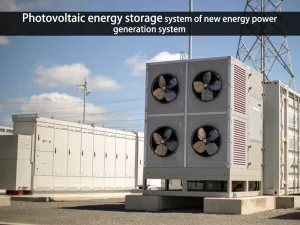
With the continuous increase of energy demand, people’s demand for renewable energy is becoming more and more urgent. Photovoltaic energy storage system, as an emerging energy technology, is gradually receiving widespread attention and application.

This article introduces the new technology of flywheel energy storage, and expounds its definition, technology, characteristics and other aspects.

 +86 – 18925002618





