



From a global market perspective, the household energy storage market demand will see 15.6GWh of newly installed capacity in 2022, a year-on-year increase of 136.4%, more than doubling growth, and is expected to maintain a sustained rapid growth trend in the medium term.
As the global energy transformation strategy continues to advance, there is a time and space mismatch between power supply and demand. The aging of the power grid, local conflicts, extreme weather and other issues have exacerbated conflicts, driving the demand for household energy storage to rise.
At the same time, governments of various countries have provided strong support for household energy storage, which has improved the economics of household energy storage. It is expected that the global installed capacity of household energy storage, with Europe and the United States as the main markets, will continue to maintain an upward trend.

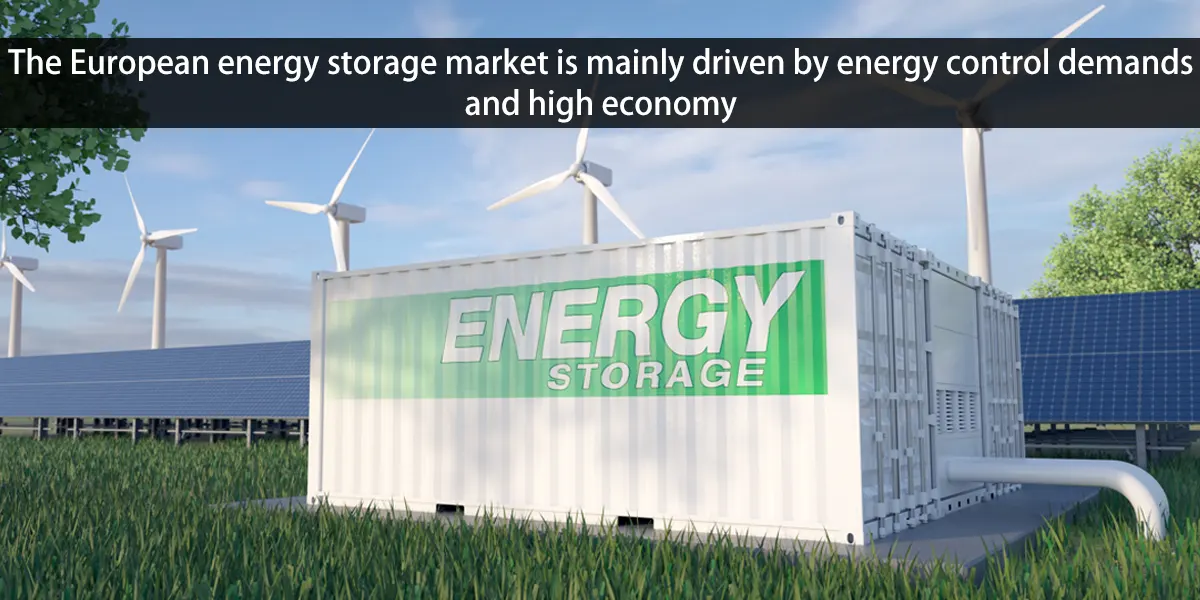
The European energy storage market is mainly driven by the demand for energy self-control and high economics. The European electricity spot market price is determined by energy supply and demand.
In 2022, geopolitical conflicts disrupted European natural gas supply and European electricity prices soared. Amid high electricity prices and unstable supply, the European household energy storage market demand will increase sharply in 2022.
In the European energy storage market, Germany and Italy occupy nearly 70% of the market. According to SolarEurope, the new installed capacity of household storage in Europe in 2021 is 2.29GWh, +106.8% year-on-year, and the cumulative installed capacity is 5.4GWh.
In 2022, the top four new households in Europe are Germany, Italy, the United Kingdom, and Austria. Among them, Germany is still the region with the highest demand for household energy storage in Europe, accounting for 42%. Italy’s proportion of newly installed household storage has increased significantly. than 27%.
Since the beginning of this year, electricity prices in European countries represented by Germany have fallen. The current electricity price has been restored to the 2021 level. The electricity price in Germany, Italy and the UK is around 0.4 euros/kWh, and household storage is still economical.
In addition, the energy crisis has increased the determination of European countries to transform their energy sources. It is expected that the demand for new energy construction and energy storage facilities will continue.
In order to achieve independent and controllable energy and achieve the long-term goal of carbon neutrality, many European countries have adopted various types of policies to encourage the development of household savings. With strong policy leverage, the economics of household savings in Europe has been further amplified.
The EU launched a “REPowerEU” energy plan in May 2022, which proposed increasing the renewable energy share target to 45% in 2030. In the interim agreement in 2023, the final target was set at 42.5%. Under the general framework decided by the European Union to ensure energy security and promote the development of renewable energy storage.
European countries have actively adopted various types of policies such as government subsidies, tax exemptions, and financing support to promote the installation of new energy equipment. Among them, distributed installed capacity is an important component, bringing additional demand for household energy storage. Here are more about home battery backup system.
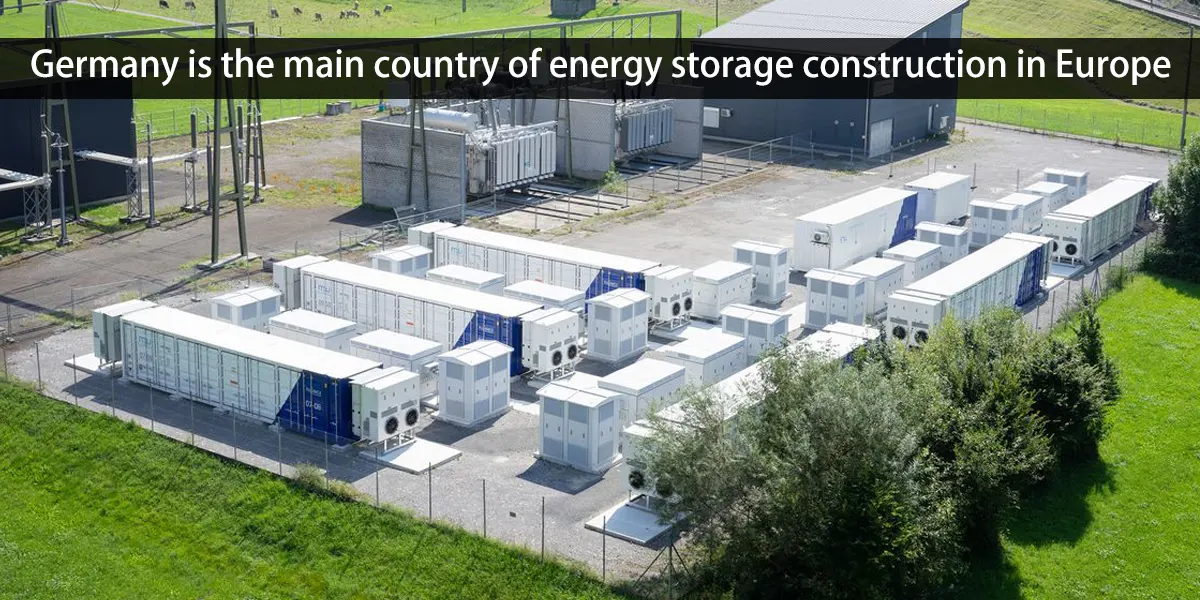
As the main country in energy storage construction in Europe, Germany’s support for household savings originated early, using a combination of financing, taxation, subsidies and other policies.
In 2023, as natural gas prices fall, residential electricity prices fall, and European dealers continue to destock, dragging down performance. The market is further worried about the actual household energy storage market demand in Europe.
However, the actual installation rhythm of the European market in 2023 still shows a strong trend. According to statistics from ISEA&RWTH Aachen University, the installed capacity of household storage in Germany from January to August 2023 was 3.04GWh, +158.0% year-on-year.
According to ANIE statistics, in the first quarter of 2023, Italy’s energy storage installed capacity was 1.09GWh, +296.0% year-on-year. We believe that the slowdown in shipments in 2023 is mainly due to the temporary impact of destocking.
The current return on energy storage is still relatively high. Considering that compared with 2021, the current product preparations are more diversified, the cost of raw materials such as batteries has begun to decline, and user education is more sufficient, the European household energy storage market demand still has high growth momentum.
The European energy storage market is mainly driven by the demand for energy self-control and high economics. It is expected that shipments will return to rapid growth in 2024, and there is still a lot of room for improvement in the penetration rate of household storage in Europe.
The aging of the U.S. power grid in recent years has brought about demand for distribution and storage, and household photovoltaic storage has become the second source of electricity for households.
The underlying driving factor for the demand for household energy storage in the United States is that the US power grid is aging and power outages are prone to occur during severe weather.
At the same time, the latest ITC and NEM3.0 policies in the United States are increasing the economics of household storage. In addition, the U.S. housing structure is mainly single-family, with ample roof area, which gives enough space to release the demand for household energy storage market, and the growth of household energy storage can be expected in the future.
According to reports from CNBC and the Energy Bureau, most of the power grid in the United States was built in the 1960s and 1970s, and more than 70% of the transmission system is more than 25 years old.
When operating at high load or when the external environment is stressed, the power grid is prone to short circuits and other conditions. , causing a power outage.
According to EIA statistics, each user in the United States will experience power outages for more than 7 hours in 2021, of which power outages due to weather conditions last for more than 5 hours.
According to DOE statistics, there will be 390 power outages in the United States in 2022 and 167 power outages in the first half of 2023. According to NOAA, as of the end of August 2023, there have been 23 severe meteorological disasters in the United States this year that caused a single impact of more than US$1 billion, exceeding the record set in the whole of 2020 (22 incidents).
Frequent power outages due to aging power grids and weather conditions have led American household users to seek the protection of photovoltaic and energy storage facilities.
On August 16, 2022, Biden signed the Inflation Reduction Act (IRA) worth a total of US$750 billion, which will be officially implemented in 2023. IRA extends ITC time limit to 2035.
For the first time, independent energy storage is included in the scope of tax deductions in IRA, and it is clarified that independent energy storage greater than 3kWh can also apply for ITC deductions.
The IRA subsidy time and scope for ITC have been relaxed, which has reduced early concerns about subsidy fading. The initial construction cost of energy storage in the United States has dropped significantly, supporting market demand for household energy storage. Here are more about Top 10 household energy storage companies in Germany.



 +86 – 18925002618





