



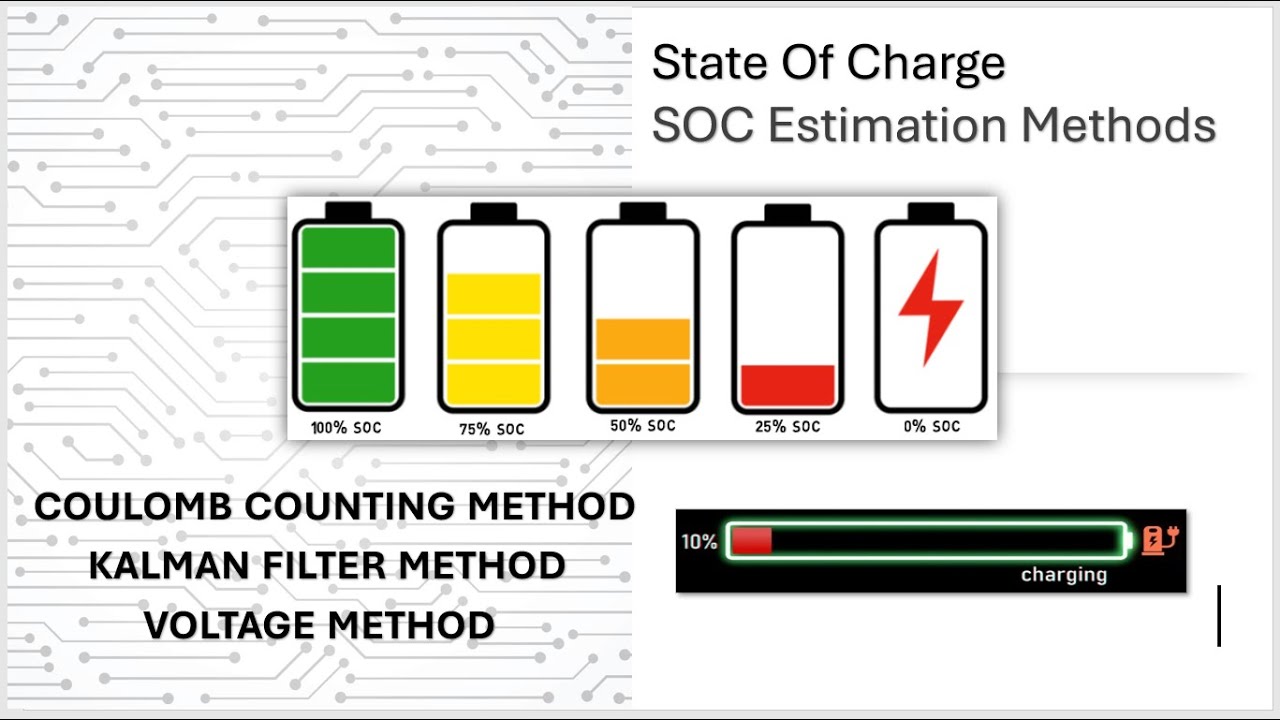

What is Battery State of Charge (SOC)
Battery State of Charge (SOC) is a parameter that indicates the energy remaining in the battery. Usually, it is shown through a percentage where 100% means the battery is fully charged and 0% means the battery is completely discharged.

For vehicles, battery SOC has a role as a determinant of whether the battery is still sufficient to continue traveling or it is time to stop and charge. In other words, battery SOC provides a real-time overview of the battery condition so that it can help prevent running out of power at an unwanted moment and also support battery maintenance for a longer life.
Why Battery State of Charge is Important
Understanding why battery SOC is so important is the right step for users. This is because knowing battery SOC is not just looking at the percentage number on the screen. However, SOC provides important information about the remaining energy capacity and how long the device or vehicle can be used before requiring charging.

In addition, conducting proper SOC monitoring can help users to maintain battery life cycle. This is because SOC can help users to avoid overcharging or discharging the battery, which can accelerate degradation. In other words, SoC provides a real-time view of the battery’s charge status, helping prevent unexpected power loss and supporting maintenance practices that extend its lifespan.
You might also find our article on battery self discharge
How to Measure Battery State of Charge
Measuring Battery State of Charge (SOC) is like checking how much fuel is left in the vehicle tank. The difference is that, instead of fuel, what is being measured is the amount of stored electrical energy in the battery. There are several ways to do this, ranging from simple to sophisticated.

1. Measuring Voltage When the Battery is at Rest
This method measures the battery voltage when the battery is not being used or charged. This ensures a stable and accurate voltage reading by avoiding transient effects from charging or discharging. For example, in many lithium-ion batteries, a voltage of around 4.2 V corresponds to 100% SoC, while about 3.7 V corresponds to roughly 50%. These values can vary depending on battery chemistry and temperature
2. Calculating Incoming and Outgoing Current
This method calculates the amount of electric current going into and out of the battery over a certain period to estimate how much energy is left. In this way, the system records how much energy is used and recharged in real-time.
For example, if a battery is charged with a current of 2 amperes for an hour, then the incoming capacity is 2 ampere-hours (Ah). If the battery is then used to discharge a current of 1 ampere for two hours, the energy discharged is 2 Ah, so the battery capacity is reduced according to the energy used.
3. Measuring the Internal Characteristics of a Battery
This method measures the electrical resistance inside the battery. This is done to estimate how much energy is left. By observing the change in resistance, the system can determine the condition of the battery more accurately than simply measuring the voltage.
4. Combining Several Methods at Once
Then the last method is to combine several measurement methods, such as measurements using voltage, current, and internal resistance simultaneously. Therefore, in this way, the system can provide more accurate and stable SOC estimates under various usage conditions.
Factors Affecting SOC in Battery
After learning how to measure the battery state of charge (SoC), it is important to understand the factors that influence the accuracy and reliability of SoC estimation.

1. Temperature
First, extreme temperatures play a major role in battery performance. This is because temperatures that are too hot or too cold can affect the chemical reactions in the battery, so the SOC reading may fluctuate or the battery capacity may temporarily decrease.
2. Battery Age and Condition
Secondly, as the battery ages, its ability to store energy will gradually decrease. This will impact the accuracy of the Battery SOC reading as well as the overall performance of the device using the battery.
3. Charging and Discharging Speed
Third, the speed at which the battery is charged or discharged also affects the accuracy of the Battery SOC. This is because too fast charging or heavy use can cause temporary changes in voltage and current, making SOC estimation more difficult.
Explore more about this in our dedicated post on battery life cycle
4. Battery Type and Technology
Fourth, SoC estimation is influenced by the battery type and technology. This is because each type of battery such as lithium-ion, lead-acid, or nickel-metal hydride has different characteristics that can affect how SOC is measured.
5. Measurement and Calibration Methods
Fifth, the tools used to measure Battery SOC must be properly adjusted so that the results are accurate. If the tool is not properly adjusted, the readings that come out can be off.
Common Misunderstandings about SOC of a Battery
Many people often misunderstand what Battery State of Charge (SOC) is and how it works. These misunderstandings sometimes lead users to make the wrong choices in caring for or using their batteries, which can result in reduced performance and shorter battery life

Some common misconceptions about SOC include:
1. SOC is a measure of battery health
Many people often think that SOC is a parameter that indicates the overall health of a battery. In reality, SoC simply indicates the current charge level of the battery.
2. SOC numbers are always accurate and precise
The percentage shown by the battery SOC is not always accurate. This is because SOC is merely an estimate influenced by many factors, so it can sometimes differ from the actual condition.
3. Battery SOC is the same as battery capacity
Another common mistake made by the general public is assuming that battery SOC is the same as battery capacity. In reality, SOC only indicates how much power is left from the total capacity at that moment. Meanwhile, battery capacity is the total amount of power that can be stored.
4. Battery SOC can be relied upon while the battery is in use or charging
Another mistake is reading the SOC while the battery is in use or charging. This is less accurate because the results change rapidly and are inconsistent.
Tips for Managing Battery State of Charge
Maintaining the Battery State of Charge (SOC) is important so that the battery you use can last longer and not easily get damaged. Here are some easy ways you can try to take good care of your battery:

1. Never let the battery get too low.
Try to charge it before it is completely drained, because total discharge can shorten the battery’s lifespan.
2. Avoid overcharging
While most modern devices have built-in protection, try not to leave the battery charging for too long after it is fully charged.
Learn more in our article on battery charging
3. Pay attention to temperature during charging and use
Extreme temperatures, both high and low—can degrade the battery and reduce SoC measurement accuracy by affecting electrochemical stability. Try to charge and use the battery at normal temperatures.
4. Use compatible chargers and cables
Incompatible chargers or cables can cause unstable charging and damage the battery.
5. Perform SOC calibration regularly
Calibration helps the device measure SOC more accurately, typically done by charging the battery to full capacity and then discharging it nearly to empty on a regular basis.
Conclusion
Battery State of Charge (SOC) is an indicator that shows the remaining power available in your battery. By understanding SOC, you will know when is the best time to recharge your battery so that it does not suddenly die when you need it.
There are several ways to measure SOC, from checking the battery voltage when the engine or device is inactive, to using a combination of several measurement methods at once. However, SOC measurements can be influenced by various factors, such as ambient temperature, battery condition and age, as well as charging and usage habits.
Therefore, SOC readings are not always perfect or 100% accurate. Nevertheless, SOC remains an important guide that helps maintain battery performance and extend its lifespan when used correctly.
FAQS
Usually, the ideal SOC is in the range of 80-100%. This means that the battery is sufficiently charged and ready for use. If it is often below 20%, the battery can quickly drop and its lifespan will be shorter.
If the battery shows a voltage of around 12.4 volts, this means the SOC is approximately 50%. This indicates the battery is still half full, but it should be monitored and prepared for recharging.
The simplest method is to measure the battery voltage when it is not in use. Additionally, there are specialized tools and other methods that can provide a more accurate SOC estimate.



 +86 – 18925002618





