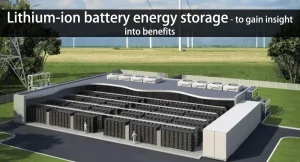
In global energy storage, UPS energy storage is an important energy storage method that cannot be ignored.
UPS systems are increasingly essential to ensure that crucial tools and devices work well in this modern digital age. Businesses rely on UPS systems from data centers to hospitals and manufacturing plants to provide backup power during outages or fluctuations in the main power supply.
In this article, we’ll discuss the importance of UPS energy storage and how it can significantly enhance power backup capabilities. Exploring the features and benefits of UPS energy storage will help you understand how these products can provide you peace of mind in the face of power outages.
What is ups energy storage?
UPS energy storage is a system that stores energy and supplies backup power to vital electric devices in situations where the primary power source becomes unstable or fails entirely. UPS is an abbreviation for “uninterruptible power supply,” which describes a power source that maintains its output even when there is a power failure.
When it comes to storing energy and delivering it to the load, UPS energy storage makes use of various batteries, including lead-acid, lithium-ion, nickel-zinc and so on. The energy storage provided by a UPS may shield connected equipment from malfunctions that might otherwise result in data corruption or downtime.
What types of ups energy storage are there?
The three most common configurations are On-line, line-interactive, and standby UPS energy storage systems. Choosing one over another depends on the user’s power requirements and financial constraints. Here’s a quick look at each type:
● On-line UPS energy storage: By taking in alternating current (AC), converting it to direct current (DC), and then reversing it back to AC to power the protected devices, on-line UPS employs a “double conversion” technique.
Power issues such as voltage spikes, sags, noise, frequency instability, and harmonic distortion may be significantly mitigated using an on-line UPS. On the downside, on-line UPS uses more power, produces more heat, and is more expensive than offline alternatives.
● Line-interactive UPS energy storage: When the power goes off, a line-interactive UPS keeps the inverter connected and switches the battery’s DC flow from charging to providing. This implies that power conditioning and regulation only take place when the input power is outside a certain threshold.
Power quality issues like voltage spikes and sags are somewhat manageable with the help of a line-interactive UPS. However, when transitioning to battery mode, line-interactive UPS may add some switching time and is unable to fix frequency instability or harmonic distortion.
● Standby UPS energy storage: In a standby UPS, often known as an offline or battery backup, the input power is used to power the load directly, and the backup power circuitry is only activated if the utility power fails or varies above a certain threshold.
This implies that unless there is a major power outage or issue, electricity is not conditioned or controlled in any way. A standby uninterruptible power supply (UPS) can shield your equipment against temporary power outages and voltage spikes.
What is the structure of the ups battery? how to connect it in series and parallel?
The UPS lithium battery typically consists of one or more lithium-ion cells, a protection circuit, and a battery management system. The cells are connected in series or parallel to provide the desired voltage and capacity. The protection circuitry helps prevent overcharging, over-discharging, and short circuits.
The battery management system monitors the cells and ensures they operate within safe parameters.
When batteries are connected in series, one battery’s positive terminal is connected to another battery’s negative terminal. The capacity of the battery system remains the same, but the overall voltage increases.
Connecting two 12V batteries with 100Ah capacity in series yields a total voltage of 24V and maintains the original 100Ah capacity. Batteries connected in parallel have their positive and negative terminals connected to one another.
The voltage remains the same, but the overall capacity of the battery system increases. In this case, the parallel connection of two 12V batteries with 100Ah capacities yields a total voltage of 12V and a total capacity of 200Ah.
What are the benefits and applications of ups energy storage?
● Resiliency: Devices are protected against damage, data loss, and downtime due to power issues such as voltage spikes, sags, noise, frequency instability, and harmonic distortion thanks to the energy storage provided by an uninterruptible power supply (UPS).
In the case of a blackout or other grid failure, emergency services like hospitals, data centers, and utilities can rely on UPS energy storage to keep the lights on.
● Cost savings: UPS energy storage may lower facility operational expenses by managing power usage and quality. Power supply units with energy storage, such as batteries, may reduce peak load and power costs by releasing stored energy at peak demand.
Modern technologies like lithium-ion batteries can be used for UPS energy storage, extending battery life and lowering maintenance costs.
● Renewable integration: Since renewable energy sources like solar and wind are intermittent and variable, UPS energy storage may facilitate the switch to these cleaner options. For instance, UPS energy storage may increase the penetration of renewable energy and decrease dependency on fossil fuels by storing surplus renewable energy when it is available and delivering it when it is required.
By responding rapidly and flexibly to grid signals, UPS energy storage can take part in grid functions like frequency management and demand response, therefore generating market money.
● Additional grid benefits: UPS energy storage helps the grid run more smoothly and reliably by offering ancillary services like voltage support and reactive power adjustment.
In order to keep the voltage and power factor stable, UPS energy storage may inject or absorb reactive power as needed. Furthermore, UPS energy storage may improve power quality by mitigating nonlinear load harmonics and distortions.
Compare ups lithium batteries and lead-acid batteries
Lithium and lead-acid batteries are two standard battery chemistries utilized in UPS systems. Depending on the user’s power requirements and budget, UPS lithium and lead-acid batteries both have their benefits and disadvantages.
One of the most notable distinctions between these two UPS batteries is their battery capacity. UPS lithium batteries have nearly double the power storage capacity of lead-acid batteries of the same size; thus, lithium can provide longer backup time in a more compact space.
When compared to lead-acid batteries, UPS lithium batteries charge much more quickly. Lithium batteries, for instance, can be ultimately charged in a matter of hours, whereas lead-acid batteries may need a whole day. As a result, they will be better prepared for the next power outage.
Another obvious distinction between these two UPS batteries is that UPS lithium batteries have a longer expected lifespan than lead-acid alternatives.
Some lithium batteries, for instance, have a lifespan that is 10 times longer than that of lead-acid batteries after being charged and discharged. This makes you spend less money on repairs and replacements of a UPS lithium battery as compared to how much you’ll spend on lead-acid.
How much does ups energy storage cost?
The cost of UPS energy storage depends on the type, size, and configuration of the system. Some online sources state that the typical rate for UPS energy storage can range from $100 to $1,000 per kWh. This price, however, might change considerably based on the technology in question, its intended use, and current market circumstances.
Regarding performance metrics like power density, energy density, cycle life, efficiency, and maintenance needs, various energy storage systems occupy a wide spectrum. For instance, compared to lead-acid batteries, lithium-ion batteries offer a better power output and energy density but have a higher purchase price. If you are interested in learning about energy storage batteries, you can click our top 10 energy storage battery manufacturers in the world to learn more.
Parameters to consider when purchasing a ups
Not every UPS is the same. When shopping for a UPS, it’s important to think about the following factors:
Equipment
The first factor to think about is the devices that will be connected to the UPS. It’s also important to know the combined power needs of electric devices and the voltage they can handle. This can help you determine the capacity and size of the UPS required to power and hold devices during an outage.
Backup Time
The second variable to consider is the amount of time you want the UPS to offer backup power in case of a blackout. The UPS’s backup time is contingent on many factors, including the load power and efficiency of devices, as well as the UPS’s battery type and capacity. The backup time is proportional to the battery capacity or the load power, whichever is greater.
Topology
The next variable to consider is system’s layout and the kind of backup power supply (UPS) you’ll require. A standard UPS energy storage may be either standby, line-interactive, or double-conversion. Choosing one over another depends on several factors, including the quality and consistency of the primary power supply.
Environment
The location of the UPS energy storage is another parameter to keep in check. It would be best to consider factors such as temperature, humidity, ventilation, dust, noise, and space. These factors may impact the efficiency and longevity of the UPS and its battery.
Cost
Another parameter you should consider is how much money you will spend on the UPS energy storage system. As said earlier, the price of UPS energy storage may vary widely based on its technology, size, configuration, features, warranty, and servicing.
What are the safety considerations for ups energy storage?
UPS energy storage systems can be an important component of a reliable and efficient power system. However, it is important to consider safety precautions when designing, installing, and operating these systems. Some key safety considerations for UPS energy storage include:
● Electric shock: The UPS system might also include potentially high-voltage elements or components. UPS energy storage systems should only be installed, serviced, and repaired by well-trained and certified electricians.
● Fire and explosion: UPS energy storage may produce heat, sparks, or flammable gases during normal operation or when there’s a malfunction, which poses a fire and explosion hazard.
To mitigate these safety risks, it is important to follow proper installation and maintenance procedures, including ensuring proper ventilation and temperature control, using protective equipment when handling batteries, and implementing appropriate fire detection and suppression systems.
Regular testing and inspection can also help identify and address potential safety issues before they become emergencies.
Conclusion
UPS energy storage is a system that can enhance power backup for various applications and environments.
In addition to lowering operational costs by optimizing power consumption and quality, facilitating the transition to renewable energy sources by offsetting these sources’ intermittent and variable nature, and enhancing grid reliability and stability by providing ancillary services, UPS energy storage is a helpful tool.


+86 – 18925002618