Have you ever wondered how to safely and effectively store energy in industrial settings for later use? If this is the case, you may be curious about industrial storage batteries used in several applications.
Industrial storage batteries have been designed to power massive machines or act as backup power. This article aims to explain industrial storage batteries, how they function, and why they are the ideal choice for storing energy in industrial settings.
What is an industrial storage battery?
An industrial storage battery is a type of rechargeable battery that is designed for industrial uses. Note that industrial storage batteries are not the same as the portable batteries used in devices like cell phones, laptops, and electric cars. Industrial batteries can meet the power support in specific scenarios through reasonable battery energy storage system design.
Depending on your load’s power and energy requirements, industrial storage batteries may have varying sizes and weights. These batteries are very helpful in keeping the supply and demand of power in equilibrium since they can store and release enormous quantities of energy quickly and efficiently.
Industrial storage batteries combined with wind and solar energy can provide a dependable and eco-friendly power source.
How do industrial storage batteries compare to traditional fossil fuels?
Industrial storage batteries do not contribute to pollution or global warming as traditional fossil fuels do when used for energy. Industrial storage batteries are advantageous over fossil fuels because they speed the transition to a low-carbon economy.
By controlling energy production and consumption with the aid of these batteries, we can cut down on our reliance on fossil fuels. This has a favorable effect on the environment since it improves the electrical grid’s dependability and efficiency.
However, industrial storage batteries have a higher upfront cost and need more materials and energy during production compared to fossil fuels.
Still, using industrial storage batteries often reduces maintenance costs for industrial facilities and raises the profitability of operations. This is done so that facilities may have reliable, inexpensive electricity for their day-to-day operations after an initial high investment cost.
Unlike fossil fuels, industrial storage energy sources often have a limited lifespan and degrade over time, losing capacity and performance. Environmental and societal impacts are felt throughout the mining and processing of their raw materials.
Despite their shortcomings, industrial storage batteries provide a possible substitute for fossil fuels. This can help you minimize greenhouse gas emissions and promote renewable energy development.
To make these batteries more sustainable and competitive, experts are concentrating on improving battery capacity, durability, safety, and recyclability via research and innovation.
Types of industrial storage batteries
There are different types of industrial storage batteries, depending on the technology and chemistry used. Some of the most common types are:
Lead-acid batteries: Lead-acid batteries are the most common batteries that have been used in industrial settings. Their biggest feature is that they are cheap.
They may be sealed or left vented; sealed batteries are regulated by a valve, while vented batteries require you to refill them periodically. Due to the low energy density and the frequent need for replacement, this battery has gradually become less and less popular.
Nickel-cadmium batteries: Another type of industrial battery is the nickel-cadmium battery. The electrolyte is potassium hydroxide, while the active ingredients are nickel hydroxide and cadmium. The battery is more adaptable to the low temperature environment. But they come at a higher cost compared to previous battery types.
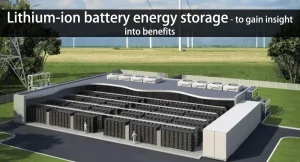
Lithium-ion batteries: The most advanced and modern industrial batteries are lithium-ion ones. They pack a lot of power into a small package, work efficiently, and can be charged quickly. Their electrolytes are organic solvents, and their active ingredients are a variety of lithium and metal alloys.
They are protected against overcharging or discharging using a built-in protection circuit. Lithium-ion batteries are currently the most expensive among all batteries in terms of initial cost but often have the most reasonable price when considering maintenance and other miscellaneous.
What's the best industrial storage battery?
One of the best industrial storage batteries is the lithium-ion battery due to its several benefits over its competitors. The lithium-ion battery is able to store a large amount of energy despite its compact size and lightweight due to its high energy density.
Its great efficiency allows it to effectively transform raw energy into usable electricity while simultaneously minimizing waste. Fast battery charging rates are a common feature of lithium-ion batteries, allowing them to be rapidly recharged and ready for use again.
Many industrial machines and power systems rely on lithium-ion batteries for their operation. These batteries have several advantages, including helping to lower pollutants, strengthening sustainable energy generation, strengthening the reliability of the power system, and decreasing operational costs.
Parameter reference for industrial batteries
The parameter reference for industrial batteries is a set of specifications that describe the characteristics and performance of different types of batteries used for industrial applications.
The following is the parameter reference of Grevault 173kWh industrial and commercial energy storage batteries:
| Specification | Parameter |
|---|---|
| Nominal Voltage | 656.6V |
| Rated Capacity | 260AH |
| Rated Energy | 173KWH |
| Internal Impedance | ≤100mΩ |
| Series-parallel connection | 2P208S |
| Standard charge | 52A |
| Standard discharge | 52A |
| Max Charging Current | 150A |
| Max continuous Discharging current | 150A |
| Upper limit charging voltage | 730V |
| Discharge Cut-off voltage | 580V |
Applications of industrial storage batteries
● Renewable energy systems: Integrating industrial storage batteries with renewable energy sources like wind and solar guarantees a constant and clean electricity supply in any weather condition.
They are also employed to aid the power system’s efficiency and stability by balancing the grid’s supply and demand for energy.
● Backup power sources: Critical loads, such as those found in hospitals, data centers, and telecommunications facilities, can benefit from using industrial storage batteries as emergency backup power supplies.
● Heavy machinery: Forklifts, cranes, and mining equipment are heavy-duty machines that industrial storage batteries may power. They have the potential for great power production, extensive cycle life.
● Electric vehicles: Buses, lorries, and trains are all examples of electric vehicles that industrial storage batteries can power. They have the potential to provide a mode of transportation that is both environmentally friendly and functional.
● Microgrids: Microgrids are small-scale power networks that may function autonomously or in parallel with the main grid and can be formed using industrial storage batteries. Rural communities and islands are cut off from the grid may all benefit from these systems.
● Smart grids: Smart grids, intelligent power networks that employ digital technology to monitor and regulate energy flow, are made possible by industrial storage batteries.
Distributed energy resources, such as solar panels on rooftops, electric cars, and smart appliances, can be more easily integrated with their help. They may minimize peak demand and traffic congestion in addition to improving the power system’s energy efficiency and quality.
What is the difference between industrial batteries and household one?
There are certain distinctions between the design, performance, and use of industrial and residential batteries, even though they can both store and supply electrical energy.
Industrial batteries often power anything from large equipment to renewable energy systems and even emergency backup generators. The household one is more suitable for general consumer electronics and household devices that require less power.
Depending on the energy and power needs of the load, industrial batteries may be of varying sizes and weights. Household batteries are often more compact and lighter since they must fit in portable devices.
Large quantities of energy can be stored and released rapidly and effectively by industrial batteries, which helps maintain a stable power supply and demand. Domestic batteries take longer to charge and provide less power than their commercial counterparts.
What factors affect the performance of industrial storage batteries?
● Technology and chemistry: Industrial batteries come in various technologies and chemical compositions, including lead-acid, nickel-cadmium, lithium-ion, and flow batteries.
Each type has its own advantages and disadvantages when it comes to cost, capacity, lifespan, safety, and environmental impact. These factors also heavily impact the performance of your batteries since they are built differently and have different attributes.
● Temperature: Both the environment and battery temperature have an effect on battery life and performance. Battery performance, efficiency, and life duration are all negatively impacted by extreme heat or cold. However, not all batteries are equally resistant to temperature swings.
● State of charge: The proportion of the battery’s total capacity that may be used at any one moment is referred to as the battery’s state of charge (SOC). The battery’s power output, voltage, and internal resistance are all impacted by the SOC.
● Depth of discharge: The depth of discharge (DOD) is the percentage of the battery’s capacity used during a discharge cycle. The battery’s cycle life, efficiency, and self-discharge rate are all impacted by the DOD. The depth of discharge (DOD) a given battery can take varies based on its actual use.
● Charging and discharging rate: The charging and discharging rate is the amount of current that goes into or out of the battery during a charge or discharge cycle. This determines how quickly the battery can be charged or discharged. The capacity of the battery, as well as its efficiency and the amount of heat it produces, are all influenced by the rate.
Best industrial energy storage systems
The Grevault 173 KWH C&I energy storage system is a highly efficient and reliable energy storage solution that is designed specifically for commercial and industrial use. It comes with a host of advanced features that make it an ideal choice for businesses looking to optimize their energy consumption and reduce their cost.
One of the key features of this energy storage system is its high charge/discharge efficiency, which ensures that the maximum amount of energy can be stored and released from the system with minimal loss. This makes it an ideal choice for businesses that are looking to reduce their energy costs and improve their overall efficiency.
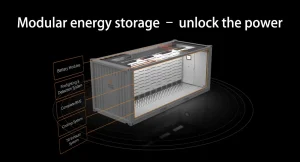
The system also comes with an advanced thermal management system, which helps to regulate the temperature of the battery and ensure that it operates within its optimal range. This not only improves the overall performance of the system, but also helps to extend the lifespan of the battery.

Another notable feature of the 173 KWH C&I energy storage system is its LiFeP04 battery, which is known for its reliability and energy density. This type of battery is ideal for businesses that need a high level of performance and durability from their energy storage solution.
In addition to its advanced features, the system also comes with a modular design that allows for quick delivery and easy installation. It has a small footprint that makes it easy to maintain, and it can be easily expanded to a MW-level system if needed.
Overall, the 173 KWH C&I energy storage system is a highly efficient, reliable, and flexible energy storage solution. If you have a need for industrial energy storage system, please contact us, we will have professionals to customize energy storage solutions for your actual needs.
Conclusion
Industrial storage batteries are purpose-built solutions designed to meet the unique demands of industrial energy storage. Their ability to provide a consistent power supply makes them essential for industries that rely on uninterrupted operations and efficient energy management.
Advanced chemistries like lithium-ion or nickel-based technologies help enhance energy density, cycle life, charging speed, and efficiency in industrial storage batteries.
FAQs
Industrial storage batteries can be utilized in cold areas, but their performance may be compromised depending on the battery's quality and model. Certain batteries' capacity, efficiency, and longevity are more stable when exposed to cold temperatures. However, low temperatures may decrease a battery's capacity, increase internal resistance, and diminish its cycle life.
While it is true that you can use industrial storage batteries for residential purposes, they may not be the most practical solution for most families. This is because large-scale, high-demand industrial applications are tailor-made for industrial storage batteries.
Some of the most common safety concerns with industrial storage batteries are fire and explosion, electric shock, and chemical exposure. Overcharging, over-discharging, short-circuiting, damaging, or extreme temperatures may cause industrial storage batteries to explode.


+86 – 18925002618