



According to the analysis, the investment in electrochemical energy storage will exceed US$5 billion in 2022, a year-on-year increase of nearly three times. The global electrochemical energy storage market is expected to reach $120 billion to $150 billion by 2030. But at present, the energy storage market is still a fragmented situation.
Participating companies want to quickly know where the market opportunities are and how to compete and win market share. The content compiled below will help the players in the electrochemical energy storage market to formulate their corresponding strategies.

Electrochemical energy storage deployments are already underway on a large scale. A US energy company is developing an electrochemical energy storage project with an eventual capacity of up to 6GWh. Another US company with commercial interests inside and outside of energy has surpassed this figure, with electrochemical energy storage deployments reaching 6.5GWh by 2022.
Much of the money now pouring into electrochemical energy storage is being spent on services that increase the flexibility of energy providers, for example through steadfast frequency response. In the longer term, the growth of battery storage will come more from the construction of solar parks and wind farms, which require batteries for their short-term storage needs.
The revenue model for FTM (generation-side) utility-scale energy storage depends largely on the state of the region the provider is entering. Most utility-scale battery storage players pursue a revenue stacking strategy, pooling revenue from various sources. They may participate in ancillary services, arbitrage and capacity auctions. For example, many electrochemical energy storage installations in the UK currently revolve around ancillary services such as frequency control.
Italian electrochemical energy storage players have made a breakthrough by winning a renewables-focused capacity auction in the country. Germany’s opportunity revolves more around avoiding costly grid upgrades.
Electrochemical energy storage players gaining traction in the FTM utility space have understood the value of responding to states and their regulations individually versus using a single strategy.

- Industrial and Commercial Energy Storage
Commercial and industrial (C&I, industrial energy storage and commercial storage) is the second largest market segment, and we predict that it will grow at a compound annual growth rate of 13%, so that the annual increase of C&I to 2030 will reach 52 to 70GWh.
C&I has four subsections. The first is Electric Vehicle Charging Infrastructure (EVCI). According to the data, EVs will account for 45% of global car sales in 2030, up from about 23% in 2025. This growth will require a rapid expansion of conventional charging stations and Superchargers, stressing current grid infrastructure and requiring costly and time-consuming upgrades.
To avoid this, charging station companies and property owners may choose to install electrochemical energy storage on their properties. Partnerships have already been established between electrochemical energy storage players and EV producers to build more EVCIs, including in remote areas.
The next segment of business and industry is critical infrastructure such as telecom towers, data centers and hospitals.
In this segment, lead-acid batteries typically provide temporary backup power through UPS during outages until power is restored or diesel generators are started. In addition to replacing lead-acid batteries, lithium-ion electrochemical energy storage products can also be used to reduce reliance on less environmentally friendly diesel generators and can be integrated with renewable energy sources such as rooftop solar.
In some cases, excess energy stored on batteries can allow organizations to generate revenue through grid services. Some telecom operators and data center owners have turned to electrochemical energy storage for their UPS energy storage solutions and the additional advantages electrochemical energy storage provides.
The third part is public infrastructure, commercial buildings and factories. This segment will primarily use energy storage systems to help with peak shaving, integration with on-site renewables, self-consumption optimization, backup applications, and to provide grid services. We believe electrochemical energy storage has the potential to reduce energy costs in these areas by up to 80%. The argument in favor of electrochemical energy storage is particularly strong in countries such as Germany, North America and the UK, where pay-as-you-go is often practiced.
The final C&I segment includes portable applications for activities such as mining, construction, oil and gas exploration, and outdoor festivals. The source of growth will be customers moving away from diesel or gas-fired generators to lower-emission solutions such as electrochemical energy storage and hybrid generators.

- Household energy storage
Residential installed capacity (household storage) will reach about 20GWh by 2030, which is the smallest electrochemical energy storage field. From a sales perspective, electrochemical energy storage can be bundled with photovoltaic panels of photovoltaic energy storage or integrated into smart homes or home EV charging systems.
Customized products will help residential customers achieve self-sufficiency, optimize self-consumption and reduce peak power consumption, which means higher profits in this field. In consumer surveys of alternative energy purchases, user interest in electrochemical energy storage products will be attributed to several factors, starting with price, safety, and ease of installation.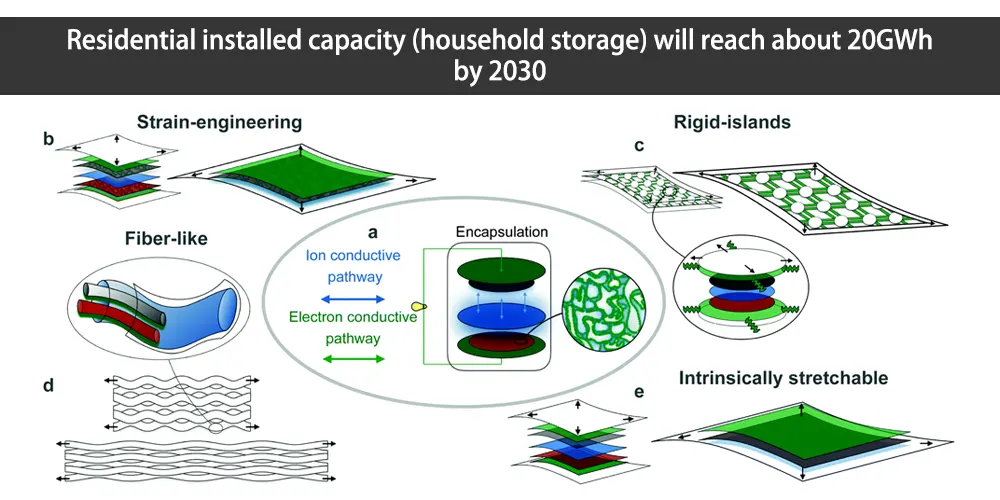

This article introduces the new technology of flywheel energy storage, and expounds its definition, technology, characteristics and other aspects.

This article will introduce mobile energy storage, not only definition, types, structure and components, but also its applications and factors need to consider.
This article delves into the concept of battery capacity, related units, parameters, factors influencing it, and its applications in different scenarios.

 +86 – 18925002618





