



Six different avenues for industrial and commercial energy storage
Peak-valley arbitrage
Industrial and commercial users can charge the energy storage battery at a cheaper low price when the load is low. When the load is peak, the energy storage battery supplies power to the load to realize the transfer of the peak load and obtain benefits from the peak and valley electricity price.
Income calculation: According to calculations, when the peak/peak-valley electricity price difference per kilowatt-hour is 0.9819/0.6197 RMB and 600 operations a year, the peak-valley arbitrage income in the first year is 1.6732 million RMB, which is the main profit method for industrial and commercial energy storage.

The cost of electricity consumption of photovoltaic users without storage is not optimized. Photovoltaic power generation is intermittent and fluctuating. When the photovoltaic system generating electricity for self-use and surplus electricity on the grid exceeds the capacity of the load, the excess electricity will be sent to the grid at a lower price.
When the photovoltaic supply load is insufficient, industrial and commercial users can purchase electricity from the grid at a higher price, and the grid and photovoltaic system supply power to the load at the same time.
Therefore, the electricity cost of industrial and commercial users has not been reduced to the maximum when deploying photovoltaics.
Energy time shift
After the industrial and commercial users configure the energy storage system, when the output of photovoltaic power generation is large, the electric energy temporarily unable to be used by themselves will be stored in the battery.
When the output of photovoltaic power generation is insufficient, the electric energy in the battery will be released to the electric load. Power generation and electricity consumption, improve photovoltaic power generation and consumption rate, and maximize the benefits of electricity consumption to the greatest extent.

Income calculation: Assuming that industrial and commercial users have a 2000m² roof and can configure 200kW photovoltaics, the photovoltaic modules will attenuate 2% in the first year, and attenuate 0.50% every year thereafter. The time-shifted income was 334,700 RMB.
Large-scale industrial electricity uses a two-part electricity price. China adopts a two-part electricity price system for large-scale industrial electricity with a transformer capacity of 315 kVA and above.
The basic electricity fee refers to the user’s power transformer (according to capacity) or the maximum demand (according to demand). The electricity price charge refers to the electricity price calculated according to the user’s practical electricity.
Demand management
After the energy storage system is installed in the industrial and commercial park where the basic electricity price is charged on demand, the real-time power of the user’s transformer can be monitored.
When the real-time power exceeds the demand, the energy storage will automatically discharge and monitor the real-time power to reduce the output of the transformer and ensure that the power of the transformer will not exceeding the limit, so as to achieve the purpose of reducing the user’s demand for electricity and reducing the cost of electricity in industrial and commercial parks.
Income calculation: Taking a 3MW energy storage project as an example, charging and discharging twice a day can save 180,000 RMB in capacity electricity costs in the first year.
Demand-side response
It means that when the price of the electricity wholesale market rises or the reliability of the system is threatened, after receiving the direct compensation notice from the power supply party for inductive load reduction or the signal of rising electricity prices, the power user changes its inherent habitual power consumption mode to achieve reduction.
Or shift the electricity load for a certain period of time to respond to the power supply, thereby ensuring the stability of the power grid and inhibiting the short-term behavior of rising electricity prices.
That is to say, when the power consumption is in short supply, the enterprise actively reduces the power consumption, and responds to the power supply balance through peak shaving and other methods, and thus obtains economic compensation.
Income calculation: Assuming that there are 20 annual demand-side responses, the maximum subsidy for a single demand-side response is 4 RMB/kWh, and the average price is 2 RMB/kWh for calculation. The first-year demand-side response income is 140,300 RMB.
Electricity spot trading
Power spot trading refers to the trading mechanism in which market players such as power generation companies provide power services in the form of market-oriented transactions.
At present, the southern regional power market has started trial operation, and relevant policies have made it clear that market players such as energy storage will be introduced in due course to participate in green power trading.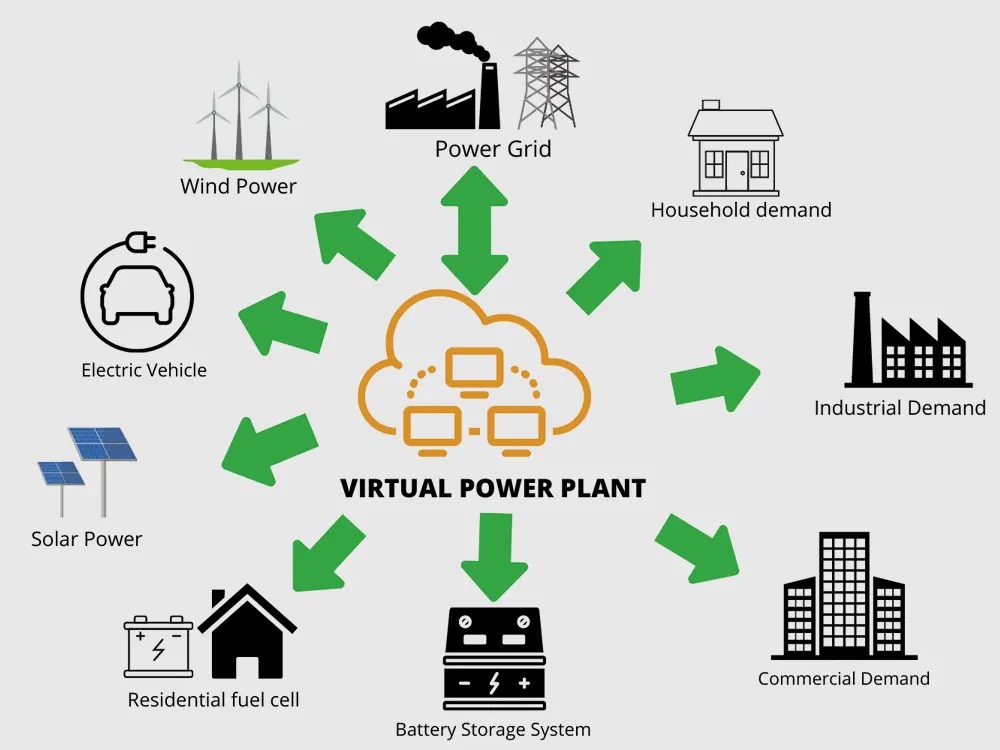
Due to the small capacity of industrial and commercial energy storage systems, it is difficult to meet the buyer’s demand for one-time call in the electricity trading market. Virtual power plants (VPP) can be used to participate in electricity market transactions in an aggregated manner.
Income calculation: Assuming that you participate in one electricity spot transaction every day, the transaction volume is the difference between a single charge and discharge, and the settlement price is 0.5 RMB/kWh. The income from electricity spot transactions in the first year is 144,700 RMB.
Power auxiliary services
In addition to normal electric energy production, transmission and use, in order to maintain the safe and stable operation of the power system and ensure the quality of electric energy, services provided by power generation companies, power grid operators and power users.
Income calculation: Taking industrial and commercial energy storage frequency modulation services as a representative to calculate, assuming that the frequency modulation service unit earns 0.75 RMB/kWh, participates in frequency modulation 300 times a year, and the income of power auxiliary services in the first year is 339,900 RMB.
Calculation results: The cost of electricity (LCOE) is the energy storage cost obtained by leveling the input and processing power in the entire life cycle of the energy storage project. After calculation, the LCOE of this project is 0.68 RMB/kWh. After comprehensive consideration, take 0.7 RMB/kWh is a more appropriate break-even point for peak-valley arbitrage.
LCOE calculation formula:
Electricity cost = total investment cost / total processing power
Total investment cost = initial investment + interest + operation and maintenance costs + project management fees – residual value, the calculated present value is 18.9642 million RMB
Total processing power = daily single processing power * 2 * 300
Summary
In the case of only considering peak-valley arbitrage income, when the peak/peak-valley power price difference per kWh is 0.9819/0.6197 RMB and the investment cost is 1.8 RMB/Wh, the IRR of industrial and commercial energy storage projects reaches 9.36%.
Under the trend of widening peak-to-valley price difference and decreasing investment cost of energy storage, it is expected to increase the IRR to more than 20%, and the economics of industrial and commercial energy storage are becoming more and more obvious.




 +86 – 18925002618





