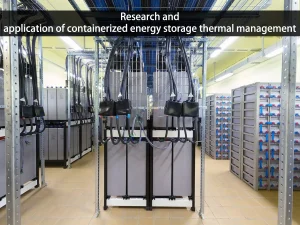
energy storage system

The most comprehensive analysis of storing lithium batteries

The most comprehensive analysis of storing lithium batteries
The storage of lithium batteries presents several challenges and considerations due to the unique characteristics of lithium-ion technology. This comprehensive analysis will delve into the factors affecting the storage of lithium batteries, including temperature control, state of charge, packaging, and safety measures.
Table of Contents
    Add a header to begin generating the table of contents

    This research aims to provide the most comprehensive analysis of storing lithium batteries, covering various aspects such as safety, longevity, and performance. By examining the latest research and industry practices, this analysis will contribute to the development of guidelines and best practices for storing lithium batteries in a safe and efficient manner.

    YouTube_play_button_icon_2013–2017.svg (2)(1)

    What are storing lithium batteries?

    • Short term storage:

    If the lithium battery is not used for a short term energy storage (such as within 6 months), when the battery is charged, store the battery in a dry, non-corrosive gas place with a temperature and humidity between -20°C and 35°C 65±20%. At or below this temperature and humidity, the metal parts of the battery may rust or the battery may leak.

    • Long term storage:

     If the lithium battery is not used for a long time (such as more than 6 months), charge 50% to 70% of the power, remove it from the instrument and store it in a dry and cool environment, and charge the battery every 3 months to avoid storage time. If it is too long, the battery will be too low due to self-discharge, resulting in irreversible capacity loss.

    The self-discharge of lithium batteries is affected by ambient temperature and humidity. High temperature and humidity will accelerate the self-discharge of the battery. It is recommended to store the battery in a dry environment of 10 ℃ ~ 25 ℃, 65±20%.

    It is not recommended to store lithium batteries for more than two years

    The environment for storing lithium batteries

    • Battery warehouses should use flat warehouses as much as possible instead of three-dimensional warehouses for storing lithium batteries. They should be independent single- or multi-story buildings. The single-story battery warehouse covers an area of ≤12,000㎡, and the multi-story battery warehouse covers an area of ≤9,600㎡;
    • The fire separation distance from adjacent buildings should comply with Article 3.5 of the “Code for Fire Protection Design of Buildings GB50016”;
    • The area of a single fire protection partition of a single-layer battery warehouse is ≤3000㎡, and the area of a single fire protection partition of a multi-layer battery warehouse is ≤2400㎡. A battery emergency disposal room should be set up on each floor and in each fire protection zone;
    • Inside the fire protection zone of the battery warehouse, fire partition walls and fire doors should be used to separate the battery storage areas into fire protection areas. The area of each fire protection area is ≤250㎡. If possible, use solid walls to separate the battery storage area into multiple smaller ones in the fire protection area. The advantage of this is that when a fire occurs, it can delay the spread of the fire and reduce water damage when extinguishing the fire;
    • The fire protection partition of the battery warehouse should be separated to the top by a fire wall with a fire resistance rating of not less than 4.00h. When interconnected doors need to be opened on the partition wall, Class A fire doors should be used for storing lithium batteries;
    • The battery storage area and emergency response room should be separated by fire partition walls with a fire resistance rating of not less than 2.5h and floor slabs of 1.5h; when interconnecting doors need to be opened on the partition walls, Class A fire doors should be used;
    • The battery warehouse shall have no less than 2 safety exits, and the horizontal distance between the nearest edges of two adjacent safety exits shall not be less than 5m, and shall comply with the relevant requirements of the “Building Design Fire Protection Code GB50016”;
    • Each battery storage area should have no fewer than 2 evacuation doors, and the horizontal distance between the nearest edges of two adjacent safety exits should not be less than 5m. At least one evacuation door should lead directly to the evacuation walkway or evacuation stairs;
    • The width of the main aisle of the battery warehouse should not be less than 2m. The width of the evacuation door should not be less than 0.90m;
    • The storage area should be clean, tidy and well-ventilated, the temperature should be controlled at 10℃~30℃, and the relative humidity should not be greater than 40%~75%RH;
    • Do not use high-temperature lighting fixtures such as iodine tungsten lamps and incandescent lamps exceeding 60 watts in storing lithium batteries.

    Way to store lithium batteries

    • Batterys should be stacked in piles. It is recommended that the number of horizontal and vertical stacking columns in each pile should not exceed 5. Leave a gap of no less than 20cm between piles to facilitate heat dissipation;
    • Emergency forklift passages for transferring batteries should be reserved between each centralized storage area. The width of the passage should not be less than 1.5m, and the width of the pedestrian passage should be greater than 0.8m;
    • Storage battery power should not exceed 70% SOC, and insulation protection measures should be taken at the positive and negative poles.

    The best storage environment for lithium batteries is 18-25 degrees Celsius

    Hardware protection facilities for storing lithium batteries

    • Smoke fire detectors should be installed with a protection radius of ≤8m. Sound and light alarms and fire broadcasts should be installed evenly, and the sound pressure level should be 15dB higher than the background noise. Manual alarm buttons should be set up, preferably at personnel passages or entrances and exits;
    • A wet automatic sprinkler system should be installed, and antifreeze and heat preservation measures should be taken in areas with low ambient temperatures;
    • A fire hydrant system should be set up, and the two substantial water jets of two fire water guns should meet the requirements of any location at the same time. The distance between fire hydrants should not be greater than 30m;
    • A smoke prevention and exhaust system should be set up. Each independent battery storage area should be equipped with mechanical firefighting and smoke exhaust facilities. The smoke exhaust outlet should be arranged in the middle of the area of storing lithium batteries, and the number of air changes should be no less than 12 times/h;
    • Emergency lighting, evacuation lights and safety exit lights should be set up;
    • A 24-hour video surveillance system should be set up;
    • Mobile emergency facilities should be set up (emergency forklifts, smoke masks, fire blankets, high temperature resistant gloves, crucible tongs, explosion-proof barrels, salt water barrels, water-based fire extinguishers, mobile smoke exhaust fans, etc.).

    Daily management of storing lithium batteries

    • The emergency response procedures, emergency organizational structure and contact information should be posted in the battery warehouse;
    • Specialized personnel should be set up to be on duty 24 hours a day and conduct inspections every 2 hours. Unrelated personnel are not allowed to enter the warehouse area;
    • Staff are prohibited from bringing fire and other potentially dangerous items inside, and fire operations are strictly subject to approval management in accordance with high-risk operations;
    • Regular maintenance of fire protection facilities and equipment, monthly inspection of mobile emergency supplies, and timely replacement of those that are invalid, expired or in abnormal condition;
    • Carry out battery fire emergency response drills every six months for storing lithium batteries.

    Store lithium batteries with power no more than 70% SOC

    Stacking of storing lithium batteries

    1. Lithium ion battery safety should be stored in a well-ventilated, dry and cool place. High temperature and high humidity are likely to damage the performance of the lithium battery and corrode the surface and battery life cycle of the lithium battery. At the same time, the lithium battery packaging box will become soft and deformed, thereby losing its integrity. The protective effect of lithium batteries causes the lithium batteries to be squeezed.
    2. Lithium battery cartons should not be stacked higher than the specified height. If they are stacked too high, the lithium batteries in the bottom carton are likely to deform and leak.
    3. Lithium batteries should be stored or displayed away from direct sunlight or rain. If the lithium battery is exposed to water, the insulation resistance will decrease, and self-discharge and rust are likely to occur. Rising temperature is likely to damage lithium batteries. When the ambient temperature is higher than 60 degrees Celsius, the storage life of lithium batteries will be significantly reduced.
    4. It is prohibited to stack lithium batteries together after removing lithium-ion battery pack from cartons, pallets, etc. This may easily cause short circuit and damage to the lithium batteries while storing lithium batteries. 
    5. It is prohibited to put other items that may cause short circuits in the same package as lithium batteries, such as wires, screws, and other metal products.
    6. It is prohibited to store lithium batteries and other flammable and explosive items in the same warehouse.

    Charging and charge control of storing lithium batteries

    • The original manufacturer of the battery supply uses special battery equipment;
    • The customer or user installs the battery in the instrument and equipment for charging.

    Usually lithium batteries have relatively complete protection functions (with protective plates) and do not have many other requirements for battery charging. However, in order to prevent safety problems caused by the failure of the overcharge protection function of the protective plates, long-term charging is not recommended.

    Take out the battery after it is fully charged. In addition, when charging, you must use the original or the charger that comes with the battery, and operate and use it according to the instructions, otherwise the battery may be damaged or even dangerous;

    Charge capacity identification and detection method: Charge capacity is 50%~70%, usually corresponding voltage range: 3.6~3.9V (lithium batteries with different material systems are different); customers or users can use a multimeter to measure the voltage of the positive and negative terminals , if installed in an instrument or equipment, the power displayed on the instrument can be directly read.

    Here are more information about bess battery manufacturers.

    Lithium batteries should avoid being stored or displayed in direct sunlight

    Related posts

    logo+86 – 18925002618
    [email protected]
    Guangpu West Road, Huangpu, Guangzhou, Guangdong, China

    Product

    Video Gallery

    Huntkey automated battery storage workshop process
    Huntkey Grevault participated in Germany ESE exihition with 5KW mobile power bank
    Contact Form Demo
    Scroll to Top