

Energy storage-related policies and business models in European and American countries and regions are more mature, and energy storage projects are more economical. Mature market rules and good economics are more conducive to the healthy and sustainable development of the global energy storage industry.
1. Global energy storage development background and current situation
As global climate change poses a major threat to human society, countries around the world have elevated “carbon neutrality” to a national strategy. The transformation of the energy structure towards low-carbon, environmentally friendly and renewable energy has become a mainstream trend. Against this background, major international countries are accelerating the transformation of green energy, and photovoltaic and wind power generation have received unprecedented attention.
As an important part of the development of renewable energy storage, new energy storage is also facing rapid development opportunities. According to statistics, the global cumulative installed capacity of new energy storage will reach 45.7 GW in 2022, a year-on-year increase of 80%.
2. Policies related to energy storage in the European market
2.1 Electricity price policy
European behind-the-meter energy storage accounts for more than 50% of the total energy storage scale in Europe. It mainly helps users save electricity bills by cooperating with photovoltaic systems for self-use. Fluctuations in terminal electricity prices in Europe have a greater impact on the application of household energy storage.
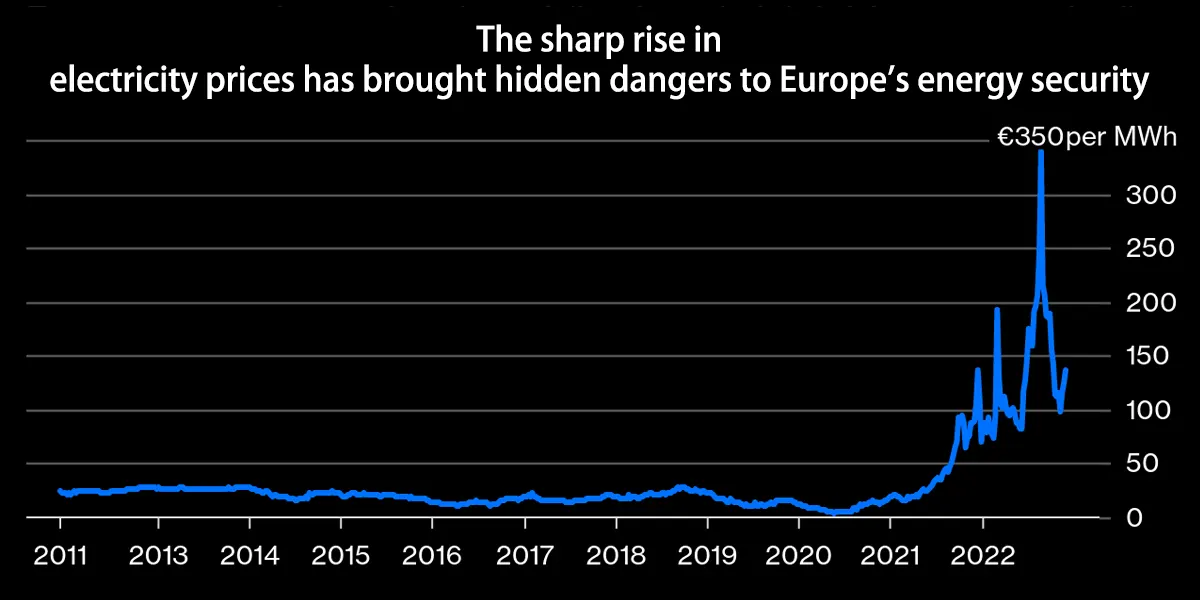
In 2022, the surge in natural gas prices has prompted a rapid rise in electricity prices in Europe. According to data from the European Energy Exchange (EEX), the German wholesale electricity price KWK index reached a record high of 375.75 euros/MWh in the third quarter of 2022. Under the European marginal pricing model, electricity prices have risen sharply, posing hidden dangers to European energy security.
Under the dual impact of EU intervention and falling natural gas prices, the German wholesale electricity price KWK index fell to 192.84 euros/MWh in the fourth quarter of 2022.
Limiting the increase in electricity prices will have a negative impact on energy storage revenue in the short term. However, in the long term, electricity price fluctuations caused by traditional energy shortages have caused Europe to accelerate the development of renewable energy. The increasing proportion of new energy will inevitably require large-scale storage. It can ensure the stability and safety of power supply.
2.2 Policies related to energy storage planning
In July 2021, the EU proposed the “Fit for 55” plan, clarifying that renewable energy power generation in the EU will reach more than 40% in 2030, and proposed the EU carbon emissions trading system, member states’ emission reduction targets, and carbon border tariff adjustments mechanism, renewable energy directive and other packages. Since then, the EU has formulated a series of implementation policies and measures around “Fit for 55”.
In May 2022, the European Union adopted the REPowerEU plan, which proposed that by 2030, renewable energy power generation will increase from 40% planned in 2021 to 45%, driving the renewable energy installed capacity target to increase from 1067 GW to 1236 GW.
The plan also proposes to make the installation of photovoltaics mandatory for certain types of roofs, and this regulation is expected to further increase the demand for energy storage installations. Inspired by renewable energy development goals, European countries have begun to formulate energy storage development plans. Among them, Greece and Italy have proposed plans to install 6 GW and 3 GW of battery energy storage by 2030 respectively.
2.3 Localization policy for energy storage industry chain
While adjusting its energy structure, Europe has also issued a series of measures to accelerate the localization of the European energy storage and battery industry chain.
In March 2022, the European Battery Alliance (EBA) proposed to formulate an accelerated action plan to improve the European battery industry chain, requiring 69% and 89% of local battery demand to be met through local manufacturing by 2025 and 2030, respectively.
2.4 Fiscal and taxation support policies
In December 2022, Germany stipulated that starting from 2023, the power generation income of single-family residences and commercial properties with rooftop photovoltaic installations of no more than 30 kW will be exempted from income tax (German personal income tax in 2022 is 14% to 45%);
For multi-family conjoined buildings, For buildings, the tax-free capacity limit for each residential or commercial unit is 15 kW, and for each taxpayer or cooperative enterprise, the tax-free capacity limit is 100 kW; the purchase of household photovoltaic energy storage systems is exempt from value-added tax (approximately 19%).
This policy can further reduce the cost burden for users to purchase and install rooftop photovoltaic and household energy storage systems.
In February 2022, the British Department for Business, Energy and Industrial Strategy (BEIS) announced a grant of 39.6 million pounds to support innovative long duration energy storage technology projects in the UK.
The first batch of 24 projects has been selected, with a total financial support of 6.7 million pounds, covering membrane-less green hydrogen electrolyzers, gravity energy storage, all-vanadium redox flow batteries, advanced compressed air energy storage, seawater + compressed air combined energy storage, etc. Technical route.
2.5 Market rules and policies
In terms of identity attributes, in June 2022, the German Bundestag passed a legal amendment defining energy storage as an asset “in which the electricity generated is not immediately used, but is postponed to a certain period of time for final use.”
Giving energy storage systems a legal definition can simplify the registration process for energy storage systems and remove identity barriers for large-scale energy storage projects to participate in the power market.
In terms of the types of market services participating in the market, the UK began to launch power market reform policies in 2013, and successively introduced market segments such as capacity market, frequency response, and balanced reserve.
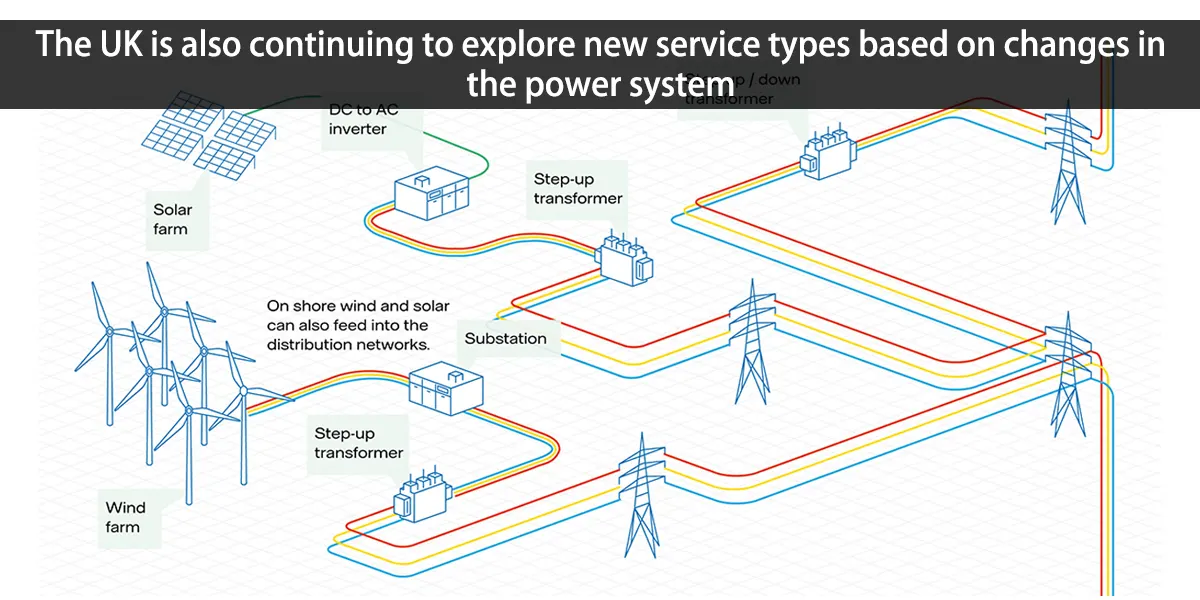
There are currently more than 20 types of ancillary services in the power market that energy storage can participate in, which are already in operation or are being launched. The UK is also constantly exploring new service types based on changes in the power system, providing multiple possibilities for energy storage to participate in the power market. .
3. European energy storage business model
Energy storage business models and economics are closely related to energy storage policy. Electricity prices in Europe have risen sharply while the price gap continues to increase, which is conducive to energy storage arbitrage in the electric energy market. Regarding excessively high electricity prices, the government has adopted restrictive policies to protect the rights and interests of consumers.
Keeping electricity prices fluctuating within a reasonable range is more conducive to energy storage in the long term. Earn stable profits in the electric energy market.
Germany exempts and exempts energy storage income tax and value-added tax, and the United Kingdom provides financial support for energy storage projects, which will help reduce the cost of energy storage and make energy storage more economical.
By introducing new power market services such as capacity market and dynamic containment, the UK can gain new sources of income for energy storage, while also providing a broader market space for the expanding scale of energy storage.
3.1 Energy storage in front of the meter
In the European market, the UK leads the development of European front-meter energy storage. In 2022, the UK’s cumulative installed battery energy storage capacity will be 1.6 GW, most of which will last for 1 hour. The British power market is relatively mature, and electrochemical energy storage revenue comes from various sources.
Currently, the main revenue sources include: capacity market, wholesale market, balancing reserve and frequency modulation auxiliary service market. Overall, the market segments that UK front-of-meter energy storage can participate in are relatively diversified, and through income superposition, the overall profitability is relatively good.
3.2 Energy storage behind the meter
The installation volume of household photovoltaic storage systems in the European Union has maintained rapid growth since 2014. There are two main driving forces for the rapid development of behind the meter battery storage energy in Europe. One is the high electricity bills for residents, and the other is the standardization of household energy storage systems configured for photovoltaics. The cost per unit of electricity (LCOE) continues to fall. Germany is a representative country for behind-the-meter energy storage in Europe.
4. Policies related to the U.S. energy storage market
4.1 Policies related to energy storage planning
In August 2022, the United States released the “Inflation Reduction Act of 2022”, planning to invest US$369 billion in the fields of energy security and climate change over the next 10 years, mainly for activities related to clean electricity and energy conservation and emission reduction, and to increase renewable energy.
Subsidies for alternative energy production, providing credit incentives and tax credits for personal use of clean energy, and providing support for the development of new energy vehicles, etc.
Aiming to promote economic low-carbon or decarbonization development, improve energy use efficiency, and reduce energy costs.
4.2 Support the localization policy of the energy storage industry chain
In recent years, the United States has issued a series of policies to support the development of the domestic battery and energy storage industry chain to prevent supply security issues and cost increases caused by disruptions in the global supply chain and rising prices.
In February 2022, the U.S. Department of Energy (DOE) released the “U.S. Strategy for Securing Supply Chains to Achieve a Robust Clean Energy Transition”. It is the first comprehensive plan in the United States to ensure security and improve energy independence, including nuclear energy, carbon Conduct in-depth assessments of supply chains in 13 energy fields including capture and energy storage.
The “Inflation Reduction Act of 2022” stipulates that more than $60 billion will be used to support the construction of clean energy facilities in the supply chain of domestic clean energy and transportation technology, in an attempt to reduce dependence on foreign countries.
4.3 Fiscal and tax policies
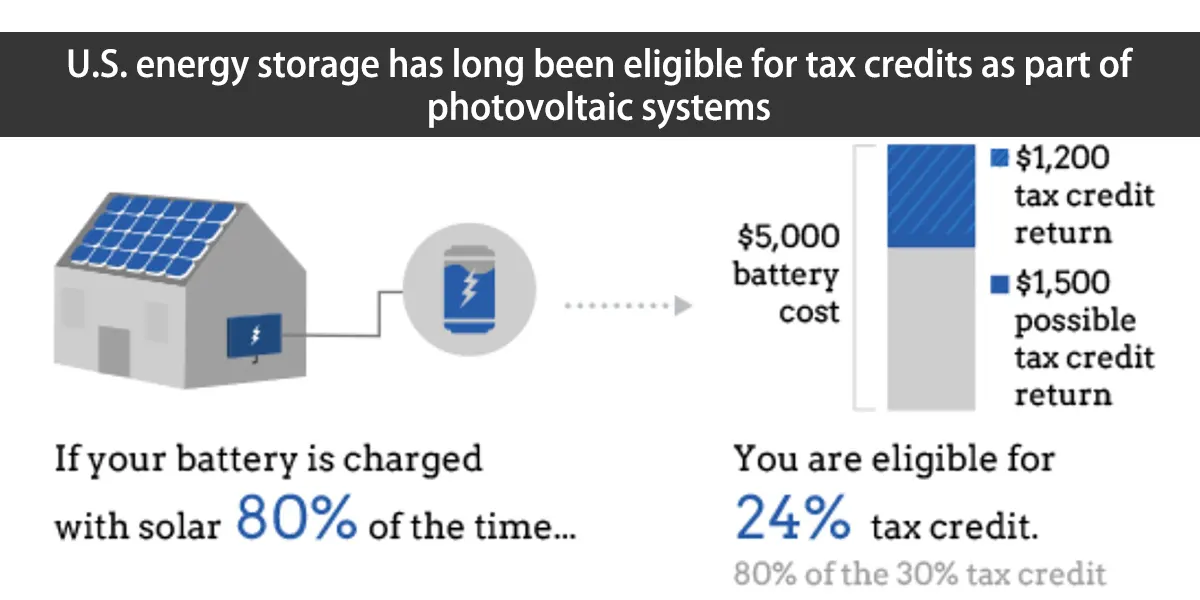
In order to achieve clean energy transition and carbon neutrality goals, the United States began to implement ITC policy subsidies (solar investment tax exemption policy) for photovoltaic systems in 2006. For a long time, energy storage has been able to obtain tax credits as part of the photovoltaic system, and separate energy storage The system cannot obtain tax credits.
5. Summary
The electricity market conditions of each country are different, and the energy storage policy structures are also different.
Europe mainly supports storage through policies such as setting new energy development goals, supporting the localization of the industrial chain, tax exemptions, financial support, and increasing the types of electricity markets that energy storage can participate in.
To promote energy storage development, the United States mainly promotes energy storage construction through policies such as ITC tax credits, supporting the localization of the industrial chain, and formulating detailed power market rules in which energy storage can participate.


+86 – 18925002618






