




Long duration energy storage can be achieved in a variety of ways, such as mechanical energy storage, thermal energy storage, electrochemical energy storage, chemical energy storage, etc.
(1) Mechanical energy storage: The most mature mechanical energy storage technology is pumped hydro energy storage, which accounts for 95% of the world’s total energy storage capacity.
However, there are certain requirements for plant and station site selection. New pumped hydro storage facilities such as geomechanical pumps are now emerging to reduce dependence on geographical conditions.
In addition, mechanical energy storage also includes compressed air energy storage, gravity energy storage, and liquid air energy storage.
Compressed air energy storage also takes into account thermal energy storage, which is used to store the heat generated during the compression process and reuse it in the discharge cycle; gravity energy storage is currently in the early stages of commercialization.
(2) Thermal energy storage: Thermal energy storage technology can release electricity and heat at the same time. The technical route can be divided into changing the medium temperature, changing the state of the medium material, thermochemical thermal reaction, etc.
These technologies use media such as molten salt, concrete, aluminum alloys or rock materials to store heat in insulated containers. The most widely used technology route is a combination of molten salt and concentrated solar power (CSP) power generation facilities.
(3) Chemical energy storage: hydrogen storage, natural gas energy storage, etc.
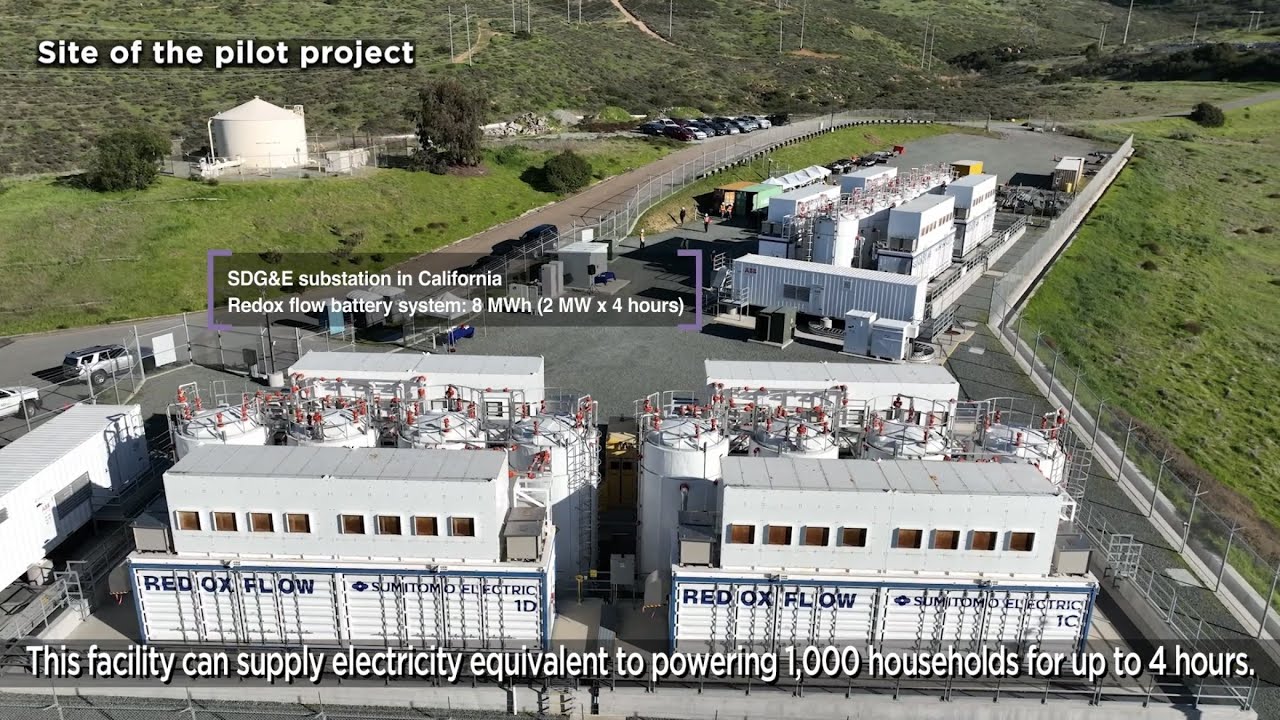
(4) Electrochemical energy storage: Based on long duration energy storage based on electrochemical reactions, flow batteries are a technical route.
Flow batteries store electrical energy in chemical solvents in external tanks and charge and discharge through ion exchange membranes. At the same time, lithium ion battery energy storage is also a very competitive choice.
The increase in the proportion of renewable energy power generation will bring about growth in energy storage demand for 8-12 hours or even longer, and is also an important market for long duration energy storage.
Long duration energy storage technology mainly has the following five advantages:
(1) The marginal cost is low when storing large amounts of electrical energy.
(2) Energy and power decoupling.
(3) Modularization, scalability, fewer requirements for factory and station locations, and stronger security.
(4) It does not rely on rare elements, has low economic costs, and has industrial scale effects.
(5) Compared with the upgrade and expansion of transmission and distribution networks, the construction period is short.
Long-duration energy storage can improve the flexibility of the power system by storing and releasing energy over a longer period of time (>4h, across days, weeks, and seasons). Its main application scenarios are reflected in four aspects:
(1) Intraday energy storage application: 4 to 12 hours of long duration energy storage to solve the imbalance of power supply and demand within the day.
(2) Cross-day and cross-week energy storage applications: mainly deal with medium and long duration power imbalances caused by short-term weather abnormalities (lack of light, water shortage, etc.).
(3) Cross-season application: Solve the peak energy demand in winter and the long duration uncertainty of the power system caused by climate change.
(4) Coping with extreme weather events.
Although some long-duration energy storage technologies are still in their early stages.
However, in the context of accelerating energy transformation, it is predicted that long duration energy storage will usher in gridscale energy storage around the world starting in 2025.
The cumulative installed capacity is expected to reach 30-40GW (total capacity reaches 1TWh), which is 6-8 times the current public capacity, and 95% of the installed capacity is distributed.
In 2040, global LDES installed capacity is expected to expand to 1.5-2.5TW (total capacity reaches 85-140TWh), which is approximately 8-15 times the current total installed energy storage capacity.
It will reduce carbon emissions by 1.5-2.3 billion tons per year, accounting for 10%-15% of emissions from the power sector.
Its stored power will account for 10% of global power generation, with a market size exceeding US$1 trillion. This also means that by 2040, the cumulative investment in LDES will reach US$1.5 trillion-3 trillion.



 +86 – 18925002618





