



Wind energy storage refers to the various methods and technologies used to store the energy generated by wind turbines for later use. Since wind is an intermittent energy source, its availability fluctuates based on weather conditions. Therefore, storing excess energy generated during periods of high wind speeds allows for its utilization when wind speeds are low or during peak demand periods.
1. Balance power supply and improve the quality and ability of wind power supply to power-consuming enterprises
Wind power is intermittent and unstable, while electricity production equipment strives to operate continuously, evenly, and under optimal conditions in order to achieve high efficiency and high quality of production. Gridscale energy storage systems can play this role. When the wind is strong and the electricity is high, large-scale electricity storage is carried out. When the wind is small and the electricity is small, the energy storage equipment can be replenished at any time.
2. Reduce the pressure on the power grid during the “valley” period and increase the power supply capacity during the “peak” period
The wind power of many wind farms in our country increases after midnight, which is the official “valley” period of the grid load. The integration of wind power to the grid actually increases the burden of “peak shaving” on the grid. Especially when time-of-use pricing is implemented, the “valley” period The electricity price is very low. At this time, the more wind power comes online, the greater the economic losses will be. The task of coal-fired power plants to reduce power generation due to the need for “peak shaving” of the power grid will also become heavier. Wind power is stored and then connected to the grid, which can greatly reduce the pressure on the power grid during the “valley” period and increase the power supply capacity during the “peak” period.
3. Improve the use value of wind power
After the energy storage device is installed in the wind power generation system, part of the excess wind power will be stored during the “valley” period, so that less electric energy will be sold to the grid at the “average price” taken care of by the national policy, and the stored electric energy will be sold during the “peak” period. For the power grid, the on-grid electricity price will no longer be the “average price” taken care of by national policies, but will be raised to the market price close to the “peak” period, thereby improving the economic benefits of wind power itself.
4. Energy storage devices can adjust the reactive power output of wind farms
The reactive power output of wind farms is unstable, and sometimes it absorbs reactive power from the power grid, resulting in unstable grid voltage or poor voltage quality after the installation of energy storage devices. It will significantly improve the reactive power output and greatly improve the voltage quality of the power grid.
It can be seen that after configuring an energy storage system for wind power, it can not only improve the quality and operation efficiency of wind power grid connection, but also reduce the peak load pressure of the system to a certain extent.
In order to better measure the costs and benefits of wind energy storage, the value of investment, that is, the time value of funds, is dynamically considered. The method of comparing plans using equal annual values is called the equal annual value method. The equal annual value method is the most commonly used method in economic evaluation.
The increased cost of wind energy storage mainly includes: the fixed cost of equipment of the energy storage system K, which is mainly related to the capacity and discharge power of the configured energy storage system. The increased revenue B after the wind farm is equipped with an energy storage system is mainly obtained through the low storage and high generation of the energy storage system.
The annual income after the wind farm is equipped with an energy storage system can be expressed as follows:
AW=-K(A,P,i,n)+B-C
In the formula: AW – the annual income of the wind farm;
K — one-time investment cost
I — discount rate
N – Project service life
B—Annual income of the project
C—Annual operating cost of the project.
When using equal annual values for economic evaluation, the program is economically desirable only if AW ≥ 0, and the value of i should be greater than the current bank deposit interest rate.
The installation of energy storage equipment can smooth the output of wind farms, which has a strong impact on improving grid stability, power quality and suppressing low-frequency oscillations of the power system. To encourage wind farms to install energy storage equipment, peak and valley segmented grid access can be implemented The method of electricity price can improve the economic benefits of installing energy storage devices in wind farms.
From the perspective of wind farms, less power generation during valley periods can increase the total electricity revenue. However, wind farms without energy storage devices will suffer losses due to wind farms. The difference between the output characteristics and load characteristics results in lower electricity bills.
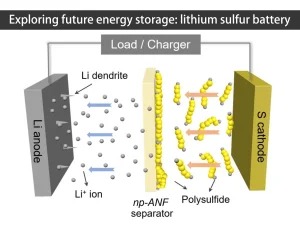
Among the many energy storage methods, lithium battery cells have a high specific energy, can discharge at high current and high power, have no discharge pollution, no vibration, and no noise, which is beneficial to environmental protection and has almost no self-discharge phenomenon.
Large-capacity storage can be easily achieved through series connection. These advantages make lithium ion battery energy storage one of the methods with the most development potential and application prospects in current wind power energy storage applications.
Specific applications include but are not limited to the following aspects:
- Microgrid system: Wind energy storage can be applied to microgrid systems to provide stable power supply to areas far away from the main grid.
- Urban energy system: In cities, wind energy storage can be applied to rooftop solar power generation and wind power generation, combined with energy storage technology, to provide clean energy supply.
- Industrial electricity: The industrial field usually requires a large amount of electricity. Wind energy storage can provide industrial enterprises with a stable, renewable energy supply and reduce electricity costs.

- Rural power supply: In rural areas, wind energy storage can help solve the problem of insufficient power supply and improve the stability of power supply in rural areas.
- Emergency power supply system: The wind-storage integrated system can also be used as an emergency power supply system, such as providing continuous power supply to medical facilities, rescue centers, etc. during natural disasters or emergencies.
- Smart homes and commercial buildings: In homes and commercial buildings, integrated wind and storage systems can be used for power supply and combined with intelligent control systems to achieve intelligent energy management and improve energy utilization efficiency.

The application fields of wind energy storage are constantly expanding, and with the advancement of energy storage technologies and the reduction of costs, it is expected to be more widely used in the future.


 +86 – 18925002618





