


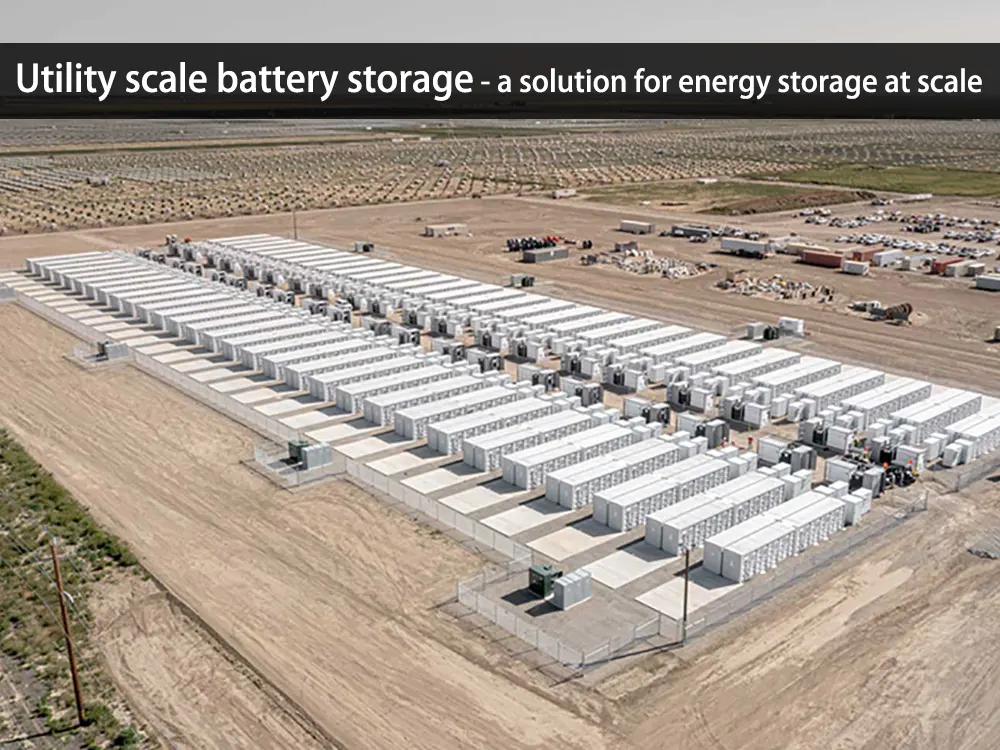


Power grids often benefit from utility scale batteries, which are energy storage devices for large scale capable of storing and delivering power. They are made of multicellular structures that work together to store and release energy electrically.
For example, lithium-ion batteries exhibit notable attributes such as high energy density and extended cycle life. Sodium sulfur batteries use molten sodium and sulfur as electrodes and have high efficiency and low cost.
The energy density of lead acid batteries is rather low, and their cycle life is limited owing to the suboptimal quality of the electrodes, which consist of lead and lead oxide. These are just some of the common types of utility scale batteries.
New energy storage technologies are constantly emerging, and some of them employ alternative materials and techniques to store power.
Various utility scale storage options exist, each with its own set of pros and cons to consider.
Common forms of large scale utility storage include:
● Battery storage: The electrochemical devices used in battery storage can transform electrical energy into chemical energy and vice versa.
Fast reaction, great efficiency, and adaptability are just some benefits that grid-connected batteries may provide. The downsides of battery storage include its high initial cost, depreciation over time, and environmental effects.
● Pumped hydro storage: Pumped hydro storage is a technique used to store and later release power. Pumped hydro storage has the potential to provide massive amounts of cheap, long-term storage. However, pumped hydro storage has its setbacks, including limited availability in some areas, negative effects on the ecosystem, and lengthy construction times.
● Compressed air energy storage: A technique that uses air to store and release electricity is called compressed air energy storage. It may serve as a long-lasting and trustworthy energy storage means. Compressed air energy storage has certain limitations, too, including poor efficiency, considerable heat loss, and a lack of suitable sites.
● Flywheel energy storage: Flywheels may be used to store and release energy in the form of electricity via the utilization of rotating kinetic energy. Energy may be stored for a short period and in great quantities using flywheels. Flywheels may be used to store energy, but they have drawbacks, including a large initial investment, mechanical wear, and safety concerns.
● Harnessing Renewable Energy: One of the main benefits of utility scale battery storage is the capacity to use renewable energy sources more efficiently.
For example, energy generation from solar and wind is weather-dependent and hence irregular. Large scale utility batteries can store the extra power produced on sunny or windy days and then release it when the weather becomes gloomy or quiet.
● Grid Stability and Reliability: Utility scale battery storage greatly improves power grid stability and dependability. It’s like having an instantaneous buffer between supply and demand swings. These batteries may be used to avert power outages and grid failures caused by abrupt spikes in electrical demand.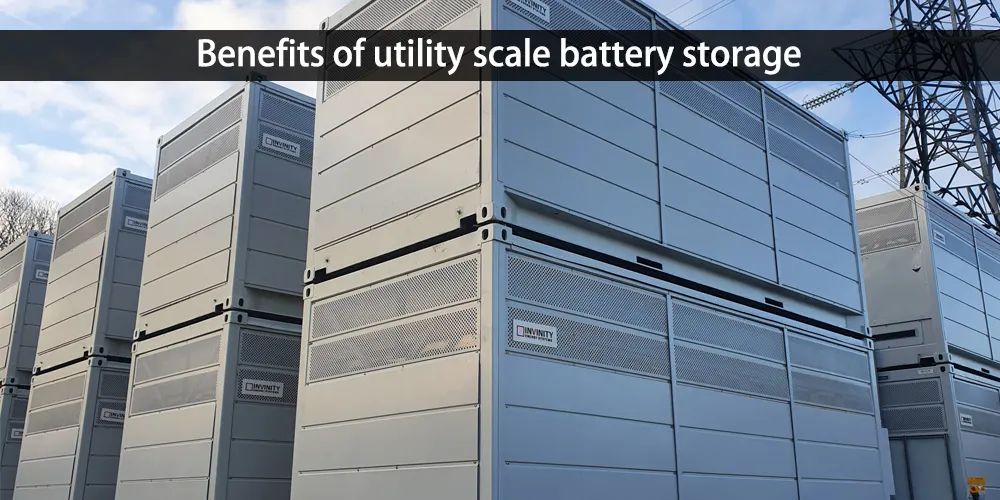
● Peak Demand Management: Utilities always face the issue of meeting peak demand, and large scale utility batteries can be charged while power demand is low and discharged when it is high. Reducing grid stress and saving money on power bills are also benefits of load shifting.
● Cost-Efficiency: Large scale battery storage systems used by utilities have seen significant price reductions. Due to technical developments and economies of scale, the cost of producing and installing these batteries has decreased significantly. Ultimately, this means cheaper energy prices for utilities and their customers.
● Supporting Electric Vehicles: The growth of the electric vehicle (E.V.) market is closely tied to utility scale battery storage. These batteries can serve as charging stations for EVs, further incentivizing the switch to clean transportation options. This synergy between energy storage and transportation is a significant step towards a sustainable future.
● Reducing Carbon Footprint: The ability of utility scale battery storage to lessen environmental impact is a major plus. It aids in cutting down on fossil fuel use by making it possible to add more renewable energy to the grid.
The fight against climate change and the pursuit of sustainability objectives depend on this shift to more sustainable energy sources.
Designing a utility scale battery storage system involves several steps and considerations, such as:
● Stage 1: Choosing the appropriate battery technology and size for the intended application and location. The energy density, power density, efficiency, longevity, cost, safety, and environmental effects of various battery systems vary widely.
Power demands (in megawatts) and energy needs (in megawatt-hours) for expected runtime (in hours) determine the size of the battery system. Because of its high energy density, extended cycle life, and quick reaction, lithium-ion batteries find extensive usage in utility scale applications.
● Stage 2: Selecting the suitable power conversion system and balance of system components for the battery system, such as the inverters, transformers, lithium ion bms, etc.
The hardware and software for keeping tabs on, regulating, shielding, and connecting the battery system to the grid make up the rest of the system. These factors impact the battery system’s efficiency, dependability, security, and bottom line.
● Stage 3: Designing the optimal configuration and layout of the battery system. A battery pack’s voltage and current output can be adjusted by rearranging and connecting its individual cells in series and parallel.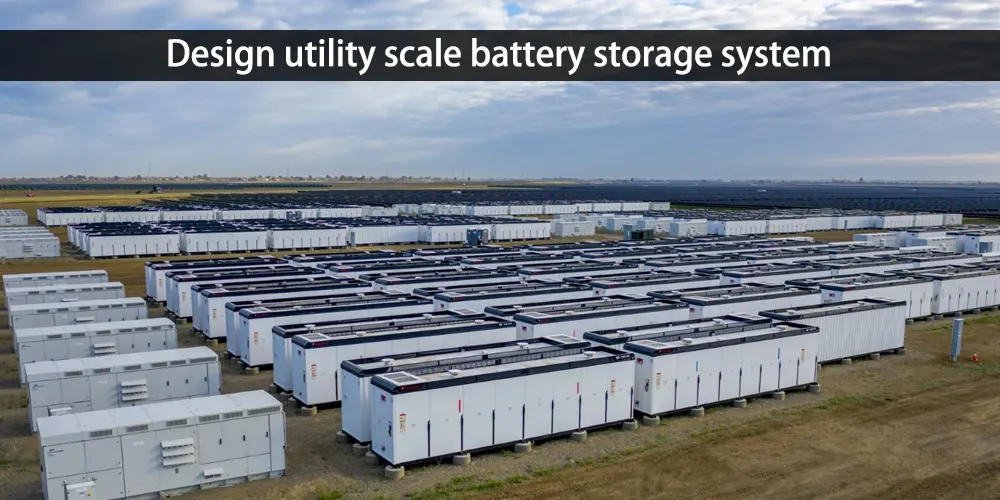
The plan describes the arrangement and distribution of the various battery modules, racks, containers, and other parts around the site. Electrical losses, thermal management, space availability, accessibility, and aesthetics are all important considerations for the setup and layout.
● Stage 4: Evaluating the battery system’s economic viability and environmental impact. The capital cost, operation and maintenance costs, income streams, and incentives for the battery system all factor into its economic feasibility.
Life cycle emissions, resource consumption, trash creation, and recycling potential are all factors in the battery system’s potential environmental effect. It can be compared to other technologies or scenarios that serve as competition to assess the benefits and flaws of a utility scale battery storage system.
Utility scale battery storage systems often include the following features and specifications:
● Power capacity: The power capacity of utility scale battery storage is measured in megawatts (M.W.) or kilowatts (kW), and it’s the maximum amount of power that can be delivered or absorbed by the battery system at any given time.
● Energy capacity: Energy capacity units of measurement are Megawatt-hours (MWh) and kilowatt-hours (kWh), and it is the maximum amount of energy that can be stored or discharged by the battery system over a period of time.
● Duration: This is how long a battery system can provide or absorb its full-rated power capacity. You can divide the energy capacity by the power capacity to get the answer: the units are hours and minutes.
● Round-trip efficiency: The effectiveness of a battery system throughout a charge-discharge cycle is measured by its round-trip efficiency. It represents the battery system’s efficiency in storing and discharging power with minimal losses. A percentage is used to represent it.
● Cycle life: Battery systems have a cycle life, measured in the number of charge-discharge cycles they can withstand before their performance drops below a certain benchmark. It shows how long the battery system can keep running before it has to be changed.



 +86 – 18925002618





