

energy storage system

Complete knowledge about flow cell battery

Complete knowledge about flow cell battery
In 1985, the Maria Skyllas-Kazacos team at the University of New South Wales pioneered the all-vanadium flow battery. Flow cell battery are a new, green electrochemical energy storage battery. This article will analyze and summarize this type of battery.
Table of Contents
    Add a header to begin generating the table of contents

    Flow cell battery is a new type of energy storage battery. It is an electrochemical conversion device that uses the energy difference in the oxidation state of metal elements to store or release energy.

    YouTube_play_button_icon_(2013–2017)

    1. What is a flow cell battery?

    Flow batteries are a new electrochemical energy storage technologies. It is a high-performance battery that separates the positive and negative electrolytes and circulates them separately. According to different electrolytes, flow cell battery can be divided into: all-vanadium flow batteries, zinc-bromine flow cell battery, sodium polysulfide/bromine flow batteries, zinc/nickel flow batteries, etc.

    2. Composition of flow cell battery

    The flow cell battery system mainly consists of components such as an electric stack, an electrolyte circulation system, a battery management system (BMS), a battery storage system (BSS), and a power conversion system (PCS).

    Among them, the electric stack is the core of the flow cell battery system. The components are composed of current collector plates, bipolar plates, sealing gaskets, electrode frames, electrodes, ion conductive membranes, insulating plates and other parts.

    3. Working principle of flow cell battery

    The positive and negative electrolyte solutions of the flow cell batteryare stored in storage tanks outside the battery, and are transported to the inside of the battery through pumps and pipelines. The active materials of the positive and negative electrolyte solutions undergo reversible oxidation-reduction reactions to achieve mutual conversion of electrical energy and chemical energy storage.

    Here we take the all-vanadium redox flow battery as an example. Vanadium has active chemical properties and presents multiple valence states. The vanadium redox flow cell battery uses solutions of different valence states of vanadium ions as the electrolyte, causing reversible reactions to occur on the positive and negative plates.

    Complete the battery charging, discharging and recharging process. After the battery is charged, the positive electrode material is V5+ ion solution, and the negative electrode is V2+ ion solution; after the battery is discharged, the positive and negative electrodes are V4+ and V3+ ion solutions respectively.

    The flow battery has high energy conversion efficiency and fast start-up speed

    4. Charging and discharging of liquid energy storage battery

    When the flow cell battery is charged, the valence state of the active material during the oxidation reaction at the positive electrode increases, and the valence state of the active material during the reduction reaction at the negative electrode decreases. When the flow cell battery discharges, the valence state of the positive active material decreases and the valence state of the negative active material increases, and the flow cell battery releases its stored battery capacity.

    5. Characteristics of flow cell battery

    Power and capacity are independent of each other. The output power is determined by the size and number of battery modules. The energy storage capacity is determined by the concentration and volume of the electrolyte.

    • Power and capacity are independently designed;
    • High energy conversion efficiency and fast startup speed;
    • It has strong overload capability and deep discharge capability.

    6. Product classification of flow cell battery

    According to the type of electrolyte, as well as the current technological maturity and application situation, all-vanadium, iron-chromium, zinc-based electrolytes and other electrolytes are the main technical routes, among which all-vanadium technology has the highest maturity.

    • The current density of the all-vanadium flow battery reaches 300mA/cm2, and the system integration design of the 500kW energy storage module has been realized, which can meet the construction of 100MW flow cell battery energy storage power station and the new energy storage markets demand for GW-level standard modular energy storage System engineering requirements.
    • Iron/chromium flow cell battery stack products have covered a variety of models such as 2.5kW, 30kW, 45kW, etc., and can provide users with container modular or large-scale factory-style energy storage configurations that are both safe and economical according to the actual needs of the project.
    • Zinc-based flow cell battery technology for distributed energy has made breakthroughs in the key material preparation and stack manufacturing technology of zinc-based flow batteries, forming a user-side zinc-based flow cell battery system covering different power scales of 5kW, 10kW, and 30kW.

    The positive and negative electrolyte solutions of the flow battery are stored in storage tanks outside the battery

    7. Current status of flow cell battery industry

    The upstream of the flow cell battery industry chain mainly involves resource mining and smelting, the midstream involves the design and manufacturing of flow battery energy storage systems, including power units (stacks) and energy units (electrolytes), and the downstream mainly involves energy storage. Project development and operation.

    All-vanadium flow cell battery. Upstream materials include vanadium pentoxide, polymer materials, sulfuric acid, carbon materials and various auxiliary materials, among which vanadium ore and its processing industry are at the core. Vanadium battery electrolyte is one of the key materials of vanadium batteries, which directly affects the power storage capacity of vanadium batteries.

    For a 4-hour energy storage system, the electrolyte accounts for 50% of the total cost of the energy storage system, while for a 10-hour energy storage system, electrolysis Liquid accounts for 70% of the total cost.

    8. Flow cell battery cost analysis

    Compared with lithium-ion batteries, the initial investment of flow batteries is larger. However, according to the relevant requirements for long-term energy storage, the full battery life cycle investment advantages of flow cell battery systems greater than 4 hours are obvious, and the initial unit investment of flow cell battery increases with the length of energy storage.

    It is enlarged and diluted, and has outstanding advantages in the field of long-term and large-capacity energy storage. The following takes the cost of flow batteries in China as an example to conduct an analysis.

    The initial investment cost of an all-vanadium redox flow cell battery system with an energy storage time of 4 hours is 3,000 yuan/kWh. After the battery system is scrapped after more than 15 years of use, if the scrap metal residual value of the battery system is estimated to be 300 yuan/kW, the residual value of the electrolyte The 70% estimate is 1,050 yuan/kWh, so the residual value of the battery system is 1,125 yuan/kWh, and the actual cost is approximately 1,875 yuan/kWh.

    For an all-vanadium redox flow cell battery energy storage system with an energy storage time of 10 hours, the initial investment cost is 2,100 yuan/kWh. After the battery system is scrapped after more than 15 years of use, the residual value of the battery system such as scrap metal is estimated to be 300 yuan/kW.

    Electrolysis The liquid residual value is estimated to be 1050 yuan/kWh based on 70%, so the residual value of the battery system is 1080 yuan/kWh, and the actual cost is only 1020 yuan/kWh.

    Flow battery is a new electrochemical energy storage technology

    9. International standardization of flow cell battery

    In terms of counterparties to the International Organization for Standardization, the flow cell battery standardization work is the IEC/TC21/JWG7 International Electrotechnical Commission flow cell battery Joint Working Group established in cooperation with IEC/TC21 International Electrotechnical Commission Secondary Batteries and Batteries and IEC/TC105 International Electrotechnical Commission Fuel Cells. Has currently organized and formulated 3 international standards and will be officially released in 2020.
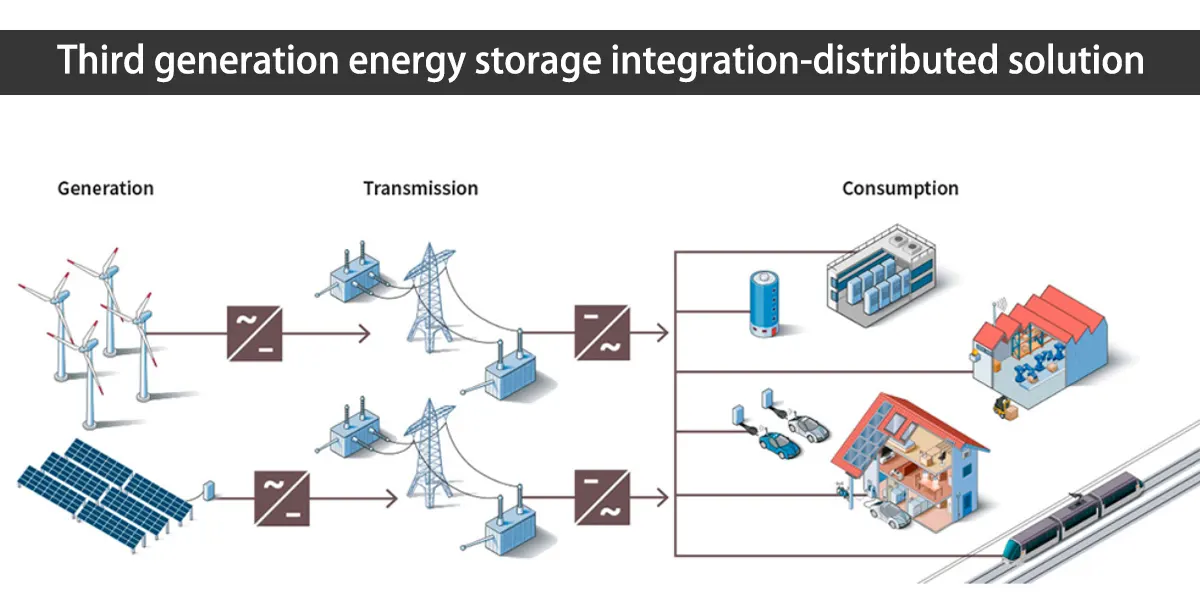
    Third generation of energy storage integration

    Related posts

    logo+86 – 18925002618
    [email protected]
    Guangpu West Road, Huangpu, Guangzhou, Guangdong, China

    Product

    Video Gallery

    Huntkey automated battery storage workshop process
    Huntkey Grevault participated in Germany ESE exihition with 5KW mobile power bank
    Contact Form Demo
    Scroll to Top





