



Centralized energy storage is the first generation of integrated routes in the industry. After the multiple battery clusters are paid to the DC side, the lithium ion BMS, the temperature control system, the automatic fire prevention system and the cross -current power distribution device are formed to form a battery container.
At the same time, in the variable flow voltage part, PCS and transformer composition the power container, and the two containers are connected through the DC cable.
Due to the advantages of low-cost and low-tech thresholds, it quickly occupied the energy storage market and became the first generation of mainstream energy storage integrated routes.
However, after a large number of concentrated schemes run, there are many problems. Here we need to strengthen a concept, full life cycle cost, and the two core factors that affect this indicator are the total life cycle investment cost and the power throughput of the whole life cycle. The biggest problem for centralized solutions is that it is impossible to achieve the optimal full life cycle power throughput.
After the battery is connected in parallel on the DC side, due to the difference in electrical performance between different batteries, each battery is dissatisfied and incomplete, and it will also bring serious circulation problems. In order to avoid the system safety problems caused by the circulation, The amount of 10%of each is retained, which is reduced to the depth of storage.
In the design of heat dissipation, the energy storage container usually uses 1-2 concentrated air conditioners. It needs to be designed with a long air duct. The refrigeration efficiency is low, the temperature difference in the container is large, exacerbating the inconsistency of the cell, and reducing the number of system cycles.
For changing flows, there are many battery clusters connected to a single PCS. Once a failure occurs, the capacity loss is large, which affects the system efficiency.
The reduction of the power throughput capacity of the whole life cycle allows the centralized solution to only reduce the economy that has been maintained well, but the cost reduction will also bring more security issues. As of now, most of the energy storage power stations that have suffered security problems have also A centralized solution is adopted.
At the same time, in the perspective of operation and maintenance, large -scale prefabricated unit monomers occupy a large area and poor flexibility. They do not support mixed use of old and old batteries, and it is difficult to replenish electricity. These problems will gradually appear during the later operation.
At this stage, the energy storage industry is still pursuing the best investment costs. Tomination is the core factor of technical considerations. The reason behind this is because the energy storage profit model is not clear, and the second is because most of the projects are renewable energy storage, and many power stations are to complete the corresponding indicators.
The core reason for the low power throughput of the centralized scheme for the whole life cycle is actually inconsistent with the battery. If each battery pack is not accurately controlled, it will inevitably lead to the reduction of storage depth, system efficiency, and decrease in battery life cycle.
In order to solve this problem, everyone thought that connecting an energy optimizer on each battery module
The battery cluster is connected to the DC bus through this energy optimizer (DC/DC), and then connected to the grid through PCS. This is a distribution solution. From concentration to distribution, the entire system can accurately control the power of each battery cluster, solve the problem of dissatisfaction, incompleteness, and circulation of DC side parallel, greatly improving the depth of the system storage depth and ensuring the battery life.
However, due to the addition of the DC/DC module, the cost of equipment has increased. At the same time, the two -stage inverter of DC/DC and PCS reduces the system’s circulation efficiency and increases the internet adjustment time.
At the level of physical integration, the distribution scheme still uses a container layout. It cannot achieve flexible equipment layout. It does not achieve partitioned safety isolation. At the same time, the problem of a large number of batteries in a single PCS connected to the battery is not solved.
With the emergence of centralized decentralized schemes, everyone has shifted from pure pursuit of optimal investment costs to pursuing the optimal electricity cost. From the “completion of the storage index” to “how to make profit through energy storage power stations”.
Whether it is a centralized or concentrated scattered scheme, its core is to reverse through PCS through PCS on the DC side. Container has become a necessary physical form but has not been able to solve the problem of low system efficiency and high total life-cycle electricity cost.
On the other hand, with the continuous increase in the electricity difference between industrial and commercial electricity price and the rapid increase in distributed photovoltaic installations, a large number of user -side demand has begun to emerge.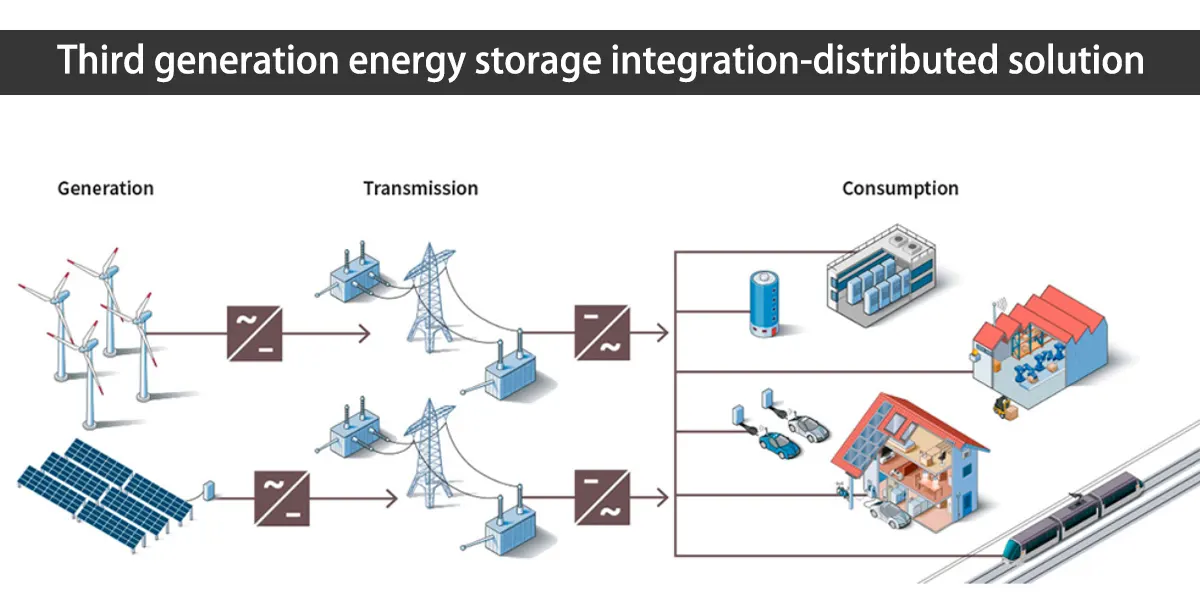
At this time, the physical form of the container and the complex terrain of the industrial and commercial factories appeared in the pain points that were difficult to match.
At the same time, the capacity of the container battery could not match the power load of the user. We need a more flexible energy storage integrated scheme to solve the pain point of the user’s side energy storage system. For example, Grevault 5kWh trolley ESS offers people more convenient power support.
1. Small cabinets become the physical form of the third-generation energy storage integrated solution
On the basis of the small cabinet, if the DC side is still connected, the large PCS cabinet is still needed to complete the inverse work, which involves two problems.
First, the large-capacity PCS covers a large area, and the site requirements for users are too high, and many scenarios are still not applicable. The second point is that with the continuous changes in the load of users on the industry and commerce, it is necessary to increase the flexibility of power supply and expansion operations.
With a degree, it is difficult to maintain the system efficiency after power replenishment expansion, and it cannot meet the needs of users in terms of flexibility.
2. “Product systemic” has become the core concept of the third-generation energy storage integrated solution
Therefore, some manufacturers have proposed that through a highly integrated battery cluster+PCS+BMS+temperature control fire system to make small cabinets, the product is systematized. It can achieve flexible expansion and solve the problem of power replenishment.
Each small cabinet is controlled by the independent BMS and PCS. The depth of the storage can be 100%. The height of the PCS and the battery cluster allows the system efficiency to break through the new height.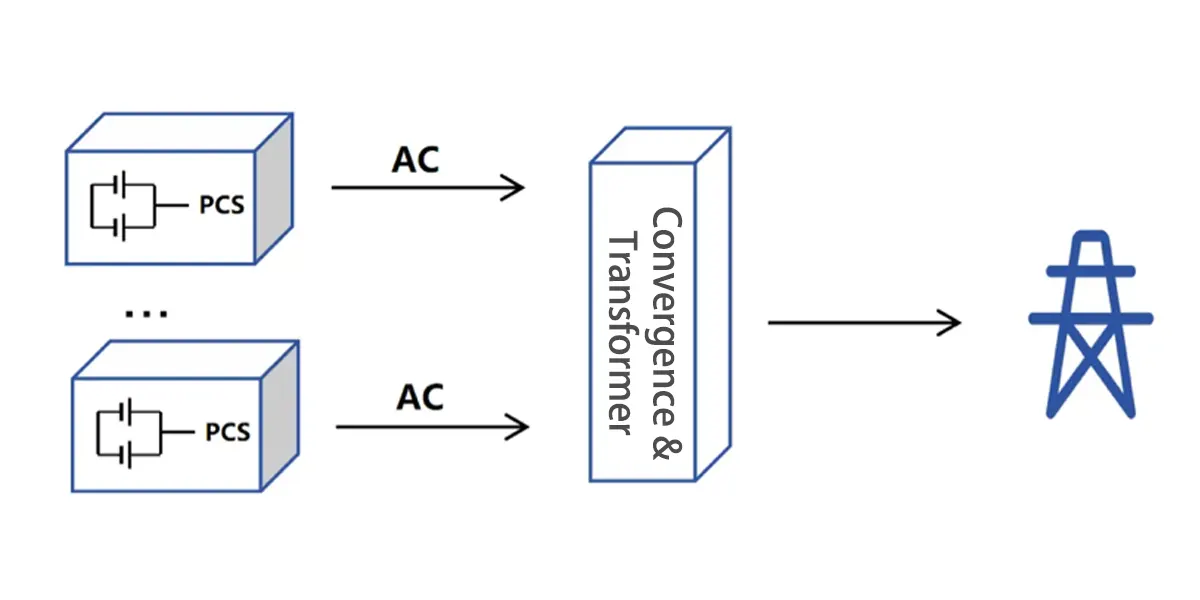
The distributed scheme has also made great breakthroughs in safety, because the physical design and control accuracy of small cabinets have increased. Once security risks occur, the system can be more quickly and accurately positioned to the problem battery. In the cabinet, as long as the fire resistance and explosion -proof performance of the cabinet can effectively reduce the impact area, so that firefighters have enough time to handle the fire scene.
With the emergence of the third -generation integrated scheme, the distributed energy storage system is not only widely used in the user side, but also frequently used in large source network -side projects.
The full life cycle storage and discharge volume, the improvement of security, and the improvement of operation and maintenance convenience brought by the distributed scheme make more and more owners and design institutes willing to adopt this new model.
Although it will bring some initial investment, the benefits of the whole life cycle are still better than the container solution.
This generation of energy storage schemes are integrated through the high degree of “product is system” concept and implemented through the physical form of small cabinets.
It not only perfectly solves the customer pain point in the user side, but also has quite colorful application cases on the source network side.



 +86 – 18925002618





