



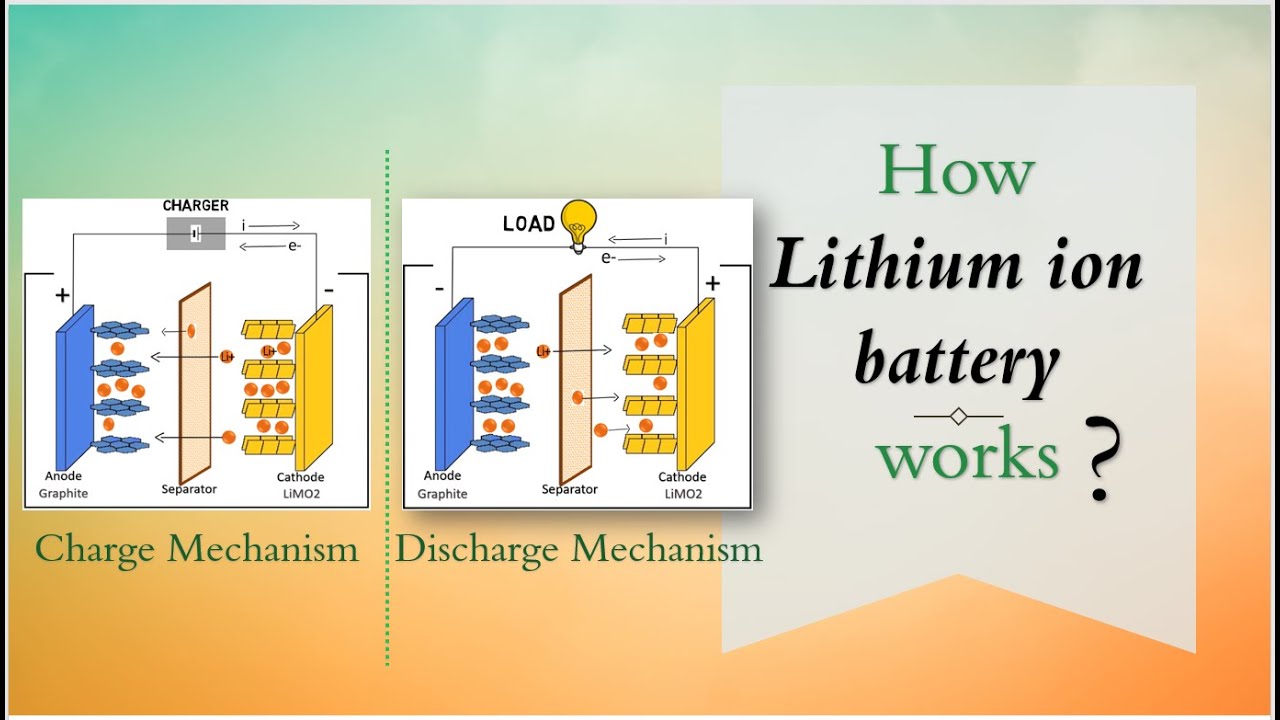

Anode
During discharge, lithium ions originating from the cathode travel toward the anode, usually composed of some kind of carbon.
Cathode
Typically, a metal oxide makes up the cathode. Lithium ions from the anode cross the electrolyte and integrate towards the cathode throughout discharging.
Electrolyte
Lithium ions are present in the electrolyte, a conductive solution that facilitates ion transport between the cathode and anode. It enables the ion flow and the electrochemical reactions that take place inside the battery.
Separator
The separator is a membrane with a permeability that prohibits touching directly between the cathode and anode, thereby avoiding a short circuit from occurring while permitting the passage of lithium ions.
Upon discharge (Whenever a cell produces electricity).
- Lithium ions travel between the anode and the cathode via the electrolyte solution.
- An electrical current is created at the anode by freed ions that traverse a circuit outside to operate the device.
- Lithium ions, as well as electrons, unite at the cathode to absorb electrical energy.
While a cell is being charged or during recharging
- The movement of lithium ions and electrons is reversed by applying a voltage from the outside.
- Lithium ions travel through the cathode and return to the anode.
- In the process, electrons are compelled to flow in the reverse orientation, and electricity is stored in the energy source for future use.

Several elements, such as substances, production-related variables, excellence, and standards, affect the lithium-ion battery price. The following essential variables can influence lithium-ion battery cost.
Cathode Substance
A lithium-ion battery’s cathode substance has an enormous effect on both lithium-ion battery price and its efficiency. Common cathode materials include lithium iron phosphate, manganese oxide, cobalt oxide, and nickel-cobalt-manganese alloys.
Anode Substance
Anode coatings like silicon or graphite also affect battery prices and efficiency. For instance, silicon anodes have greater energy levels yet could cost more.
Quality of the Battery Management System
The lithium battery BMS is essential for controlling cell discharge and charging to maintain cell life and security. Although it can be more expensive, a top-of-the-line BMS is necessary for dependability.
Energy Content
Greater concentrations of energy cells are typically more expensive. For numerous uses, it is essential to have more significant storage space in a lighter, more compact container, achieved through greater lithium battery energy density.
Life Cycle
One important consideration is how many charge and discharge cycles a battery can withstand before its capacity declines noticeably. Batteries of longer battery life cycle are frequently more expensive.
Prices for Raw Materials
A Lithium-ion battery price might change depending on the cost of the essential components utilized for manufacturing, including nickel, cobalt, lithium, and various other metals.
Technology of Production
Lithium battery price expenses of manufacture can be impacted by improvements to production procedures, like cell construction and electrode encasing procedures. Operations that are mechanized and improve efficiency may cut costs.
Scale economies
Because of the production efficiencies, bigger-scale manufacturing can result in lower costs. The price for each unit continues to decrease as the production amount rises.
Market forces and the supply network
A Lithium-ion battery price and accessibility can be influenced by interruptions in the supply chain, geopolitical circumstances, and consumer demand, which can ultimately affect the final cost.
Standards for Security and Quality
A Lithium-ion battery price may increase to meet strict quality and safety requirements. Secure and excellent batteries are essential, mainly when security is paramount.
Use Cases
The battery’s form and specs may change depending on its use. Various specifications and price points may apply to cells made for particular services, such as electronics for consumers or electric automobiles.
Government Rules as well as Incentives
Rules, grants, and government actions may affect lithium-ion battery prices. For example, rebates for electric automobiles can influence lithium-ion battery price costs and increase demand.

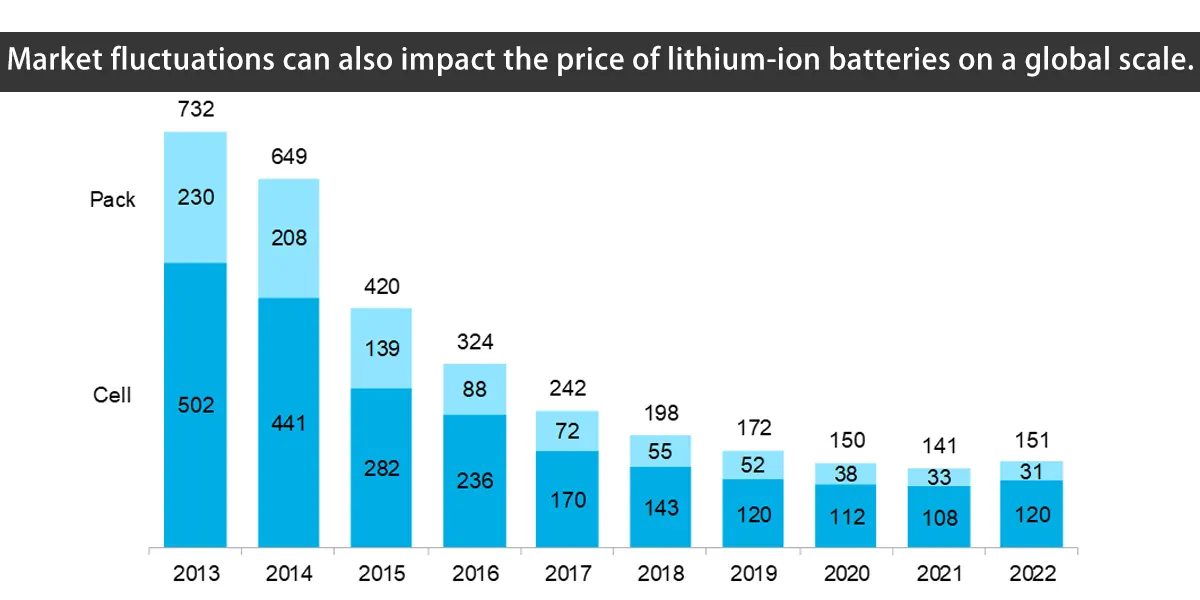
Over time, there has been a constant decline in the lithium-ion battery price, which can be attributed to various sources.
Technological Progress
The effectiveness, energy content, and general efficacy of lithium-ion cells have all significantly improved due to ongoing studies and developments in battery innovation. As novel supplies and production procedures are created, the overall price for manufacturing falls, contributing to a lower lithium-ion battery price.
Scale Effect
Producers of lithium-ion battery packs have become able to attain efficiencies of scale as consumer interest in their products has grown. Because fixed expenses are distributed over more units, higher production volumes reduce production costs per unit. This scale impact is especially noticeable in the electrical automobile business, where rising demand has increased manufacturing quantities.
Optimization of the Supply Chain
Lithium-ion battery supply chains are now more simplified and effective. Raw material extraction, manufacturing, and delivery advances lead to lithium-ion battery price savings. Furthermore, as the production network grows, firms have a greater capacity to oversee and improve their acquisition methods.
Heightened rivalry
Several companies have been drawn to the market by the growing need for lithium-ion cells, particularly in uses such as electric vehicles and solar battery power storage. Due to fierce market rivalry, corporations are pressured to create new products, reduce expenses, and increase effectiveness, diminishing the Lithium battery price.
Governmental Rewards
Governments in particular regions offer financial aid and other incentives to promote the use of environmentally friendly sources of energy and electrically powered cars. These perks may raise consumption while continuing to drive down the lithium-ion battery price by helping to balance the expenses borne by customers and producers.
Enhancements in Energy Concentration
Cells can store additional power in lighter, compact packaging because of advancements in the concentration of energy. This is especially crucial for using electric automobiles, where greater energy density leads to extended cruising distances and enhanced general efficiency.
Recycle and Uses for a Second Life
By retrieving precious components, enhanced lithium-ion battery reuse processes can reduce costs. To further optimize the value of every battery, second-life solutions are being developed in which exhausted cells can be utilized for tasks that are simpler after their original life span.

Within the rapidly changing field of lithium-ion battery development, Huntkey has become a shining example of cost and creativity. Huntkey, a market leader in the sector, has continuously shown that it is dedicated to offering an affordable lithium-ion battery price.
Huntkey’s commitment to technological advancement constitutes one of the main things that makes it unique. It enables the business to streamline operations and cut expenses without sacrificing quality. Huntkey has attained efficiencies of scale through cutting-edge technologies, which result in considerable cost reductions for customers.
In addition, Huntkey’s supply chain, which has vertical integration, guarantees effectiveness from the beginning of production to the finished product.
This efficient method reduces overhead and enables the business to provide affordable rates without compromising quality. Huntkey’s emphasis on durability aligns with the increasing need for environmentally friendly energy options.
Consumers may rely on Huntkey’s outstanding track record for a dependable and reasonable Lithium battery price.
Huntkey is now the marketplace’s most affordable lithium-ion battery producer thanks to its dedication to cost and proven innovation. Selecting Huntkey is investing in an era where affordable, state-of-the-art energy alternatives are widely available.


 +86 – 18925002618





