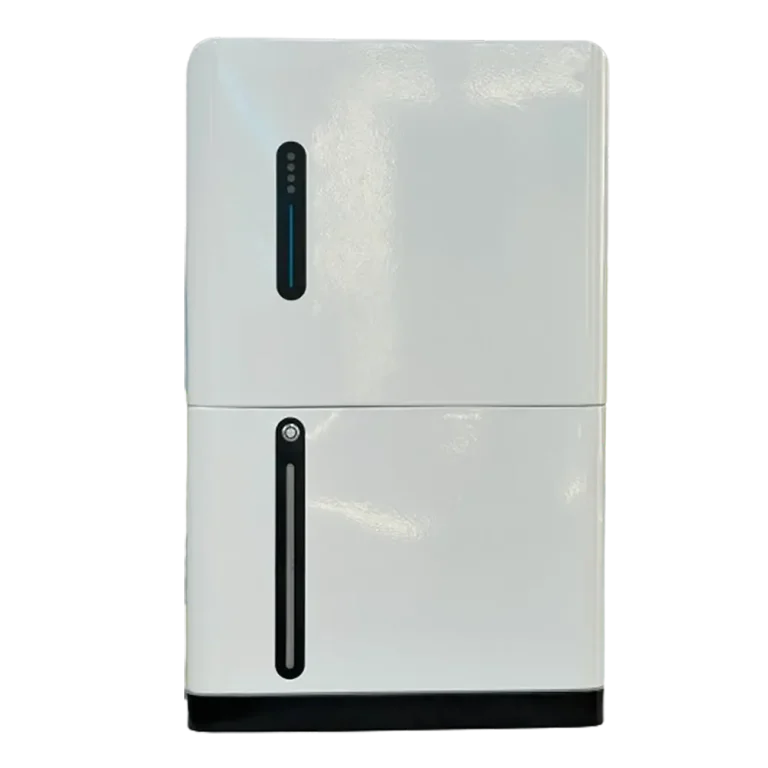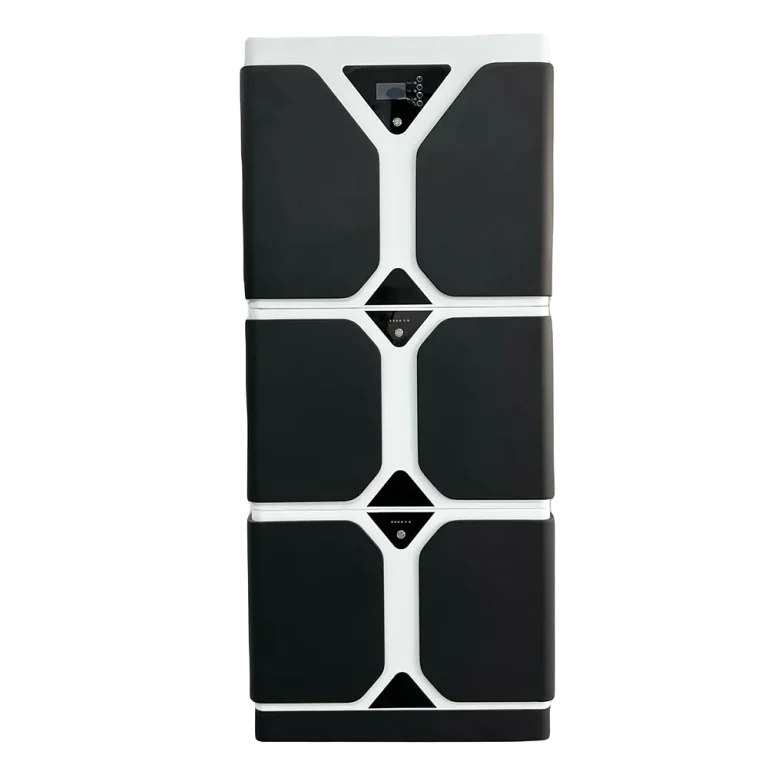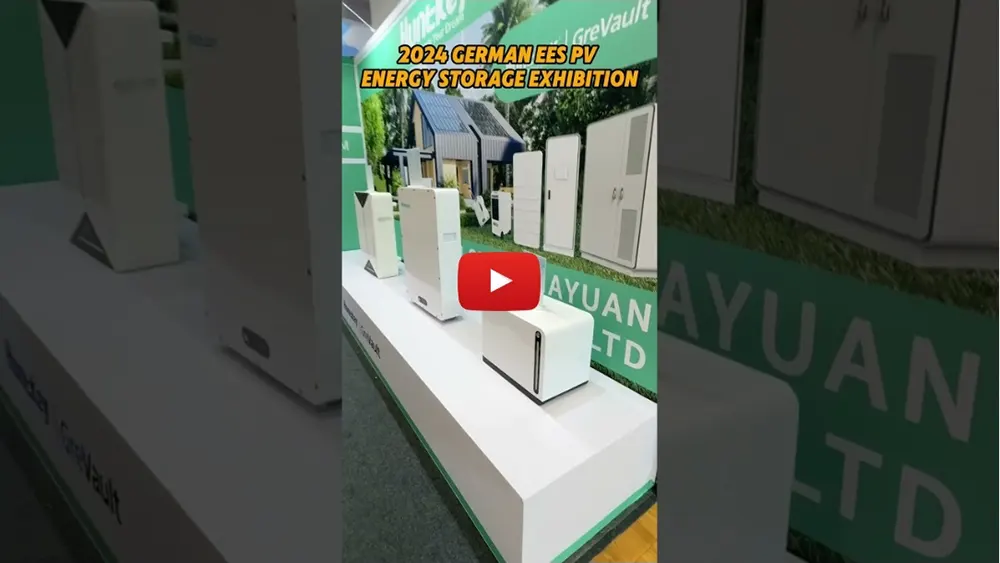


First of all, the Powerwall 3.0 does not require the installation of a third-party solar inverter, and realizes a battery capacity of up to 40.5kWh. The Powerwall 3.0’s highly efficient grid-connected solar energy efficiency reaches 97.5%. Once installed, the Powerwall 3.0 can be monitored and managed using the Tesla app.
Secondly, the AC power of the Powerwall 3.0 has been upgraded to 11.5 kW, a 20% increase over the previous generation of behind the meter battery storage products, and the Powerwall 3.0 still supports ground or wall mounting.
In addition, the thickness of Tesla Powerwall 3.0 is about 6.35 centimeters thicker compared to the previous generation, and some viewpoints point out that this is Tesla’s sacrifice of the thickness advantage to upgrade some of the product’s performances, including AC power.
In short, highly integrated products like Tesla’s Powerwall 3.0 are currently leading the market in a new direction. Highly integrated products can, on the one hand, realize cost reduction and efficiency, reduce costs while improving integration efficiency, and, on the other hand, facilitate installation at the user’s end, greatly saving installation time.

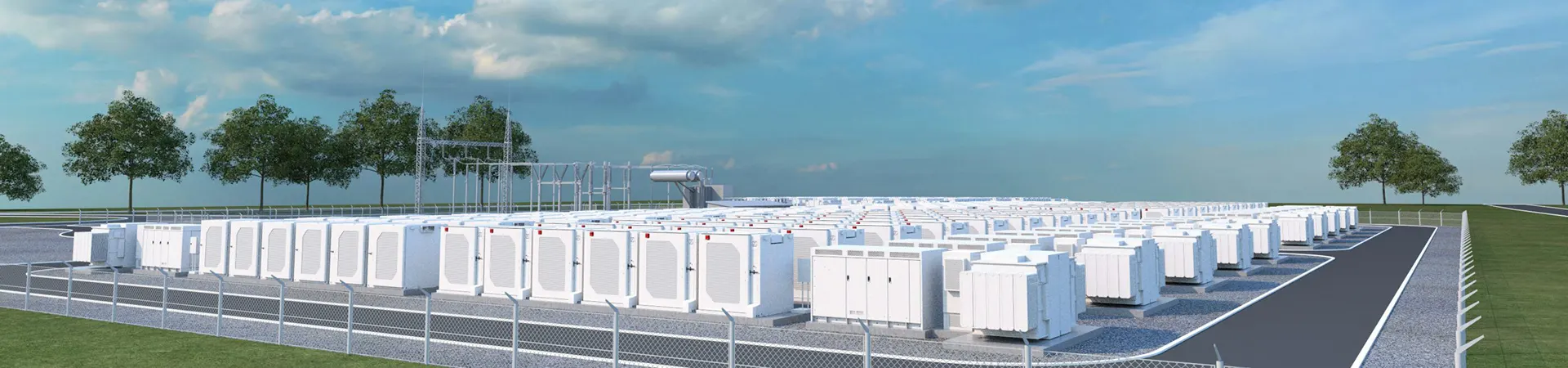
According to Tesla’s official website, 100 sets of 2h Megapack energy storage system is priced at US$199 million, with a unit price of about RMB 3.71 Yuan/Wh, and a set of individually purchased set is priced at US$2.67 million, with a unit price of about RMB 4.92 Yuan/Wh. By the end of 2022, the official price of this set of Tesla’s energy storage system will be US$25,969,910, which is about RMB 4.655 yuan / Wh, there is news that a one-time purchase of more than 100 sets can enjoy preferential, RMB price of about 3.22 yuan / Wh.
From this, Tesla’s energy storage system price rose about 4% in six months. But from the point of view of delivery time, at the end of last year, the fastest delivery period of Tesla’s energy storage system is 2024 Q3, that is, about three quarters. And now the official website shows that the fastest delivery will be in 2025 Q2, which shows that its squeezed orders not only have not decreased but even still have an increasing trend.

In the second quarter of this year, Tesla’s new energy vehicle production and sales were 479,700 and 466,100 respectively, creating the highest single-quarter production and sales record ever, and standing steadily as the global pure electric vehicle sales champion. Tesla said its 2023 electric vehicle production capacity target remains at 1.8 million units.
It’s worth noting that Tesla had several price cuts in the first and second quarters of this year, and that major car companies around the world were forced to implode to join the price-cutting melee. Finally, Tesla’s electric car business in the second quarter realized revenue of $21.268 billion, up 46% year-on-year.
However, this time, Tesla’s earnings report did not announce the profit margin of its electric car business, a metric that exceeded 30% early last year.
And Tesla itself said its margins remain at a healthy level of around 10%.
But Tesla’s overall gross margin has fallen to 18.2% in the Q2 quarter of this year, its lowest level in four years. The figure was still 18.9% last quarter.
The previously much-anticipated Cybertruck, which Tesla says is moving forward as planned, with candidate versions of the vehicle currently in production, and the first mass-produced Cybertruck having rolled off the assembly line at its Texas factory on July 15, is expected to be in mass production by the end of this year.
In conjunction with the use of electric vehicles, there has been a substantial increase in the deployment of Tesla charging piles, charging stations, and charging networks. Of particular note, in the second quarter of 2023, companies including Ford, GM, Mercedes, Nissan, Polestar, Rivian, Volvo, and Electrify America announced the adoption of the NACS charging standard, which Tesla developed specifically for its North American products more than a decade ago. Tesla says it will further open up its charging network in 2024 so that the rate of growth of the charging network can match the rate of growth of the transition from combustion to electric vehicles.

In 2015, Tesla began to involve in the global energy storage business, and it stepped into the field of energy storage through the household storage product Powerwall and the commercial storage product Powerpack, and in 2016, it further improved the household photovoltaic storage segment after acquiring SolarCity, a leading household photovoltaic manufacturer, and launched upgraded versions of Powerwall2 and Powerpack2.
In 2019, Tesla officially Launched the Megapack large-scale energy storage system for the utility-grade energy storage market, quickly occupying the leading position in the global large storage market, and in 2022, Tesla upgraded the entire line of Megapack products to lithium iron phosphate solutions, and its layout in the energy storage segment has now become complete.

The above is all about the Tesla Powerwall 3.0. If you want to know more about energy storage manufacturers, please click on Top 10 energy storage battery manufacturers in the world.

The utilization of renewable energy sources like photovoltaics has been rising in recent years. Photovoltaic power generation is highly compatible with daytime electricity loads. This article will introduce top 5 latest photovoltaic energy storage products in China.

Compressed air energy storage refers to the energy storage method that uses to generate electricity during the peak load period of the grid. This article introduces compressed air energy storage in detail from the aspects of structure and so on.

Temperature has an impact on the performance of the electrochemical energy storage system, such as capacity, safety, and life, so thermal management of the energy storage system is required. This article compares the two major cooling technologies at present: liquid cooling vs air cooling.

 +86 – 18925002618