


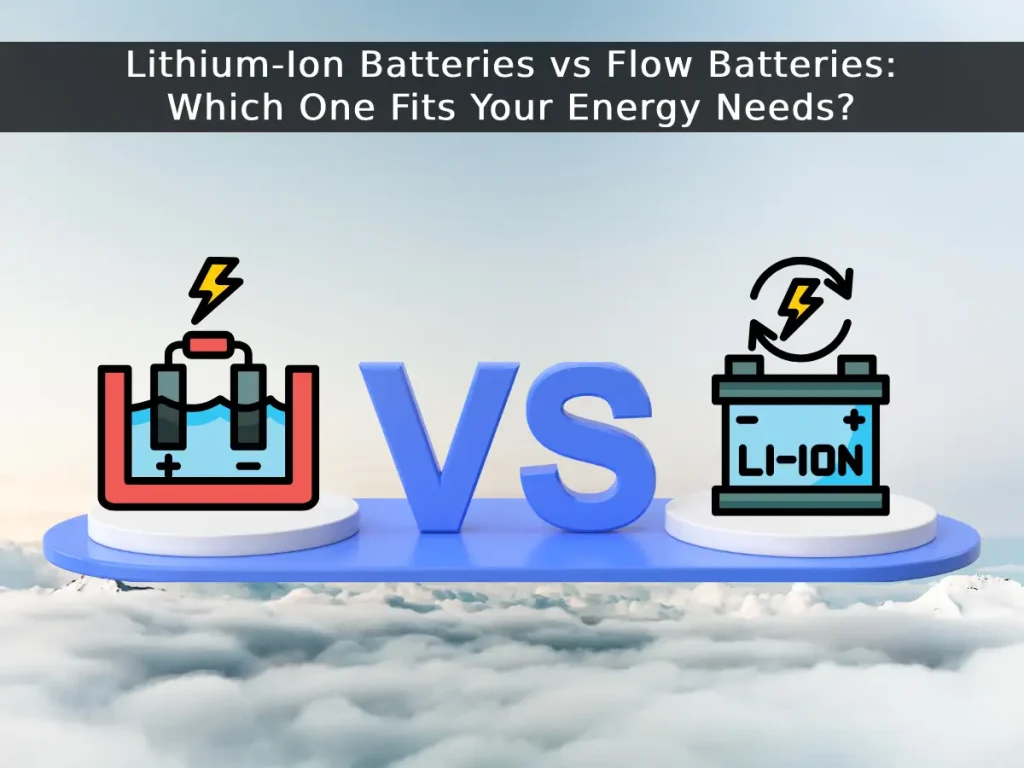
As the need for energy increases, batteries are now an important solution. The function of batteries is not only to store electricity, but also to make renewable energy more usable. The only problem is, people are often confused about choosing the right battery. Hence, the lithium-ion batteries vs flow batteries comparison is the most frequently discussed topic.
The comparison between lithium-ion batteries vs flow batteries occurs because both batteries are used for energy storage systems. However, these two batteries have different characteristics, ways of working, advantages and disadvantages.
In this article we will discuss the comparison of lithium-ion batteries vs flow batteries, starting from the definition, advantages and disadvantages of these two batteries, to tips on choosing a battery that suits your needs. Let’s dive deeper
What are Lithium Ion Batteries?
Before we discuss further about the comparison of lithium-ion batteries vs flow batteries. It is important for users to know what a lithium-ion battery is. Lithium batteries are actually often found in everyday life such as cellphones, laptops, electric vehicles to large-scale energy storage systems.

In understanding, this type of battery is a type of modern battery that works by relying on the movement of lithium ions between the cathode (positive electrode) and anode (negative electrode) through electrolyte. This is what causes lithium batteries to be rechargeable.
Lithium-ion batteries have the most prominent advantage, which is high energy density. This means that this battery can store a large amount of energy despite its small size. With this advantage, Lithium-Ion batteries are the first choice in various fields.
Learn more in our article on how does a battery energy storage system work?
What are Flow Batteries?
After understanding about lithium-ion batteries. Now we will discuss what Flow batteries are often talked about in the world of energy storage.

A flow battery is a type of rechargeable battery that stores energy in the form of an electrolyte liquid. The liquid is stored in separate tanks and pumped through electrochemical cells to generate electricit.
Flow batteries have the flexibility of storage capacity. This is because, the larger the tank used, the greater the energy that can be stored. Therefore, when comparing lithium-ion batteries vs flow batteries, Flow is usually preferred for long storage with repeated use cycles.
Advantages and Disadvantages of Lithium-Ion Batteries vs Flow Batteries
When we talk about lithium-ion batteries vs flow batteries, it is important for users to know the advantages and disadvantages of these two batteries. This is because, it can help users to choose a battery that suits their needs.

Advantages of Lithium-Ion Batteries
- High energy density
- High efficiency
- Suitable for portability
- Widely used and the technology continues to develop
Disadvantages of Lithium-Ion Batteries
- Limited cycle life
- Relatively high cost for large-scale energy storage projects.
- There is a risk of overheating if the battery management is not good
Advantages of Flow Batteries
- Long storage duration for many days
- Longer cycle life.
- Flexible capacity
- Safe to use
Disadvantages of Flow Batteries
- High initial installation costs.
- Lower efficiency
- Large size
- Technology is still developing and not as popular as lithium batteries
In the comparison of lithium-ion batteries vs flow batteries, the best choice for users is the one that is tailored to their needs. Lithium-Ion excels for efficiency and compact size, while Flow Batteries are more ideal for large-scale energy storage with long duration.
Lithium-Ion Batteries vs Flow Batteries: Key Differences
After discussing the advantages and disadvantages, now we get to the question of what are the main differences between lithium-ion batteries vs flow batteries? Here are the differences:

| Aspect | Lithium-Ion Battery | Flow Battery |
|---|---|---|
| Storage Medium | Lithium ions stored in solid cells | Liquid electrolyte stored in external tanks |
| Energy Density | High, compact and lightweight | Lower, requires larger space |
| Cycle Life | Limited (thousands of charge cycles) | Very long (tens of thousands of cycles) |
| Storage Duration | Suitable for short to medium-term | Suitable for short to medium-term Ideal for long-duration storage |
| Efficiency | Around 90% or higher | About 70–80% |
| Cost | Relatively high per kWh | Higher upfront cost, but lasts longer |
| Scalability | Limited, need to add more units | Easy to scale by enlarging tanks |
| Common Uses | Electronics, EVs, medium-scale storage | Renewable energy, grid-scale storage |
It is important to understand that the comparison between lithium-ion and flow batteries involves more than just technology. It also includes storage capacity, lifespan, efficiency, and cost. In addition to understanding these points, users can more easily decide which type of battery is suitable for their home, business, or even large-scale industrial projects.
Covered this in detail in industrial energy storage
Lithium-Ion batteries vs Flow Batteries for Energy Storage Systems
After we discussed the differences between lithium-ion batteries vs flow batteries. Now let’s discuss the role of these two batteries in energy storage systems

- Lithium-Ion Battery
This battery has the advantage of high energy density. In addition, this battery is quite light and compact. So, usually this type of battery is suitable for household energy storage from solar panels, electric vehicles, or portable backup systems. - Flow Battery
Unlike lithium batteries, flow batteries excel in large-scale and long-term storage. This is because, this type of battery has a flexible design, that is, users can enlarge the electrolyte tank if they need a larger capacity. This design allows for a very high number of charge–discharge cycles. Therefore, flow batteries are suitable for energy storage in power plants, grid balancing, and renewable energy storage integration.
Applications of Lithium Ion Batteries and Flow Batteries
After understanding the main differences and advantages of lithium-ion batteries and flow batteries. Now it is time to discuss where these two types of batteries are used. This is because, although both batteries are used for energy storage systems, the direction of use is quite different.

- Lithium-Ion Battery
Lithium-ion is widely used in everyday devices such as smartphones, laptops, and electric vehicles. In addition, currently lithium-ion is not only used in gadgets, but is also starting to penetrate into home energy storage systems. So, we can conclude that lithium-ion batteries are ideal for portable and household applications
For a deeper understanding, check out our guide on household solar batteries
- Flow Battery
Different again with flow batteries. If lithium-ion is suitable for daily needs, flow batteries are actually better at large scale. For example: for solar or wind power plants, where long-lasting and stable energy storage is needed. The advantage is that this battery can be charged and used many times without being quickly damaged. That is why they are widely used in grid energy storage, so that the electricity supply remains safe even when the weather is not favorable.
Therefore, lithium-ion batteries are more suitable for mobility & household needs, while flow batteries are suitable for large scales such as power plants and national grids.
Choosing Between Lithium Ion Batteries and Flow Batteries
If you already know the advantages and differences between the two, now the question is: which one to choose between the comparison of lithium-ion batteries vs flow batteries? Here are the considerations

- Choose Lithium-Ion Battery
Users should choose lithium-ion batteries if they need a practical, lightweight option that can be used anywhere. In addition, this type of battery is suitable for use in everyday devices, electric vehicles, and household energy storage. - Choose Flow Battery
Otherwise, if the user needs it for a large level, for example a solar or wind power plant. Users can choose a flow battery because this battery is designed for heavy work, is durable, and keeps the electricity supply stable.
Conclusion
The comparison of lithium-ion batteries vs flow batteries is actually not about who is superior, but rather who is best suited to the needs. Lithium-ion batteries are more suitable for mobility and household needs. From smartphones, laptops, electric vehicles, to home energy storage systems, these batteries are the choice because they are lightweight, efficient, and easy to use.
On the other hand, flow batteries are more appropriate for large-scale energy storage. They can be relied upon for solar, wind, and national electricity systems due to their flexible capacity and long lifespan.
By understanding the main differences between lithium-ion batteries vs flow batteries, users can more easily make the most suitable choice, whether for personal use or large-scale energy projects.
FAQS
Yes, flow batteries are generally considered safer than lithium-ion batteries. You see, flow batteries use electrolyte liquid that is stored in a separate tank, so there is less risk of fire or overheating. Whereas lithium-ion still needs strict management so that it doesn't heat up quickly.
When it comes to lifespan, flow batteries are much more durable. They can be recharged thousands to tens of thousands of times without breaking down. Lithium-ion has high efficiency, but it has limited cycles, usually only thousands of times before its capacity starts to drop.
Not necessarily. Flow batteries have advantages for large scale, but they are bulky and expensive to start, so they are not suitable for portable devices or household needs. Meanwhile, lithium-ion is still the top choice for gadgets, EVs, and home energy storage. So, it is likely that these two technologies will complement each other, not replace each other.



 +86 – 18925002618





