



As its company name “Dome” describes, the most significant feature of the Energy Dome carbon dioxide energy storage system is the use of huge air bags to store carbon dioxide gas at close to normal temperature and pressure.
In the vision of Energy Dome CEO Claudio Spadacini, these dome-shaped structures will become a symbol of the transition to clean energy, “just like windmills and solar panels.”
Efficient, low-cost, flexible, durable, and reliable, Energy Dome said that its carbon dioxide energy storage system will achieve a cost of electricity of 50-60 US dollars/MWh (340-410 yuan/MWh) in the next few years, which will be more than twice lower than lithium-ion batteries; at the same time, Energy Dome carbon dioxide storage The energy system efficiency can reach 75-80%.
One year after Energy Dome’s first 2.5MW/4MWh commercial demonstration carbon dioxide energy storage project was put into operation, at the end of 2023, Energy Dome announced that it would deploy the first long-duration energy storage project with a duration of 10 hours in Italy. The scale of the project It is 20MW/200MWh and is expected to be put into commercial operation in the third quarter of 2024. Clik here to get more about Top 10 high capacity battery cell.
According to Energy Dome, the capital expenditure required for the project will be less than 50% of the capital expenditure for a 4-hour lithium-ion energy storage project.

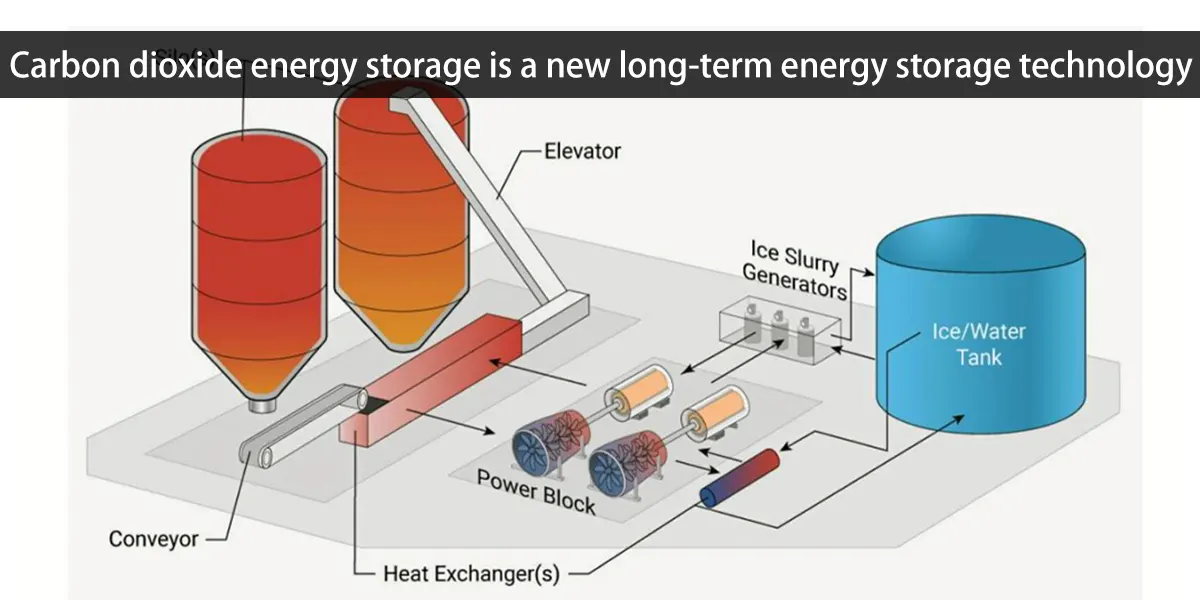
Bairang New Energy, founded in 2021, uses gas-liquid interconversion and two-state synergy energy storage technology. Its basic principle is to use excess electricity to compress carbon dioxide gas at normal temperature and pressure into liquid during the low period of electricity consumption, and then compress it. The thermal energy generated during the process is stored; Here are more about balcony solar storage system.
During peak power consumption periods, the stored thermal energy is used to heat liquid carbon dioxide to a gaseous state and drive the turbine to generate electricity.
Bairang New Energy said that its gas-liquid interconversion carbon dioxide energy storage technology has a full-cycle cost of electricity as low as 0.15 yuan/KWh, which is obviously economical; at the same time, the system design of decoupling the system power unit and capacity unit means that when the power is determined.
Under the premise, increasing the energy storage time only requires expanding the system capacity unit. Therefore, the longer the energy storage time, the lower the unit cost of the carbon dioxide energy storage system.
Due to the closed cycle, Bairang New Energy’s carbon dioxide energy storage system is not affected by conditions such as external temperature and geographical environment, and has good universal applicability. The units and related equipment are all constructed above ground, so the engineering difficulty is low and the construction is fast.
The storage and release of electric energy is realized through the physical phase change of carbon dioxide. When the phase change temperature and pressure are determined, there is no time limit for the phase change of carbon dioxide in the gas-liquid interconversion carbon dioxide energy storage system.
The unit equipment is a rotating machine, and the operating principle is the same as that of thermal power. The unit is similar and can perform work uninterrupted. The maximum single cycle of system operation can be up to 24 hours, the single charge and discharge time can be more than 23 hours, and the system’s equivalent time utilization coefficient can be close to 100%.
The Wuhu Conch 10MW/80MWh carbon dioxide energy storage project that will be connected to the grid for power generation at the end of 2023 adopts Bairang New Energy’s gas-liquid interconversion carbon dioxide energy storage technology. Combined with the process characteristics of cement production, it uses the waste heat of cement kilns to improve energy storage efficiency and convert cement into.
The carbon dioxide emitted during the production process is compressed to a high-pressure state and stored in a high-pressure gas storage tank. The compressed carbon dioxide is then released through a release valve to drive the turbine to rotate and generate electricity.
The system is deeply coupled with the CCUS capture production line of Conch Cement, and uses the carbon dioxide captured on the cement production line for the energy storage system to achieve the temporary storage of carbon dioxide, which not only reduces the cost of the energy storage system but also reduces the cost of carbon storage, achieving Carbon dioxide capture and recycling.
At the same time, by making full use of the heat of the flue gas below 110°C generated during the cement production process, the waste heat is converted into electricity and supplied to production, which can enable the company to save about 1,565 tons of standard coal per year; the systematic use of low-grade waste heat cracks the The problem of insufficient utilization of low-grade waste heat in cement plants.

To sum up, the commercial promotion of carbon dioxide energy storage has promising prospects. However, the carbon dioxide energy storage system also has some shortcomings.
First of all, basic innovation research on carbon dioxide energy storage needs to be in-depth. There is insufficient theoretical research on the core technology system of carbon dioxide energy storage systems, and there is a lack of complete top-level design and bottom-level support.
There are still many key technologies that need to be overcome in carbon dioxide energy storage in terms of thermodynamic cycle construction theory, system dynamic operation control strategy, key equipment development and high-performance material selection. At the same time, there is also certain practical pressure in equipment processing and manufacturing, system application, etc.
Due to the unique properties of carbon dioxide such as low viscosity, high density, and low critical point, there are also some potential problems when the compressor in the carbon dioxide energy storage system is working.
But as Energy Dome expects on its official website: “CO2 Battery, the only viable alternative for long-duration energy storage.” In the future, with the expansion of market share and continued technology iteration and upgrade, the carbon dioxide energy storage system will become more and more expensive, both in terms of cost and cost.
Both performance and performance will be improved. Carbon dioxide energy storage, which is currently a bit “niche”, is also expected to become an important development direction for long-term energy storage technologies.

 +86 – 18925002618





