


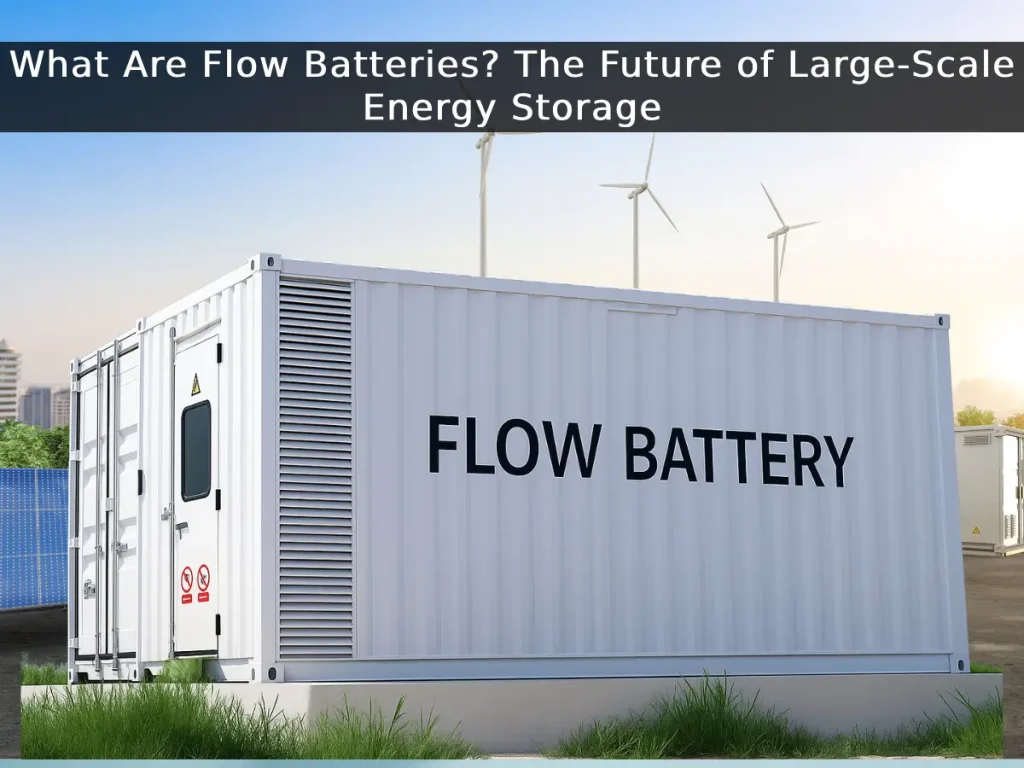
In the world of energy storage, lithium batteries are known for their high efficiency and energy density. However, lithium batteries still have limitations in terms of service life and overheating. Therefore, many large-scale energy storage users are starting to look at other technologies that are more durable and flexible, namely flow batteries.
Flow batteries are not actually a new technology but have been around since the 1970s. However, they are now being used more widely because they are considered suitable for energy storage systems. Flow batteries work by storing energy in two separate tanks of electrolyte liquid. So why are these batteries considered flexible and very suitable for energy storage?
Therefore, we will discuss further how flow batteries work and what the advantages and disadvantages of these batteries are. Let’s discuss this further.
What Are Flow Batteries?
Flow batteries are a type of battery that stores electrical energy in the form of chemical energy stored in an electrolyte fluid. This fluid is stored in two separate tanks, one with a positive charge and the other with a negative charge.

So what makes this battery different from a regular battery? The difference is that the capacity of flow batteries can be adjusted. So if the user needs more power, they can simply add more electrolyte fluid. Meanwhile, lithium batteries are still limited to the size of the cell. That is why flow batteries are considered to have flexible capacity and are very suitable for large-scale energy storage systems.
Covered this in detail in solar batteries vs normal batteries
Core Components of Flow Batteries Systems
Before we understand how flow batteries work, it is important for users to have an understanding of several key components that play an important role in the energy storage process. These components are as follows:

- Electrolyte Tanks
Flow batteries have two large tanks that function to store positive and negative electrolyte fluids. - Pumps and Pipes
The next component of flow batteries is pumps and pipes, which function to pump electrolyte fluid from the tank to the reaction cell, and vice versa. - Cell Stack (Reaction Cell)
The next component is the cell stack, which plays a very important role as the place where the two electrolyte fluids meet and react, producing electricity that can be used immediately or stored. - Membrane Separator
This component separates the two electrolyte liquids so that the fluids do not mix, but ions can still pass through this component. - Power Conversion System (PCS)
Then the last component is the PCS, which converts DC current from the battery into AC. The purpose is so that the electricity generated can be used by electrical equipment.
Working Principle of Flow Batteries
After we understand the components of flow batteries, now take a look at how flow batteries work. So flow batteries actually have a fairly unique way of working compared to other conventional batteries. This is because other batteries store electrical energy in the battery cells, while flow batteries store electrical energy in the form of liquid electrolytes. These liquid electrolytes are placed in two separate tanks.

When the battery is being charged or used, both electrolyte liquids will be pumped into the reaction cell. It is within this cell that the exchange of positive ions with negative ions occurs, generating an electric current. This electric current is still in the form of DC, which is then converted by the power conversion system into AC current that can be used by all devices.
Different Types of Flow Batteries
Flow batteries come in various types, distinguished by their electrolyte fluid. Each type has its own characteristics and advantages. Here are the differences:

- Vanadium Redox Flow Battery (VRFB)
The first type of flow battery is the Vanadium Redox Flow Battery (VRFB). This type of flow battery is very popular because it is known to be durable, safe, and can be recharged thousands of times without reducing performance. This is because VRFB uses vanadium ion electrolyte fluid on both sides of the tank. As a result, the electricity produced is more stable. - Zinc-Bromine Flow Battery
The second type is the Zinc-Bromine Flow Battery. This type of battery uses an electrolyte fluid containing zinc and bromine. These two fluids react with each other to store and release electrical energy. This type of battery is known to have high energy density. However, it requires a more careful control system because it has a fairly active chemical reaction. - Iron Flow Battery
The last type is the iron flow battery, which is already widely used. This is because this type of battery has a long service life and low operating costs. As the name suggests, iron flow - batteries use iron as the main electrolyte liquid, making the raw materials inexpensive and more environmentally friendly.
Learn more in our article on Flow Batteries vs Lead-Acid Batteries
Strength and limitation of Flow Batteries
In understanding flow batteries, users must know the strengths and limitations of this battery. This is because each battery has its own characteristics. The following are the strengths and limitations of flow batteries:

Strengths of Flow Batteries:
- Capacity can be easily increased
Flow batteries store energy in the form of liquid electrolytes stored in two separate tanks. Due to the flexible nature of flow batteries, if users need a large amount of power, they can increase the capacity by enlarging the tanks. - Long service life and stable performance
Because the chemical reactions in flow batteries do not occur inside the storage cells, this type of battery can be charged thousands of times without experiencing a decrease in capacity. - Lower risk of overheating
Unlike lithium batteries, which use solid cells, flow batteries are less prone to overheating because they use liquid electrolytes. This makes the system safer from potential overheating. - Environmentally friendly
Some types of flow batteries use recyclable and non-toxic materials, making them more environmentally friendly and supporting the use of clean energy.
Limitations of Flow Batteries:
- Initial costs are still quite high
Flow batteries have higher installation costs than lithium batteries. The many components required in a flow battery system, such as tanks, pipes, and pumps, make the initial costs more expensive. - Low energy density
As discussed earlier, flow batteries store energy in liquid form. This means that these batteries require more space for the same capacity compared to batteries that use solid cells. - Requires additional systems and maintenance
Flow batteries require additional systems and routine maintenance to maintain stable performance.
After considering the strengths and limitations of flow batteries, this type of battery is ideal for use in large-scale energy storage systems such as solar or wind power plants.
For a deeper understanding, check out our guide on How to Maintain Energy Storage Batteries
Flow Batteries vs Lithium-Ion Batteries: Key Differences
After users understand the strength and limitations of flow batteries, they may wonder what the difference is between lithium batteries vs flow batteries, which can both be used for energy storage. Here are the differences.

- How Energy is Stored
Flow batteries store energy in the form of liquid electrolyte stored in two large tanks. Meanwhile, lithium-ion batteries store energy in solid cells. - Capacity and Flexibility
In terms of battery capacity and flexibility, flow batteries are superior to lithium batteries. This is because the capacity of flow batteries can be increased by enlarging the size of the tanks. Meanwhile, the capacity of lithium-ion batteries depends on the number of cells used. - Service Life and Durability
In the long term, flow batteries have a longer service life and do not easily decline in performance. Meanwhile, lithium-ion batteries generally begin to decline after several years of use. - Efficiency and Speed
In terms of efficiency and speed, lithium-ion batteries are superior. This is because flow batteries tend to be slower, but remain stable for long-term storage. - Cost and Maintenance
In terms of cost and battery maintenance, flow batteries have a higher initial cost compared to lithium batteries. However, they can be more economical in the long run because they are durable. Lithium-ion batteries are cheaper initially, but they need to be replaced after a certain lifespan.
Where Flow Batteries Are Used
Flow batteries have the advantage of flexible capacity, making them widely used for large-scale energy storage. They are used for solar panel and wind turbine power plants. In addition, flow batteries are widely used in several countries for large-scale electricity backup. So, if there is a sudden surge in electricity demand, the system remains stable because there is backup power from the batteries.

Furthermore, this type of battery can store electricity generated during the day for use at night or during inclement weather. Therefore, these batteries are also widely used in remote locations as a renewable power source so that electricity is available whenever needed.
Maintenance and Safety Tips For Flow Batteries
After users understand the advantages and disadvantages of flow batteries, it is important for them to know how to maintain the batteries properly. Here are some tips for maintaining flow batteries:

- First, users can perform maintenance by regularly checking the pump and pipe systems.
- Second, after checking the pump system, users must also monitor the condition of the electrolyte. This includes checking whether the volume has decreased or the color has changed. If either of these occurs, it may be a sign that replacement is needed.
- Third, users should also maintain a stable temperature to keep the battery performing optimally.
- Then users can use a monitoring system, which can provide real-time information about battery performance and prevent issues before they occur.
Conclusion
Flow batteries are batteries that are increasingly being used for energy storage systems. This type of battery has the advantage of flexible capacity. So, if users need a lot of power, they can increase the size of the tank to get more power.
Additionally, flow batteries can be recharged multiple times without compromising their performance. For this reason, they are widely used in large-scale energy storage systems such as solar panels or wind turbines. In many countries, these batteries are also utilized as backup power sources during sudden spikes in electricity demand.
After understanding the overall characteristics of flow batteries, users can decide which battery is suitable for their needs. For users requiring large-scale and long-term storage, flow batteries are the right choice. Meanwhile, for users wanting to use a storage system for homes and offices, lithium batteries are a more practical option.
FAQS
Flow batteries have a very long lifespan, often lasting more than 20 years, and even longer with proper maintenance. Because the chemical reactions take place outside the main storage cell, their performance remains stable even after thousands of charge and discharge cycles.
Each type has its own advantages. Flow batteries are known for their durability and flexible capacity, making them ideal for large-scale and long-duration energy storage. Meanwhile, lithium-ion batteries are more efficient and compact, which makes them perfect for smaller systems or quick-response applications.
The cost of a flow battery system depends on its capacity and technology. Generally, the initial investment is higher than lithium-ion, but over time, flow batteries can be more cost-effective thanks to their long lifespan and low maintenance requirements.


 +86 – 18925002618





