



Pouch lithium-ion battery is a liquid lithium-ion battery covered with a polymer shell. The biggest difference from other batteries is the soft packaging material (aluminum-plastic composite film), which is also the most critical and technically difficult material in pouch lithium-ion battery pack.
Pouch packaging materials are usually divided into three layers, namely the outer barrier layer (generally an outer protective layer composed of nylon BOpA or pET), the barrier layer (middle layer aluminum foil) and the inner layer (multifunctional high barrier layer).
However, due to the stacked design inside the pouch battery, a thin sheet needs to be added between each two batteries. The thin sheet will be filled with liquid and heated or cooled to ensure that the battery is at the most suitable operating temperature. This also means that the pouch battery needs more complex battery control systems such as lithium ion BMS.
The top and side sealing process is the first packaging process of pouch battery. Top and side sealing actually includes two processes, top sealing and side sealing.
First, place the wound core into the punched pit, and then fold the packaging film in half along the dotted line. The top seal is to seal the tabs, which are metal.
After cutting the second seal of the air bag, you need to trim and fold the edges. This means cutting the first and second seal edges to the appropriate width, and then folding them to ensure that the width of the battery core does not exceed the standard.
After folding, the battery cells can be put into the capacity classification cabinet for capacity classification. In fact, it is a capacity test to see if the battery capacity core has reached the specified minimum value.
After the capacity is divided, the cells with qualified capacity will enter the post-processing process, including appearance inspection, yellow glue application, edge voltage detection, tab transfer welding, etc.
Several processes can be added or deleted according to customer needs. The last step is OQC inspection, and then packaging and shipping.
Note that this is still just the battery cell. The batteries will be sent to the pack factory for further processing, including soldering circuit boards, packaging, etc.
The packaging materials and structure of soft-pack lithium batteries give them the following series of advantages:
(1) Good safety performance
Pouch batteries are structurally packaged with aluminum-plastic film. In the event of a safety hazard, the soft-packed lithium battery will only explode and crack, unlike steel-cased and aluminum-cased batteries that will explode.
(2) Light weight
Pouch lithium batteries are 40% lighter than steel-cased lithium batteries of the same capacity and 20% lighter than aluminum-cased batteries.
(3) Large capacity
Pouch lithium batteries have a capacity 10 to 15% higher than steel shell batteries of the same size and 5 to 10% higher than aluminum shell batteries.
(4) Small internal resistance
The internal resistance of the pouch lithium battery is small, which greatly reduces the battery’s self-consumption. 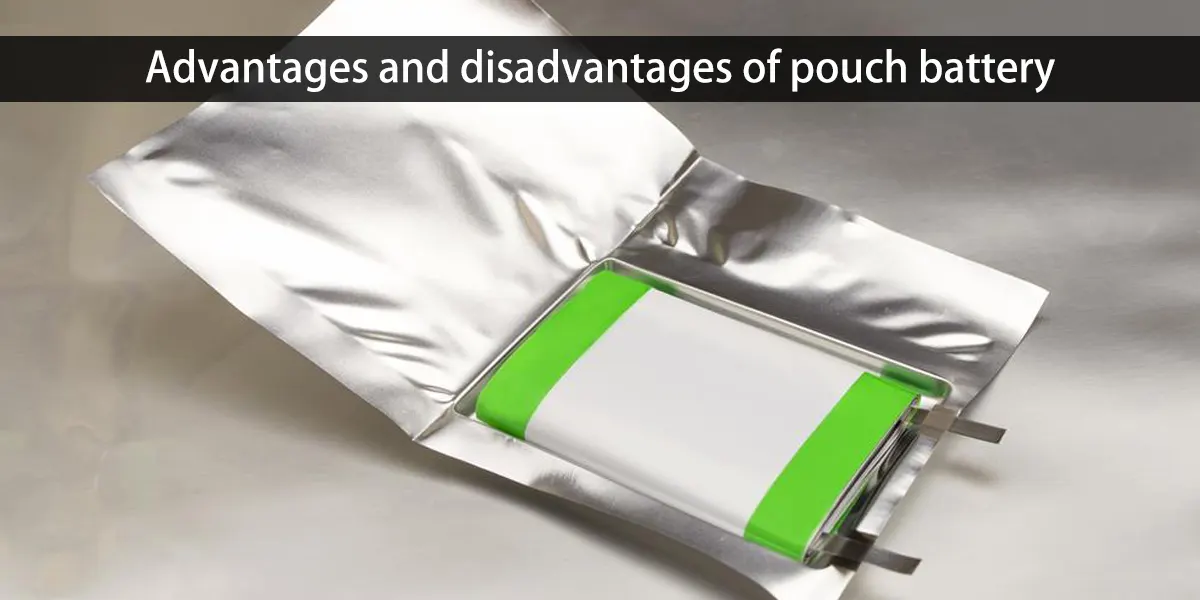
Insufficient problem
The advantages and disadvantages of pouch batteries are almost mutually reinforcing. Because the shape of pouch batteries is flexibly designed (customized according to customer needs, and the battery cells are also remade), the number of existing pouch batteries of the same model is too small. In addition, a new pouch battery needs to be developed. The cost of a new pouch battery pack is also quite high.
Pouch lithium battery is a liquid lithium-ion battery covered with a polymer shell. The biggest difference from other batteries is the soft packaging material (aluminum-plastic composite film). This is also the most critical and technically difficult material in pouch lithium batteries. This This is also one of the reasons why top 10 energy storage battery manufacturers have not significantly promoted pouch batteries.
Since the electrochemical reaction corrosion leakage of soft-pack lithium batteries is difficult to detect, generally as the use time increases, the corrosion leakage of the battery will gradually become more serious. Because this form of battery failure has a long incubation time, it can easily cause a crisis of trust for customers once it occurs.
There are generally two situations of electrochemical corrosion:
- Ionic short circuit. The aluminum layer of the aluminum film forms an ion short-circuit channel with the anode.
- Electronic short circuit. The aluminum layer of the aluminum film and the anode form an electronic short-circuit channel.


In this way, the aluminum layer of the aluminum-plastic film encapsulating the battery forms a short circuit with the anode. The anode is the cathode of the battery, the low potential part. Once it comes into contact with aluminum, an electrochemical reaction occurs through the highly conductive electrolyte, causing the aluminum layer to be continuously consumed. These two conditions are necessary for the battery to be attacked and corroded during a short circuit, and both are indispensable.
Physical reasons
Due to improper use of the battery and accidental bumping, the battery itself will become inflated and the packaging will fail, which may also lead to battery leakage. Battery misuse, including battery overcharging, over-discharging, high-temperature use, etc., can cause gas to appear in the battery, causing swelling and packaging failure.



 +86 – 18925002618





