

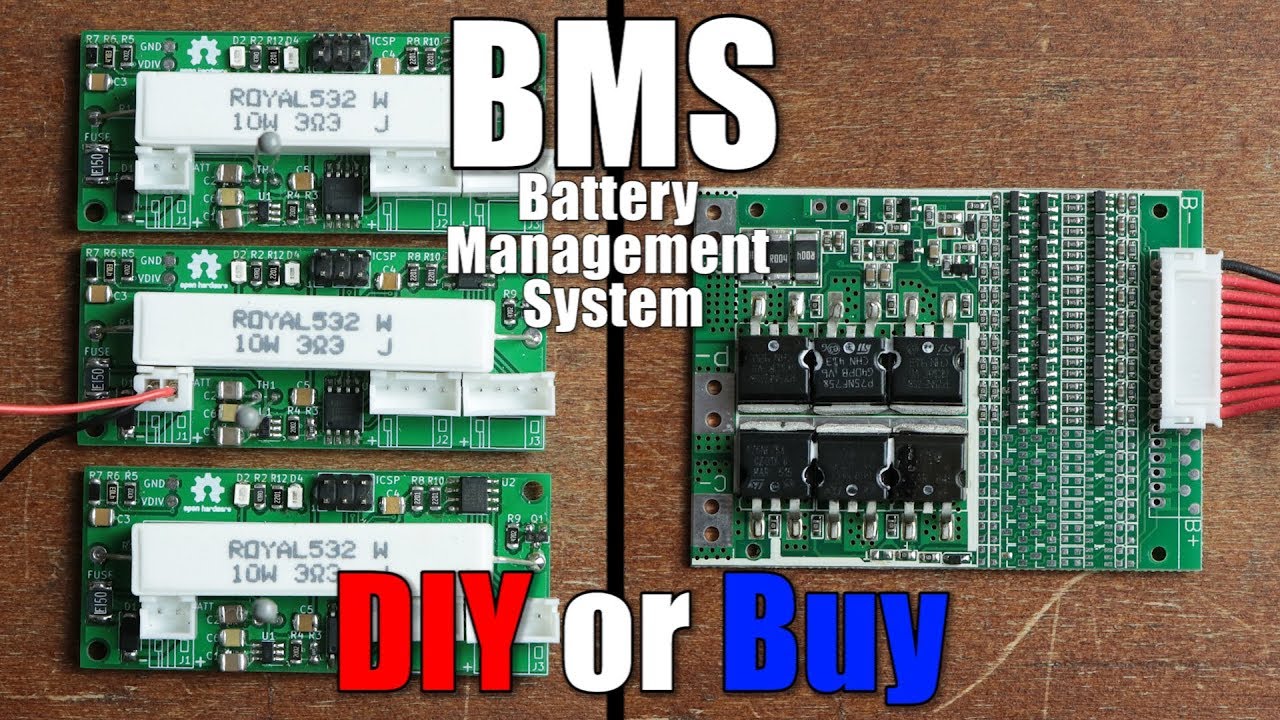
The gradual scale-up and popularization of household energy storage is a healthy and rational development trend facing future energy needs. This article mainly introduces the development status, solutions and other related knowledge of solar BMS.
1. Current status of solar energy storage
With the continued development of the “Million Solar Rooftop Plan” in the United States and the “Energy Transition” in Germany, household energy storage systems, especially the government’s high subsidies for private use of photovoltaic power, have enabled most people to achieve self-sufficiency in household electricity. The ability to store excess electricity has led to the rise of the home energy storage market in Germany and even Europe.
The behind the meter battery storage system is similar to a micro energy storage power station, and its operation is not affected by the city’s power supply pressure. During low power consumption periods, the battery pack in the home energy storage system can recharge itself to provide backup for peak power or power outages. In addition to being used as an emergency power source, home energy storage systems can also balance electricity loads, thereby saving household electricity expenses.
Although the current market demand for home energy storage systems is more driven by people’s need for emergency backup power, the use of home energy storage systems can be combined with new technologies such as photovoltaic energy storage power generation systems, promoting the promotion of new energy and building smart grids have broad market prospects.
2. What is solar BMS?
BMS stands for Battery Management System, an electrical system used to monitor and control battery packs such as lithium battery packs.
The main functions of BMS include battery unit charge and discharge control, temperature monitoring, battery status monitoring (such as voltage, current and remaining capacity) and fault diagnosis. It is critical to keeping batteries safe, extending battery life, and maintaining battery performance.
Solar BMS is indeed functionally similar to BMS generally used to manage energy storage systems, as they are both designed to manage and protect the battery pack to ensure its safe and efficient operation. However, there may be some special design considerations depending on the specific requirements and configuration of the PV system.
Solar BMS is mainly used to manage energy storage batteries connected to photovoltaic panels, usually lithium-ion batteries or other types of rechargeable batteries. Solar BMS is responsible for monitoring the battery’s charge status, temperature, voltage and current, and performing charge and discharge control to optimize battery performance and life.
In addition, Solar BMS may include specific features such as integration with solar charge controllers to optimize the battery charging process and improve energy conversion efficiency.
Although the basic principles are similar, Solar BMS may need to be customized for the characteristics of photovoltaic power generation, such as considering sunlight patterns, load requirements and energy recovery strategies.
Overall, while Solar BMS and general energy storage BMS are similar in core functionality, they may differ in application details to accommodate the specific needs of photovoltaic systems.
3. Basic structure and component requirements of home energy storage system
There are currently two types of home battery backup system, one is the grid-connected home energy storage system, and the other is the off-grid home energy storage system.
The grid-connected home energy storage system consists of five parts, including: solar cell array, grid-connected inverter, Solar BMS, battery pack, and AC load. The system uses a hybrid power supply of photovoltaic and energy storage systems.
When the mains power is normal, the photovoltaic grid-connected system and the mains power supply power to the load; when the mains power is out, the energy storage system and the photovoltaic grid-connected system jointly provide power.
The grid-connected home energy storage system is divided into three working modes. Mode 1: Photovoltaics provide energy storage and the remaining electricity is connected to the grid; Mode 2: Photovoltaics provide energy storage and some users use electricity; Mode 3: Photovoltaics only provide part of the energy storage.
Off-grid home energy storage systems are independent and have no electrical connection to the grid. Therefore, the entire system does not require a grid-connected inverter.
Photovoltaic inverters can meet the requirements. Off-grid home energy storage systems are divided into three working modes. Mode 1: Photovoltaics provide energy storage and user electricity (sunny days); Mode 2: Photovoltaics and energy storage batteries provide user electricity (cloudy days); Mode 3: Energy storage The battery provides users with electricity (in the evening and rainy days).
To sum up, the energy storage equipment currently in demand is mainly Solar BMS battery management system, photovoltaic grid-connected inverter, and energy storage inverter. In response to the above needs for household energy storage equipment, combined with the safety isolation characteristics of the circuits of each unit of the photovoltaic system, Jinshengyang proposed a complete set of power solutions for control units.
4. Battery management system BMS unit power supply solution
As the energy storage device of the system, the battery needs to monitor the online status of the battery in real time, so the importance of Solar BMS is self-evident.
In the Solar BMS system, the BCU module communicates with the BMU module in real time through the CAN bus to obtain system parameters such as cell voltage, box temperature, and insulation resistance.
It collects charge and discharge currents through current sensors, dynamically calculates SOC, and displays relevant data through the touch screen. After the BCU calculates and analyzes the comprehensive information of the battery pack, it performs intelligent system management: intelligent interaction through an independent CAN bus;
At the same time, secondary protection of charge and discharge can also be achieved through relays to ensure effective isolation of strong and weak currents and meet customer diversification security control requirements to ensure the stable and efficient operation of the system.
Solar BMSS power supply solution mainly lies in isolation voltage conversion. The main control unit is mainly based on a 24VDC system, and the power of the entire main control unit is less than 5W.
The LDO converts the 5VDC input voltage into a 3.3V output voltage to power the MCU. The 6P isolated power supplies in the system are used to power the 4 CAN communication modules, voltage and insulation detection circuits, and current detection circuits.
At the same time, they can isolate the power circuit from the signal circuit and communication module to reduce interference and improve stability and reliability.
5.Solar bms solution
The solar photovoltaic modules gather the electric energy and turn it to the energy storage inverter to convert DC into AC. During the operation of the inverter, it also needs conversion process monitoring, control and communication to ensure that the inverter voltage meets the index requirements. This part of the monitoring unit can directly draw power from the mains to work.
As shown in Figure 4, the module power supply directly takes power from the mains and converts it to output 24V, and then outputs 5VDC voltage through the non-isolated conversion module K7805-500R3;
B0503XT-2WR2 provides the MCU with a 3.3V working voltage that meets the functional isolation withstand voltage; using The isolated, high-speed TD501D485H communication module can suppress electromagnetic interference and eliminate ground loops, protecting system circuits from external networks.
In addition, Jinshengyang has developed an isolation driver with integrated DC-DC power supply specifically for inverter full-bridge IGBTs. QP12W08S-37 simplifies the design of customer drive control circuits and improves reliability.
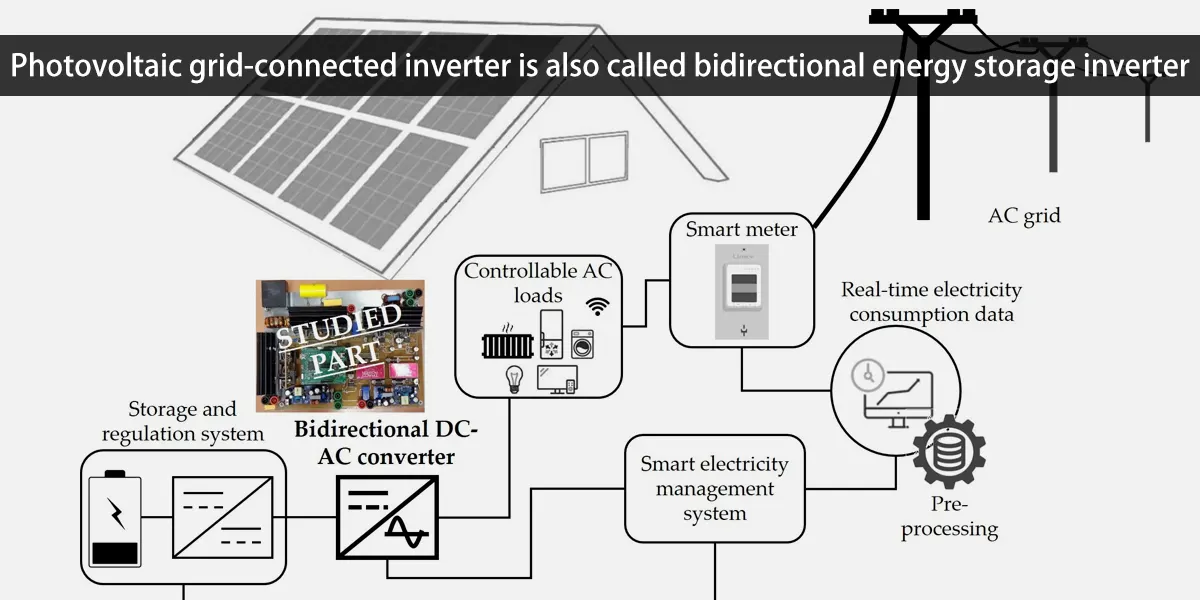
Photovoltaic grid-connected inverters are also called bidirectional energy storage inverters and all-in-one inverters. The system consists of an AC-DC unit, a DC-DC unit, a control unit, a communication unit, and a transfer relay unit.
Bidirectional energy storage inverters are divided into two power supply devices, one supplies power to the mains, and the other supplies power to the battery panel. If you want to know more about energy storage manufacturers, please click bess battery manufacturers.Â


+86 – 18925002618






