



Stem is a provider of artificial intelligence-driven energy storage solution. Its proprietary software platform, Athena, enables customers to optimize energy efficiency by automatically switching between battery power, on-site generation and grid power. Stem Energy Storage is the leading clean energy storage company in the United States, with the largest market share in California. Currently, customers using the company’s Athena artificial intelligence platform have formed the world’s largest energy storage system network.
California is the largest energy market in the United States. California has stipulated that the sale of fuel vehicles will be banned by 2035, and the entire power grid will be connected to clean electricity by 2045. The company already holds 75% market share in California and has a number of well-known blue-chip customer bases, including Amazon (AMZN.O), Apple (AAPL.O), Facebook (FB.O), Google (GOOG.O) and Walmart (WMT.N). In 2019, Stem’s energy storage installations in California were three times larger (in kilowatts) than its largest competitor.
STEM energy storage currently has three businesses. The first is to sell hardware as an energy storage system integrator, with a gross profit margin of ~10-30%; the second is to provide users with SaaS-based smart energy software based on the “Athena” AI platform, with a gross profit margin of ~80% Third, as a “Virtual Power Plant” (VPP, Virtual Power Plant), it provides users with smart energy operation services such as peak and valley arbitrage, demand response, and power trading, with a gross profit margin of ~80%. The success of STEM is inseparable from the long-term accumulation of smart energy operations.
Initially, STEM’s business was to provide power monitoring equipment PowerMonitor to help enterprises and power companies provide electricity bill reduction and visualization services. Later, STEM discovered that energy storage, as an excellent means of power regulation, can provide better energy quality control and cost reduction services, so it began to delve into energy storage and AI algorithms in 2014, making the “Athena” AI platform surpass its peers. The energy saving record is about 30%, and it is unparalleled when the scale of energy storage assets explodes, demonstrating the head network effect.
Industrial and commercial electricity in the United States will need to pay high electricity prices if it exceeds the maximum demand every month. Stem’s mission is to save at least 20% of electricity bills for these industrial and commercial customers.
Stem uses software as the entry point. Customers can clearly see the company’s power consumption curve, power usage habits, and how to make small adjustments to smooth the power consumption curve.
When power consumption is high, the “Athena” system will allow the energy storage device to automatically release the stored power without increasing the company’s maximum demand.
In addition, during low periods when electricity prices are relatively cheap, “Athena” will input electric energy into energy storage equipment; during periods when electricity prices are relatively expensive, “Athena” will even allow energy storage equipment to release electricity for electricity wholesale business, truly achieving Affordable Internet access.
Compared with retail customers, the utility market targeted by Stem is more imaginative.
Since 2019, Stem has begun deploying gridscale energy storage systems, focusing on the Massachusetts market in the United States (the state has relevant policy incentives).
Stem recently completed the deployment of a 3.6MW solar power generation facility and 2MW/9MWh lithium ion battery energy storage system in the state. The Athena system will provide a variety of capabilities, including predicting future wholesale electricity market opportunities.
The project has been delivered to Kearsage Energy, the project owner and operator.
1. For public utility enterprises, the company provides STEM systems, and its solutions include three aspects:
① The energy storage battery (PowerStore) is a group of combined power towers with a power of up to 18KW, which can be upgraded and used as system power resources;
② The intelligent power consumption detection device (PowerMonitor) is a small metering device with communication and computing functions that can detect power load with high accuracy;
③ Visual dashboard software (PowerScope) provides comprehensive control over individual points and aggregates, allowing customers to have a comprehensive view of the company’s past, present and future energy usage, thus greatly improving their satisfaction.
STEM systems operate at load centers and create value at the transmission, distribution and customer levels. The system can be installed in one day and eliminates the safety risks and costs associated with high-bandwidth, high-voltage resources for system balancing.
2. For commercial and industrial companies
For commercial and industrial companies, the services provided by the company include three aspects:
Enterprises store electricity from the power grid into energy storage batteries during non-peak periods of electricity consumption. During peak periods of electricity consumption, they can draw electricity from their own power dispatching system. In this way, Stem does not need to change the company’s own electricity usage patterns and habits, but it reduces electricity bills by reducing peak electricity consumption.
In the United States, commercial and industrial electricity billing consists of two components. One is the more conventional calculation of total electricity consumption, and the other is the enterprise’s peak electricity charge (demand charge) during this billing cycle. The calculation of Demand Charge is generally based on calculating the average electricity consumption based on 15 minutes in the billing cycle, selecting the maximum value as the enterprise’s highest peak electricity consumption, and then multiplying it by the unit price. Energy storage services are attractive to businesses, which hope to reduce peak power bills.
Installation model: Learn from photovoltaic leasing, nearly zero cost
The company has two business models:
a. Users can choose to pay the initial installation cost in one go;
b. The user does not make an upfront investment and chooses Stem’s 3-year financial assistance. Stem will share from the user’s monthly electricity bill savings.
Users who adopt the financial assistance model do not need to buy the entire Stem system at once. The installation cost is close to zero. They only need to pay Stem a fixed fee every month. After the contract expires, the user can flexibly choose the next processing mode. . This model is borrowed from the photovoltaic leasing industry and is similar to the leasing and power purchase agreements used in the photovoltaic field.
The monthly fees paid by users include: PowerStore energy storage system and financial contract operating expenses; PowerScope monitoring software requires an additional monthly fee. In addition, a $200 deposit is required for each PowerStore.
From the additional investment in Stem by investment companies, we can see that large energy companies are increasingly interested in the emerging energy storage market. Companies in this field specialize in installing large battery systems into homes or businesses to provide backup power or reduce the amount of electricity drawn from the grid during peak demand periods. Stem energy storage competitors include SolarCity and Green Charge Networks.
Peak electricity bills are common for commercial customers, whose peak electricity usage can fluctuate widely within a day or between two days. Businesses want to reduce the demand charges they pay, which can account for up to 50% of a business’s monthly electricity bill.
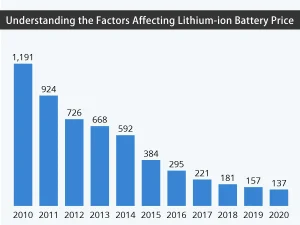
As battery prices began to fall in recent years, the energy storage industry found cost-effective solutions to deal with peak electricity bills. At the same time, technological advancements have improved the ability of batteries to store power and can control battery charging and discharging more efficiently. Stem energy storage CEO John Carrington has said that falling battery prices and changes in the way Stem builds and assembles its systems made the system, which includes the circuitry that runs the batteries, less efficient in 2014. (Including) the overall production cost has been reduced by more than 50%.
The report shows that within 10 years, the global distributed energy storage market will grow from US$452 million in 2014 to US$16.5 billion in 2024. Stem’s advanced energy storage technology combined with predictive analytics capabilities can quickly respond to dramatic increases in energy demand from commercial customers by using previously stored electricity. These systems can still provide services even in the face of variable solar power generation and peak energy demand. Users supply energy, and energy costs can be reduced by 20%.



 +86 – 18925002618





