

- Customer resources: The downstream customers of commercial and industrial energy storage are scattered, and customer resources are an important advantage. Customer resources come from the accumulation of other businesses, or through other central institutions, or through the acquisition of potential customers through existing platform information.
Moreover, resource advantages are related to the location of the company, and companies in places with a large peak-to-valley price difference have a first-mover advantage.
- Resource integration: In the future, industrial and commercial energy storage needs to serve virtual power plants, obtain ancillary services, and participate in the benefits of the power spot market. Therefore, enterprises with a resource integration platform layout are expected to enjoy rich business models in the future and will also form certain brand barriers.
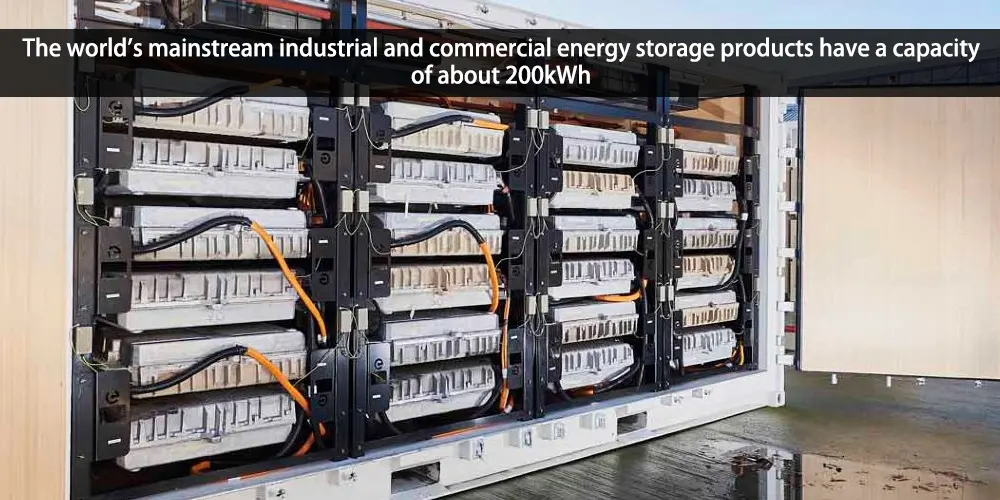
The downstream of industrial and commercial energy storage is mainly industrial and commercial enterprises. Whether the investment is economical is one of the core factors of industrial and commercial demand, and the economics of industrial and commercial energy storage may be significantly improved in 2023.
- Demand side: Under the situation of power shortage, industrial and commercial energy storage can ensure stable power supply
China’s industrial and commercial electricity demand is strong, and the supply and demand of electricity in most areas are tight. In 2022, the electricity consumption of the whole society will be 8,633.2 billion kWh, a year-on-year increase of 3.9%, and the industrial electricity consumption will be 5,594.3 billion kWh, a year-on-year increase of 1.6%. It is predicted that in 2023, there will be tight electricity supply and demand in 6 provinces in China, and tight electricity supply and demand in 17 provinces.
- The income side: the price difference between peak and valley widens, and the economy of industrial and commercial reserves improves
The income model of industrial and commercial energy storage is mainly peak-valley price difference arbitrage, and the economy of two charging and two laying down is prominent
- Cost side: the price of lithium carbonate has been cut in half, and the industry’s profit margin has expanded
Batteries are the largest cost of energy storage systems. The cost of the energy storage system is mainly composed of five parts: battery module, BMS system, container (including PCS, etc.), civil engineering and installation costs, and other design and commissioning costs. Cathode material is the main cost of lithium battery. The cost of lithium batteries consists of five major raw materials:
- Cathode material, the vast majority of domestic energy storage batteries adopt the lithium iron phosphate route;
- The negative electrode material is graphite;
- The electrolyte and solute generally use lithium hexafluorophosphate.
- Diaphragm;
- Lithium battery copper foil. Taking lithium iron phosphate batteries as an example, the cathode material is the largest cost, accounting for 37%.
The price of lithium carbonate has been cut in half, and the pressure on the cost side has been released.Since 2022Q4, the price of lithium carbonate has plummeted, and the price of cathode materials for lithium iron phosphate batteries has also fallen accordingly. As of June 30, 2023, the price of lithium carbonate has fallen to 307,000 yuan/ton, a fall of more than 45% from the highest point last year; the price of lithium iron phosphate cathode material has fallen to 97,000 yuan/ton, a fall of more than 45% .
As the most important cost of the energy storage system, the battery price cut in half effectively releases the pressure on the cost side and increases the industry’s profitability.
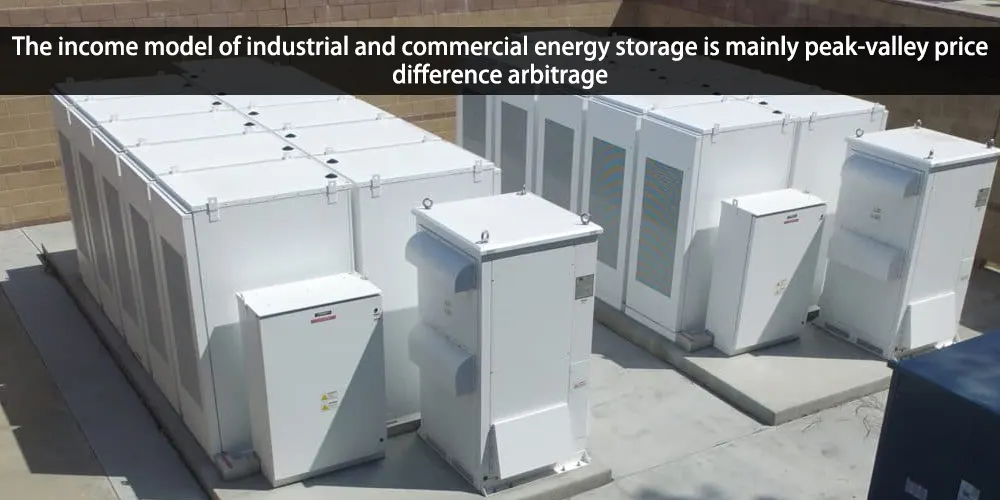
1) Industrial and commercial energy storage with one charging and one discharging
The industrial and commercial energy storage IRR of one charge and one discharge is 6.93%, and the LCOS is 0.76 yuan/kWh. The IRR of two charges and two discharges of industrial and commercial energy storage is 16.29%, and the LCOE is 0.44 yuan/kWh.
2) From the perspective of sensitivity analysis, other conditions remain unchanged. Under the EPC cost of 1.7 yuan/Wh, when the peak-to-valley price difference is greater than 0.86 yuan, the IRR of industrial and commercial energy storage can reach 8%. It is more than 0.64 yuan/kWh, and the IRR of industrial and commercial energy storage reaches 8%, which is economical.
3) Industrial and commercial energy storage is highly sensitive to the peak-to-valley price difference. The peak-to-valley price difference increases by 0.1 yuan/kWh, and the IRR increases by about 5%.
Considering that industrial and commercial energy storage may not necessarily be able to complete two complete cycles, so under the condition that other conditions remain unchanged, a peak-to-valley price difference above 0.7 yuan/kWh (between 0.60-0.78 yuan/kWh) can achieve relatively high probability. good income. The core indicators of the economics of industrial and commercial energy storage are peak-valley price difference and investment cost.
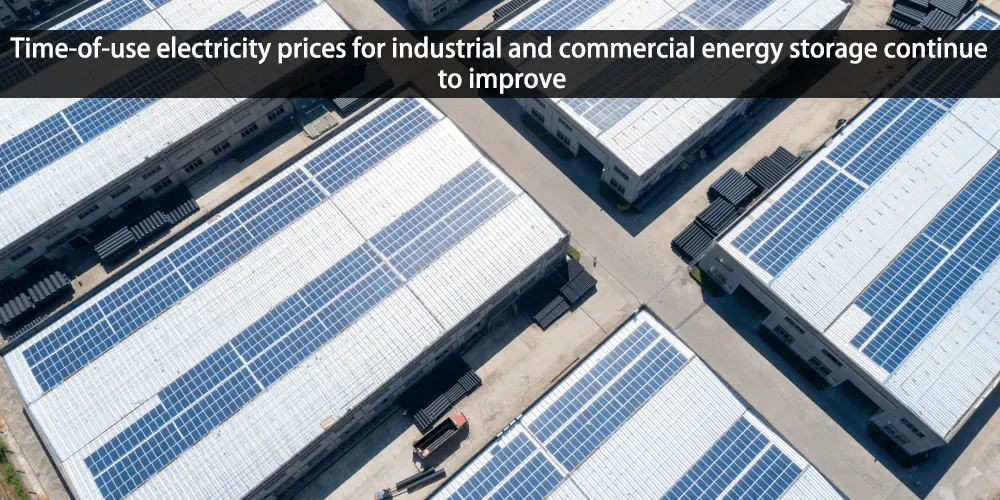
(2) The peak-to-valley price difference continues to widen, and the time-of-use electricity price continues to improve
There are 19 provinces in China where the peak-to-valley price difference is greater than 0.7 yuan/kWh, and the price difference is expanding. 0.7 yuan/kWh is the threshold value of the peak-to-valley price difference for industrial and commercial energy storage to be economical. In terms of quantity changes, from July 2022 to July 2023, the number of provinces in China with a peak-to-valley price difference of more than 0.7 yuan/kWh has increased from 16 to 19.
In terms of price difference changes, the peak-to-valley price difference increased in 20 regions. For example, Jiangxi Province increased from 0.3934/kWh to 0.8225/kWh, and Shandong Province increased from 0.7036/kWh to 0.8102/kWh. The peak-to-valley price difference in various regions has generally widened, which means that the arbitrage space for the allocation of industrial and commercial energy storage has expanded.

This article summarizes top 10 manufacturers of global energy storage batteries. They are CATL, BYD, EVE, REPT,HTHIUM, Great Power, Envision Energy, CALB, GOTION HIGH-TECH, Ganfeng Lithium.
Driven by the goal of energy transformation, Spain’s energy storage industry is full of potential, with continuous technological innovation and progress. The government has given strong support in terms of funds and policies, and the future development prospect is bright.
With the globalization of energy transformation, electrical energy storage has become more popular in the market in recent years. The global energy storage market is full of challenges and opportunities.

 +86 – 18925002618