


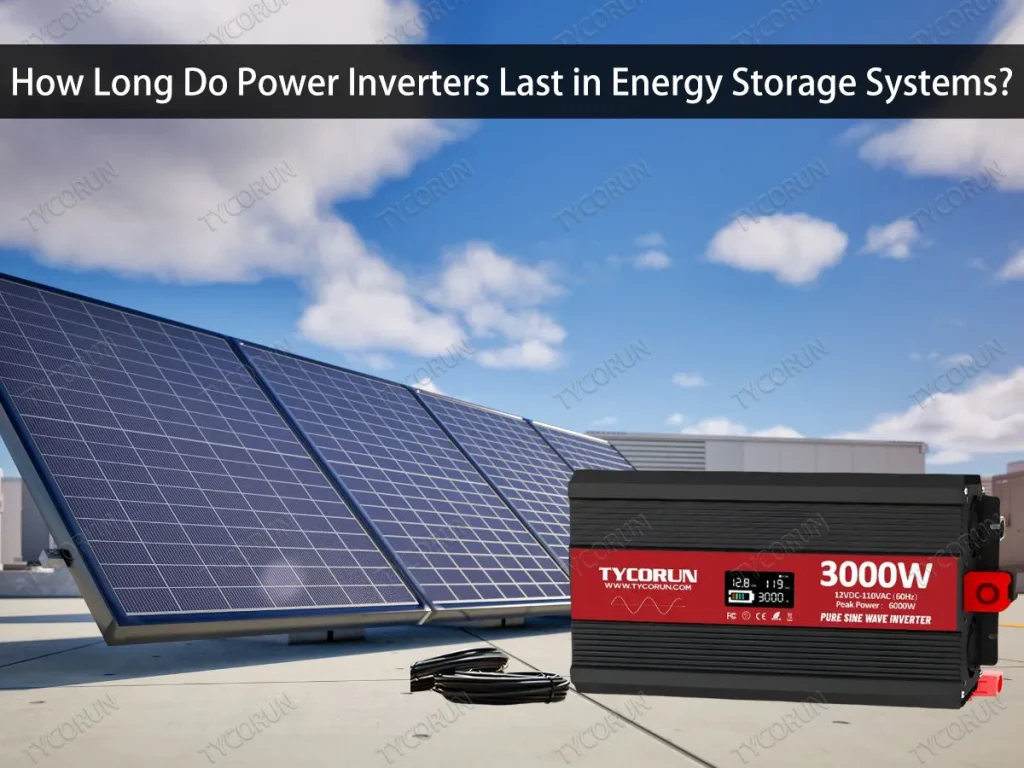
Power inverters are crucial components of contemporary energy systems, particularly when it comes to transforming DC power from solar panels or batteries into AC current suitable for electrical devices. This part is essential to guaranteeing stable and effective energy distribution, whether it is utilized in houses, automobiles, or energy storage systems. But how long do power inverters last? This is one of the most common things people ask.
It is crucial to comprehend this since its longevity will impact the system’s overall effectiveness and long-term maintenance expenses. An inverter’s longevity is typically influenced by a variety of factors, including component quality, usage trends, and operating climate. Understanding what factors influence its longevity allows users to take the necessary precautions to keep the inverter functioning properly for years to come.
What Is a Power Inverter?
A power inverter is a crucial component that transforms direct current (DC) from solar panels, batteries, and other energy sources into alternating current (AC), which is utilized by the majority of electrical appliances in homes and businesses. The best use of energy produced by solar power systems or stored in batteries is impossible without an inverter.

In modern energy systems, inverters serve as a link between power sources and electrical loads. They serve to maintain optimal energy efficiency in addition to guaranteeing a steady flow of electricity. Therefore, before answering the commonly asked question, how long do power inverters last? It is important to understand what a power inverter is.
An inverter’s design, component quality, and usage all have a significant impact on how long it lasts. Accordingly, a power inverter’s functionality extends beyond merely converting electrical current; reliability and service life also play a role in determining how well an energy system can function over the long run.
How Does Power Inverter Work
A power inverter converts direct current (DC) to alternating current (AC) using an electrical circuit known as a converter. This procedure creates a steady AC waveform that satisfies the requirements of electrical equipment by converting electrical signals utilizing transistors, capacitors, and control circuits.
For example, inverters in solar power systems transform DC energy from batteries or solar panels into AC current that can be supplied into the grid or used for home appliances. The energy produced would not work with traditional electrical systems without this procedure.
The conversion efficiency of an inverter has a significant impact on its performance. The more stable the current generated and the smaller the chance of long-term damage, the higher the technology and component quality. These factors also affect how long do power inverters last because an effective system produces less heat and puts less strain on internal parts.
In the other words, knowing how power inverters operate enables users to prolong the device’s lifespan, which serves to both guarantee peak performance and the long-term value of the energy investment.
How Long Do Power Inverters Last in Energy Storage Systems?
Power inverters are essential parts of energy storage systems because they control the power flow between batteries and electrical loads. In order to keep the system functioning effectively, they do more than just convert DC current to AC; they also keep the voltage and frequency stable. Because they function continually, users and technicians frequently express concern about the lifespan of inverters in such systems.

In energy storage systems, the lifespan of power inverters is often determined by the type of inverter and its operating conditions. When used with solar power systems or lithium batteries, inverters often last 8 to 12 years, or even longer with careful maintenance. Stable conversion efficiency, effective cooling systems, and surge protection are all characteristics of high-quality inverters that contribute to their longer lifespan.
However, because inverters charge and discharge energy repeatedly, temperature, ventilation, and electrical connection quality all have a significant impact on their durability. In reality, the lifespan of power inverters is usually slightly shorter than that of energy storage batteries. While a well-designed and well-maintained system can significantly extend inverter durability, most inverters typically last around 8 to 12 years.
Factors That Affect the Lifespan of Power Inverters
There is no one precise answer to the question of how long do power inverters last because a variety of factors influence its lifespan. Here are some of the main things that determine the durability of an inverter:
- Temperature of operation: excessive heat is inverters’ primary enemy. Internal components may sustain rapid damage if they are subjected to high temperatures without an adequate cooling system. To keep the inverter stable, make sure it has enough airflow.
- Quality of components: inverters with superior circuitry and materials typically last longer. Products from reputable companies, such as TYCORUN, typically have improved conversion efficiency and circuit protection.
- Electrical load unstable: when an inverter operates constantly above its capacity, its performance suffers and the risk of damage increases. Maintaining the load within the manufacturer’s suggested range contributes to the device’s longer lifespan.
- Environmental conditions: humidity, dust, and vibration may accelerate degradation. The longevity of the inverter will be significantly impacted by installation in a dry, clean space with adequate ventilation.
- Usage frequency: the more frequently the inverter functions in intensive cycles-such as in energy storage or solar systems-the faster the internal components wear out.
Different Types of Power Inverters and Their Durability
Each type of power inverter has unique features and levels of durability. For this reason, the answer to the issue of, how long do power inverters last? Endure varies according on the technology and kind.

These are a few popular inverter types along with their longevity:
- Pure sine wave inverter
This kind, which resembles energy from the power grid, creates the steadiest and even electrical wave. Sensitive electrical devices can operate more effectively and securely because of its high output quality. In general, pure sine wave inverters last longer, particularly when utilized in energy storage or solar power systems, which are controlled energy systems. - Modified sine wave inverter
Although this kind is more cost-effective, the electrical wave it generates is not as smooth. It is adequate for basic equipment, but its internal components have to work harder and its efficiency is inferior. Because of this, it often has a lower service life than an inverter with a pure sine wave. - Square wave inverter
Because it generates an unsteady current, this is the most basic type and is hardly used anymore. Because of its poor durability, it is not appropriate for long-term usage or contemporary electronic equipment.
Based on this comparison, it can be concluded that the type of inverter used and its manufacturing quality significantly affect how long do power inverters last. Choosing an inverter involves more than just the waveform; it also requires considering factors such as rated power, efficiency, protection functions (overload, overtemperature, overvoltage), and environmental adaptability to ensure long-term robustness and effectiveness of your energy system.
Maintenance Tips to Extend Power Inverter Lifespan
In an energy storage system, the inverter serves as a vital interface between the battery and the power source. It operates continually in a cycle of power charging and discharging, therefore consistent functioning requires regular maintenance. Here are some maintenance ideas for extending the life of the inverter in an energy storage system:
- Ensure adequate ventilation and cooling
During power conversion, inverters in energy storage systems continuously produce heat. Avoid putting them in places that are too hot or enclosed, and make sure there is enough airflow. Proper cooling prolongs the device’s life and helps maintain efficiency. - Perform regular system checks
In ESS installations, inverters function with lithium batteries and other electrical components. Frequent inspections of the protective systems, terminals, and connectors help avert possible issues that could reduce the inverter’s lifespan. - Keep the load and voltage stable
Excessive loads or voltage changes might cause inverter components to fail faster. Ensure the power storage system has enough voltage control and use the inverter in accordance with its rated capacity. - Be aware of the operating environment’s cleanliness
The internal circuits of the inverter may be hampered by dust and excessive humidity. System performance and safety are maintained when installation takes place in a dry, clean, and vibration-free environment.
Choosing a Long-Lasting and Reliable Power Inverter
Choosing a long-lasting, high-performance power inverter is critical to preserving the efficiency of your energy storage system. This brings up the topic of how long do power inverters last. The solution is frequently determined by the product’s quality, compatibility, and initial selection. Here are some things to consider when choosing an inverter for your energy storage system:
- Be mindful of safety and quality requirements
Generally, inverters with official certificates like CE, UL, or IEC are constructed with high-quality parts and have passed stringent testing. An inverter of high quality will operate more steadily and last longer. - Ensure compatibility with lithium batteries.
Lithium batteries are now used in the majority of energy storage systems; hence inverters need to be compatible with these batteries. Good compatibility prolongs the life of the entire system and aids in maintaining power stability. - Select a high-efficiency inverter.
Less energy is lost during the DC to AC conversion process when power conversion efficiency is high. Long-term optimal performance will be maintained and the system’s workload will be decreased by a high-efficiency inverter. - Choose products from reputable brands.
Reputable energy storage typically provides inverters with cutting-edge features and robust construction. For example, TYCORUN devices can offer great longevity and good power conversion efficiency since they are made to operate well with lithium batteries. - Consider the installation environment conditions
High humidity, dust, or extremely high temperatures can hasten the decline of inverter efficiency. Select an inverter with sufficient protection based on the energy storage system’s operating location and environmental factors.
Conclusion
In conclusion, how long do power inverters last? The answer is determined by the components’ quality, working conditions, and application. Inverters in energy storage systems have an average lifespan of 8 to 12 years, or even longer if properly cared for and used to their full potential. Maintaining the device’s ideal lifespan depends in large part on elements including proper cooling, load stability, and a clean installation environment.
Energy storage systems can run more efficiently and last longer if the correct inverter is used and annual maintenance is performed. Therefore, the answer to the question of how long do power inverters last involves more than just time; it also involves how the device is made, chosen, and maintained to provide the optimum long-term performance.
FAQS
Power inverters should be replaced when their performance begins to decline, for example, when power efficiency decreases, the device frequently overheats, or recurring disturbances occur during operation. Generally, inverters need to be replaced after 8–12 years of use, depending on the condition and intensity of use of the energy storage system.
To extend the life of your inverter, ensure the system has good ventilation and cooling, avoid overloading, and perform regular checks on connections and key components. Keeping the installation area clean from dust and moisture also helps prevent long-term damage.
On average, power inverters can last between 8 and 12 years depending on component quality, operating conditions, and frequency of use. In well-maintained energy storage systems that use high-quality devices, inverters can even last longer than that with stable performance.


 +86 – 18925002618





