energy storage system

Principles of liquid cooling pipeline design

Principles of liquid cooling pipeline design
Energy storage liquid cooling systems generally consist of a battery pack liquid cooling system and an external liquid cooling system. The core components include water pumps, compressors, heat exchangers, etc. The internal battery pack liquid cooling system includes liquid cooling plates, pipelines and other components.
Table of Contents
    Add a header to begin generating the table of contents

    This article will introduce the relevant knowledge of the important parts of the battery liquid cooling system, including the composition, selection and design of the liquid cooling pipeline. Principles and equipment decompression, providing you with a full range of knowledge involved in liquid cooling pipelines.

    YouTube_play_button_icon_(2013–2017)

    1. What is a liquid cooling pipeline?

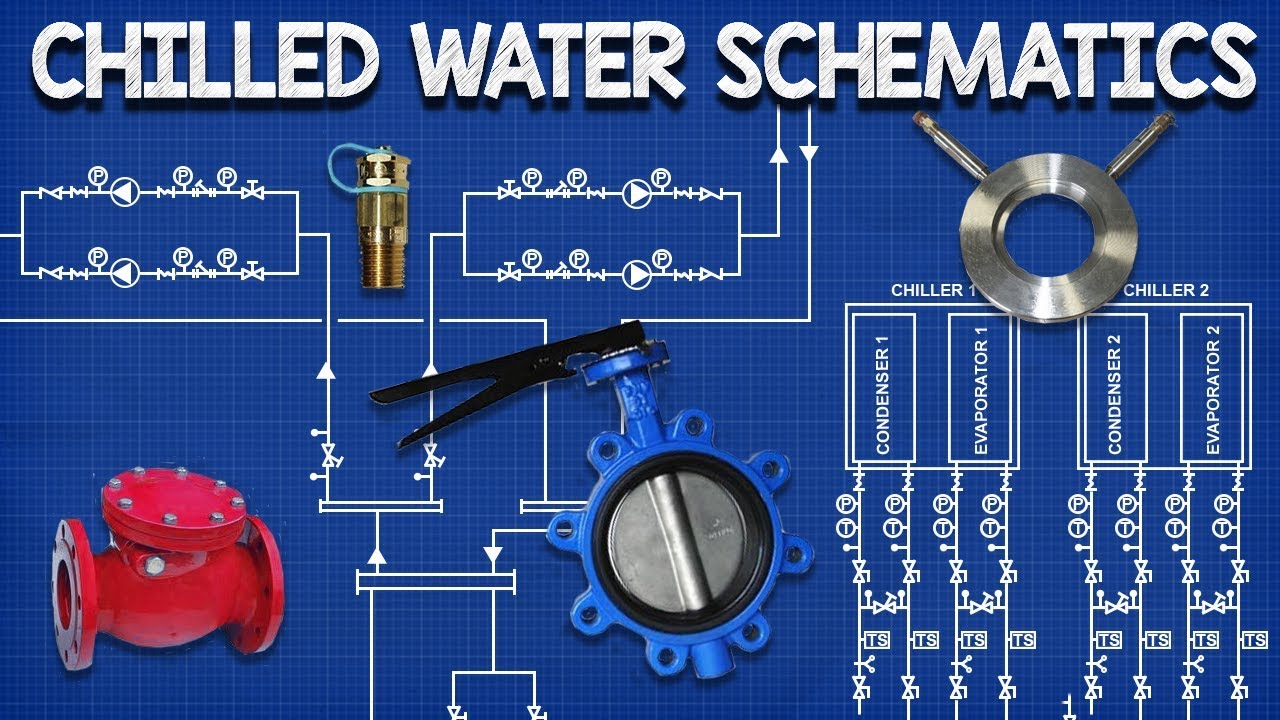
    Energy storage cooling is divided into air cooling and liquid cooling. Liquid cooling pipelines are transitional soft (hard) pipe connections that are mainly used to connect liquid cooling sources and equipment, equipment and equipment, and equipment and other pipelines. There are two types: hoses and metal pipes. If you want to know more about the difference between air cooling and liquid cooling, please click Liquid cooling vs air cooling. 

    2. Composition of liquid cooling pipeline

    • External thread: metric, inch thread, pipe thread; sealing methods include 74 degree, 60 degree, 24 degree cone seal and other sealing methods.
    • Internal thread: metric, inch thread, pipe thread; sealing methods include 74 degree, 60 degree, 24 degree cone seal and other sealing methods.
    • Barbed pagoda joint: The outer diameter of the barb is customized according to the user’s pipeline
    • Flange plate: square plate structure; standard loop flange, standard flange, etc.

    3. Instructions for selecting liquid cooling pipelines

    Liquid cooling pipelines are mainly used to connect transition soft (hard) pipes between liquid cooling sources and equipment, between equipment and equipment, and between equipment and other pipelines. Pipe selection affects its service life, reliability, maintainability and other properties.

    The following factors should be mainly considered when selecting:

    • Maximum working pressure: The maximum working pressure used by the pipeline must not exceed the maximum working pressure value of the specific specifications of the pipeline (a certain margin must be left)
    • Operating temperature: Select according to the actual ambient temperature and working temperature of the pipeline. The operating temperature range should be within the applicable temperature range of the specific specifications of the pipeline.
    • Pipe diameter: Select according to the flow and flow rate matched by the system
    • Fixing: It is recommended that hoses used in vibration environments be fixed at intervals of 250mm – 400mm according to the pipe diameter. Standard clamps or straps can be used for fixation according to the actual situation.

    Refrigeration oil and refrigerant liquid have certain mutual solubility

    4. Basic principles of pipeline design

    1. Ensure the supply of refrigerant liquid required by the evaporator to ensure refrigeration capacity;
    2. Ensure that the refrigerant flows in the system with minimal pressure drop to avoid additional power loss;
    3. Ensure that the refrigeration oil and refrigerant return to the compressor as much as possible without accumulating in the pipeline, thereby ensuring the normal operation of the compressor;
    4. Prevent refrigerant liquid and refrigeration oil from causing impact on the compressor;
    5. Reasonable cost of piping and refrigerant.

    5. Selection of pipe diameter

    When selecting pipe diameters, different considerations will be used for refrigeration systems and energy storage technologies. For comfort air conditioners, the daily usage time is about 8 -18 hours, so you are more concerned about the initial investment. If you want to increase the pipe diameter excessively in order to reduce the pressure drop, the cost of both the pipeline and the refrigerant charge will increase, so you can ensure that the oil return is reasonable and Under the condition of pressure drop, choose a lower cost solution.

    Industrial air conditioners, especially computer room air conditioners, run year-round, so you are more concerned about operating costs. At this time, you can consider a solution that ensures higher cooling efficiency when returning oil.

    6. Pressure drop in the pipeline

    Among them, the two that have the greatest impact on the selection of pipe diameter are:

    • Pipeline pressure drop
    • Pipeline flow rate

    For a given refrigeration system, an increase in pressure drop means a decrease in refrigerant flow and thus a decrease in cooling capacity.

    In order to increase the cooling capacity, the refrigerant charge must be increased to maintain the original refrigerant flow rate. However, in order to overcome the increased pressure drop, the compressor power will increase.

    The pipe diameter is designed to be too large to avoid congestion of liquid refrigerant

    7. Pipeline flow rate

    The issue of flow rate is related to both pressure drop and oil return. Refrigeration oil has the following functions in the refrigeration system:

    • Lubricate moving parts;
    • cooling compressor;
    • sealing effect;
    • Provide power for unloading mechanism
    • Removes impurities and cleans parts.

    And if the refrigeration oil accumulates in the heat exchange tube of the heat exchanger, it will reduce the heat exchange capacity of the heat exchanger. Therefore, try to let the refrigeration oil that flows out with the refrigerant return to the compressor, otherwise the compressor will be short of oil.

    Refrigeration oil and refrigerant liquid have a certain degree of mutual solubility, so it is easier to flow together in the pipeline, but the mutual solubility with refrigerant gas is relatively poor, so the refrigerant gas must reach a certain speed to promote the flow of refrigeration oil.

    What affects the refrigerant flow rate is the pipe diameter. If the pipe diameter is small and the refrigerant velocity is high, the pressure drop will inevitably increase. Therefore, pressure drop and oil return are a contradiction.

    To return oil smoothly, the refrigerant speed must be fast. When the refrigerant speed is fast, the pressure drop will be large, so we need to find a balance point and choose the appropriate pipe diameter.

    8. Pipeline pressure reduction requirements

    • Exhaust pipe

    Although the pressure drop of the exhaust pipe does not have as great an impact on the cooling capacity as the suction pipe, because the pressure drop will increase the power consumption, the maximum value of R22 should not exceed 6psi (0.4bar).

    • Condenser to reservoir connecting pipe

    In order to allow the condensed liquid to flow out of the condenser as quickly as possible without occupying the heat exchange area of the condenser, this section requires a relatively large pipe diameter to avoid congestion of the liquid refrigerant, which will prevent the liquid from flowing out of the condenser in time and reduce condensation. area.

    • Liquid reservoir to expansion valve connecting pipe

    The most important consideration for this section of pipeline is not to generate flash vapor due to pressure drop. Especially for rising pipelines, such as R22, there is a pressure loss of 0.115bar for every meter of rise, and the saturation temperature drops by 1 for every 0.38bar of pressure loss. ℃, the subcooling degree also drops by 1℃, then if it rises 10 meters, the pressure loss is 1.115bar, and the refrigerant saturation temperature drops by about 3℃.

    When selecting pipe diameters, different considerations will be used for refrigeration systems with different uses

    Neglecting other pressure losses, the refrigerant liquid subcooling degree also drops by 3℃, also That is to say, the minimum supercooling degree must be greater than 3°C so that the refrigerant liquid will not emit vapor.

    • Suction pipe:

    The pipeline directly determines the air intake volume of the compressor of the liquid air energy storage system, so it has a greater impact on the system. If the pressure drop is too high If larger, the specific volume of the refrigerant increases, the mass of the same volume decreases, the mass flow rate of the refrigerant sucked into the compressor decreases, and ultimately the cooling capacity decreases.

    Some data say that for every 1 psi of pressure loss in R22, the cooling capacity is lost by 1%, and for R410A, for every 1 psi of pressure lost, the cooling capacity is lost by 0.6%.

    The above is the entire content of liquid cooling pipelines. If you want to know about liquid cooling energy storage, please click on Top 10 manufacturers of liquid cooling products in China. 

    Related posts

    logo+86 – 18925002618
    [email protected]
    Guangpu West Road, Huangpu, Guangzhou, Guangdong, China

    Product

    Video Gallery

    Huntkey automated battery storage workshop process
    Huntkey Grevault participated in Germany ESE exihition with 5KW mobile power bank
    Contact Form Demo
    Scroll to Top